30-Day Melbourne to Darwin Road Trip + FREE Map

34 min read Jump to section
Driving from Melbourne to Darwin is one of Australia’s most unforgettable adventures!
You’ll go from the lush Great Ocean Road and the rugged Flinders Ranges, through the wild heart of the Red Centre, all the way to the tropical waterfalls and springs near Darwin.
And after road-tripping this route ourselves (and doing the Big Lap twice) we can say it’s one of the most rewarding drives in the country.
That’s why we’ve stretched this itinerary out to 30 days, so you can actually enjoy the best bits between Melbourne and Darwin, not just blast through.
And if you’ve already ticked off a few places, you can always trim it down!
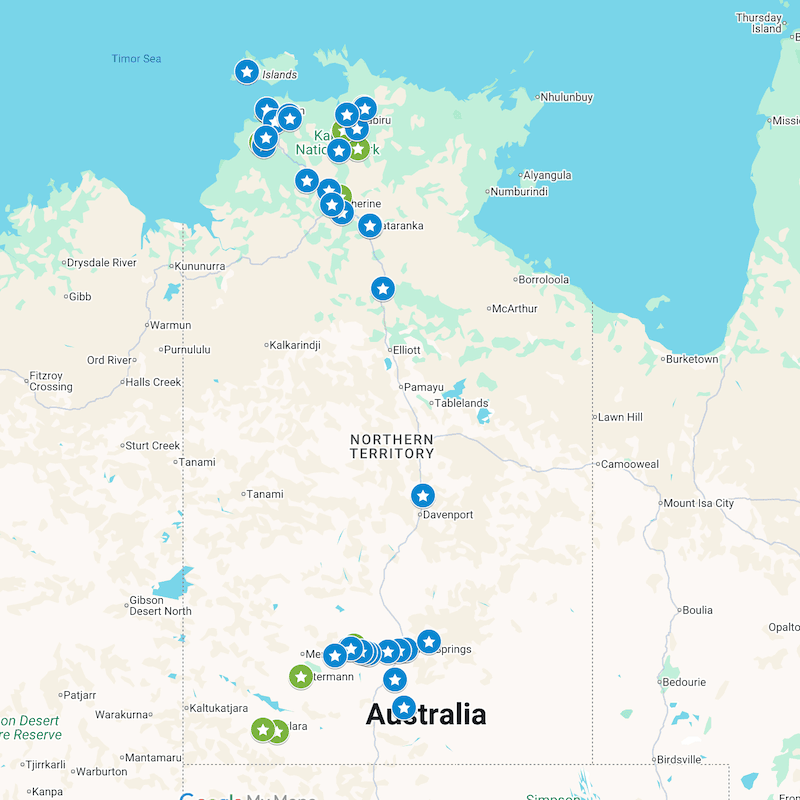
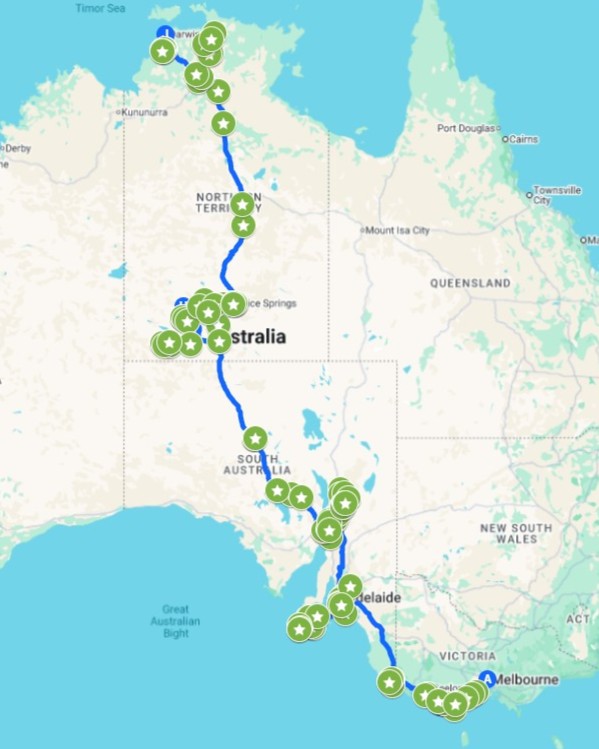
We included recommended stops, things to do, where to stay, tips from the road, and a free map you can save to Google Maps and use offline!
Now, this road trip is totally doable in a 2WD.
But if you’ve got a 4WD, you’ll unlock some of the best hidden corners of the route, like the Mereenie Loop near Alice Springs, Jim Jim Falls in Kakadu, and many more.
We’ll give you tips for both types of vehicles so don’t worry. Let’s get started!
We recognise the Traditional Owners of the lands we’re exploring in these regions.
Day 1-2: Great Ocean Road (Melbourne to Port Campbell)
Today you’ll start with one of the most iconic road trips in Australia, the Great Ocean Road!

You’ll do the first 2 days of our 3-day Great Ocean Road itinerary, here’s the gist:
Day 1: Melbourne to Apollo Bay via Torquay (3 hours, 195 km)
Here are some things to do today:
- Check out Bells Beach, see the locals tackle the waves and join if you’re keen!
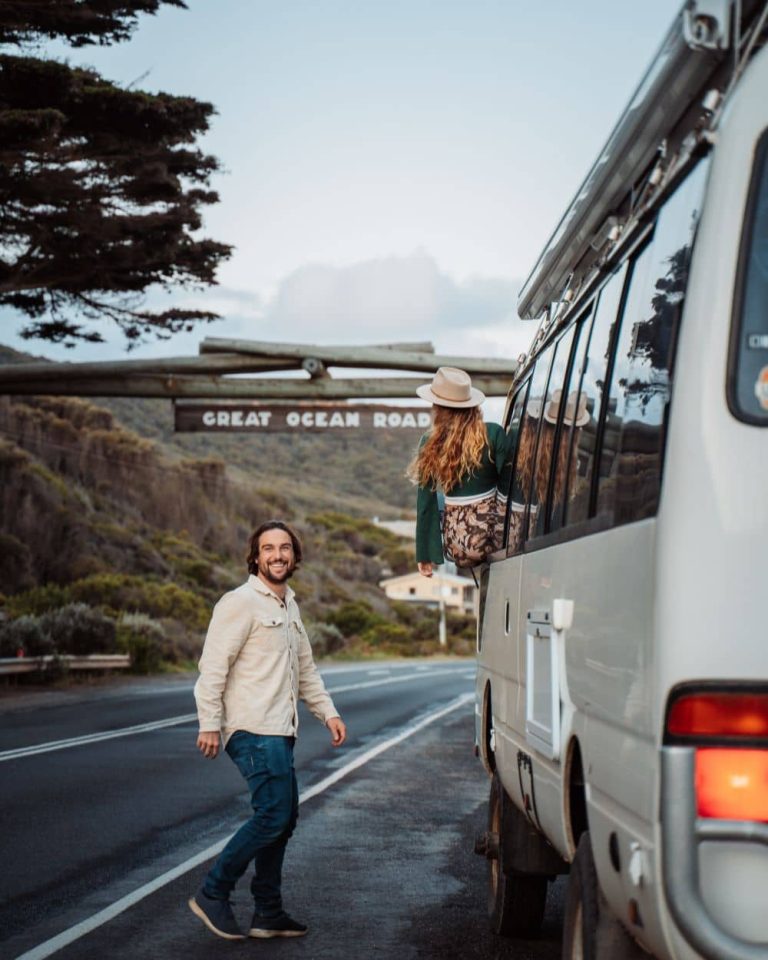
- Take the iconic pic at Memorial Arch
- Keen on a walk? Head to Sheoak Falls (quick and beautiful) or Erskine Falls (bit of a detour but worth it).
- Go to Lorne for lunch
- Stop by Kennet River to see wild koalas hanging from the trees!
- Stay in Apollo Bay, here are our recommendations.

Day 2: Apollo Bay to Port Campbell (2.5 hours,150 km)
Today will be an epic day, here are some things we recommend doing:
- Spend the morning at the Otways
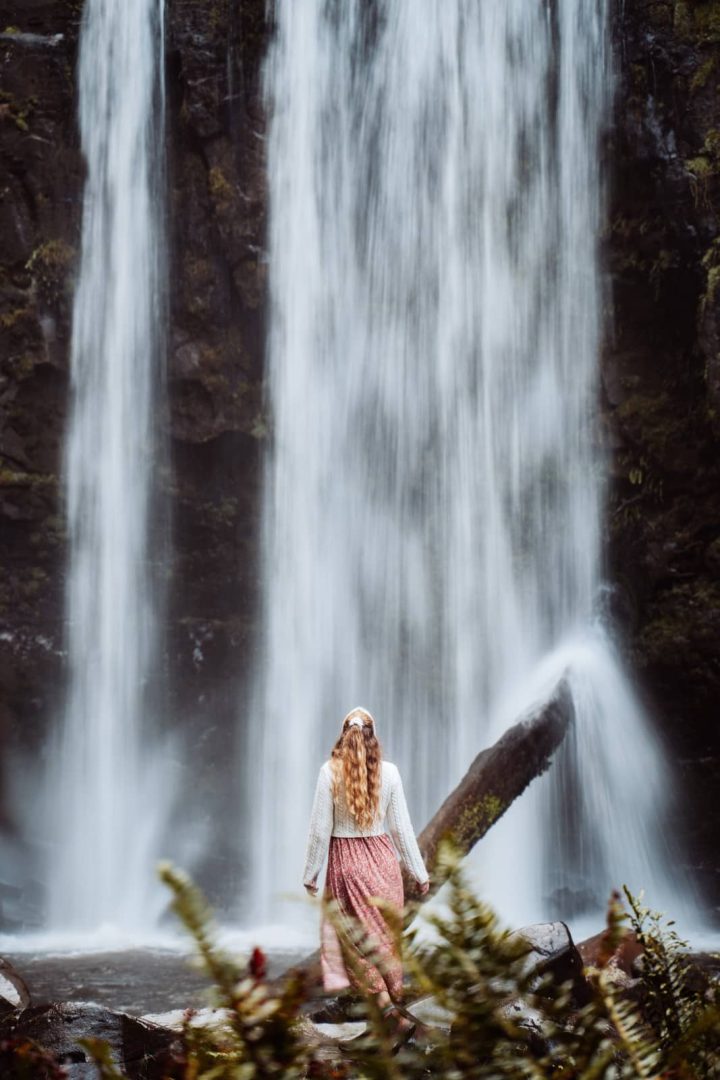
- Visit the waterfalls (Hopetoun Falls, Beauchamp Falls, Triplet Falls)
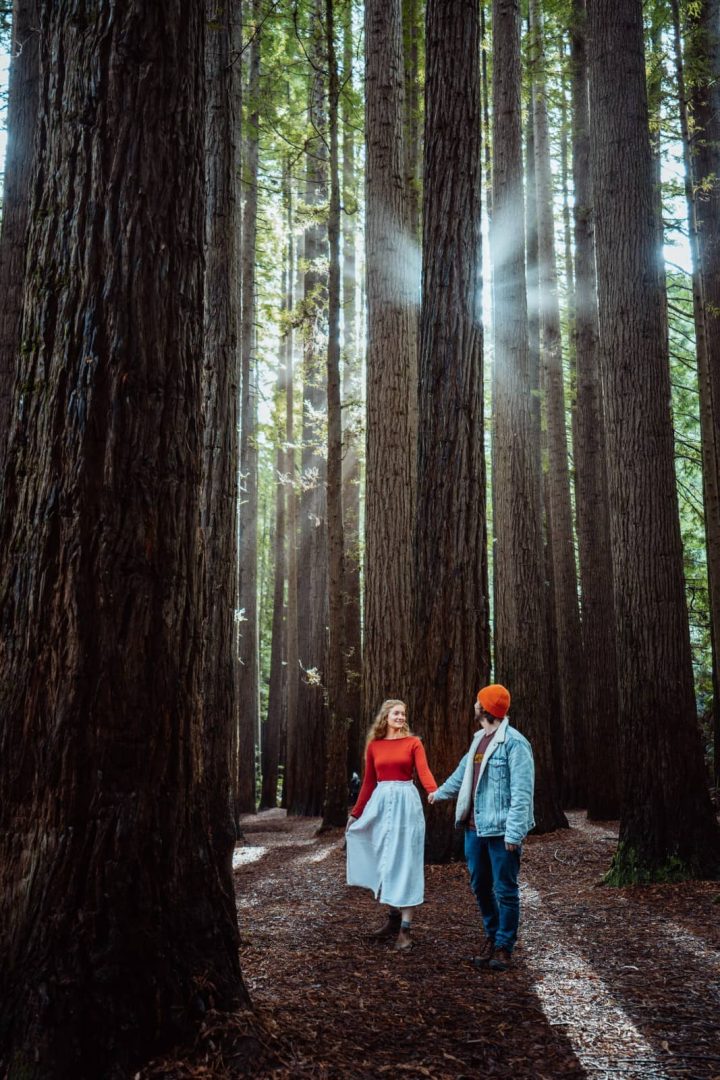
- Explore the Redwood Forest
- Go to the Cape Otway Lightstation if you’re up for a 1.5 detour with epic views
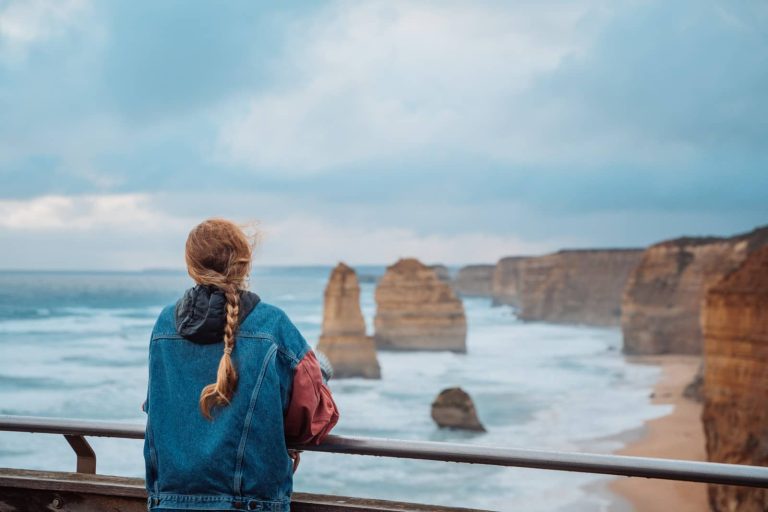
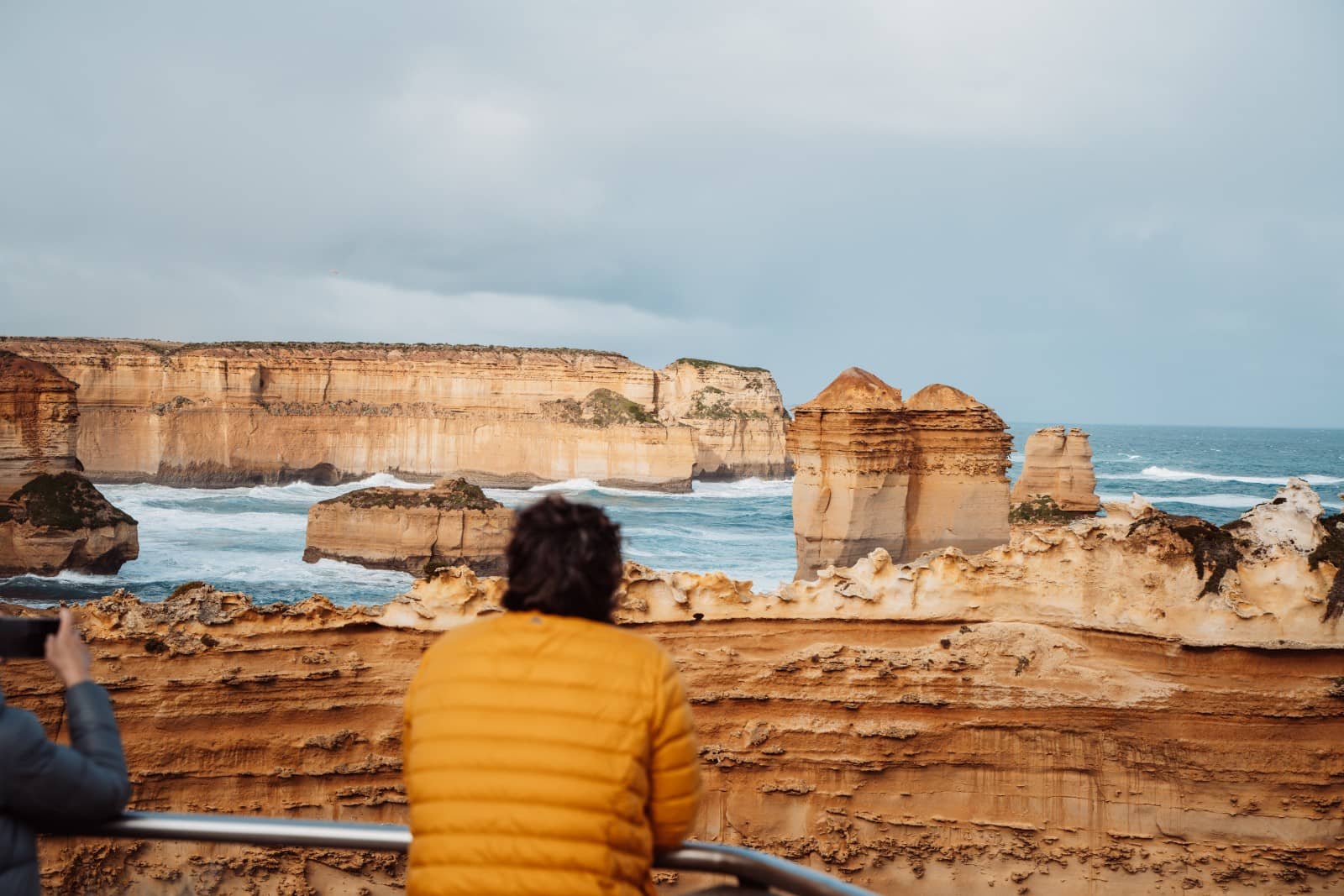
- Check out the big-ticket sights – Gibson Steps, Twelve Apostles, Razorback, Loch Ard Gorge.
- Stay in Port Campbell, here are our recommendations.


California Redwoods, Great Otway NP Hopetoun Falls
Day 3: Port Campbell to Mount Gambier (2h45m, 230km)
Start your morning with a few more Great Ocean Road icons – London Bridge, The Grotto, Bay of Martyrs, and Bay of Islands.
These are all quick stops, but honestly, they’re just as impressive as the Twelve Apostles and way less crowded!
Then, continue your way to Mt Gambier. You’ll be crossing from Victoria into South Australia today, so don’t forget these:
- There are strict rules about what you can bring across the border (like no fruits or veggies). Check this website before you pack your snacks.
- Turn your clocks back 30 minutes.
On the way to Mt Gambier, we recommend a couple of stops:
- Warrnambool. Good for a coffee break or to stretch your legs along the foreshore. If you’re into history, Flagstaff Hill Maritime Village is worth a look.
- Heywood. Not huge, but it’s a handy spot for fuel and a quick bite before you hit the SA border.
Mount Gambier is incredible and there’s heaps to see! That’s why we recommend spending 2 nights there to explore.
Where to stay in Mount Gambier
There’s a stack of places to stay, whether you’re after a hotel, campsite, or something a bit different. Here are some recs:
- Mount Gambier Hotel is right in the centre, with comfy rooms and easy access to pubs and shops.
- Nightcap at Federal Hotel is another solid pick, good for couples or families, and you can walk to most things in town.
- Pine Country Caravan Park is a bit out of town, so it’s quieter and has a relaxed feel. It’s great if you want a break from city noise.
- Kilsby Sinkhole has accommodation too, perfect if you want to make the most of the sinkhole, but it’s a fair way out of town. We reckon it would be nice to spend one night there, though.
- The Old Mount Gambier Gaol is a quirky one, it’s a former prison!
Day 4: Mount Gambier
You’ve got a full day to check out Mount Gambier, and there’s plenty to keep you busy! Here are some of our favourite things to do there:
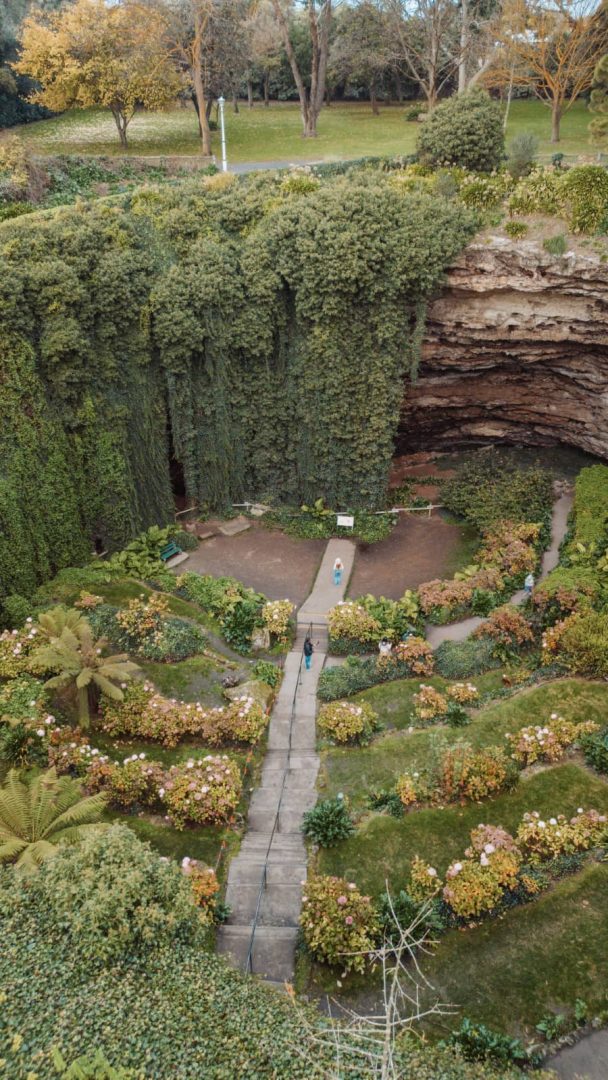
- Umpherston Sinkhole (Balumbul), an impressive garden within a sinkhole! Possums come in the evening to be fed by visitors, bring some fruit if you’re keen.
- Ewen Ponds, it’s a short drive and one of the clearest places you’ll ever snorkel. You need a permit and must book ahead, but it’s unreal how beautiful it is.
- Kilsby Sinkhole, also just outside town and famous for its crystal-clear water. You’ll need to book a snorkel or dive tour (not cheap, but unforgettable).
- Centenary Tower, a short but steep walk for the best views over the city and lakes. There’s a small entry fee if you want to climb the actual tower, but the lookout itself is free.
- The Blue Lake, famous for its wild colour change in summer. You can walk the loop track for different views, and it’s totally free.
- Little Blue Lake is a bit out of town but worth the drive for a swim. It’s free, but the water is freezing even in summer!
Day 5: Mount Gambier to Adelaide (4.5h, 435km)
It’s a long drive today, so get an early start and fuel up before you leave Mount Gambier! The road is mostly flat and easy, but it can get a bit dull, so line up a good playlist or podcast.
Here are a few spots worth pulling over for on the way:
- Naracoorte, famous for its World Heritage-listed caves.
- Keith, for classic country town vibes. There’s a giant Land Rover on a pole, for a quirky photo!
- Tailem Bend, handy to stretch your legs by the Murray River.
- Mount Barker, just before Adelaide. It has a proper supermarket and some decent cafés if you want a late lunch. It’s also a good spot to stock up before you hit the city.
The last stretch into Adelaide can get busy with traffic, especially in the afternoon.
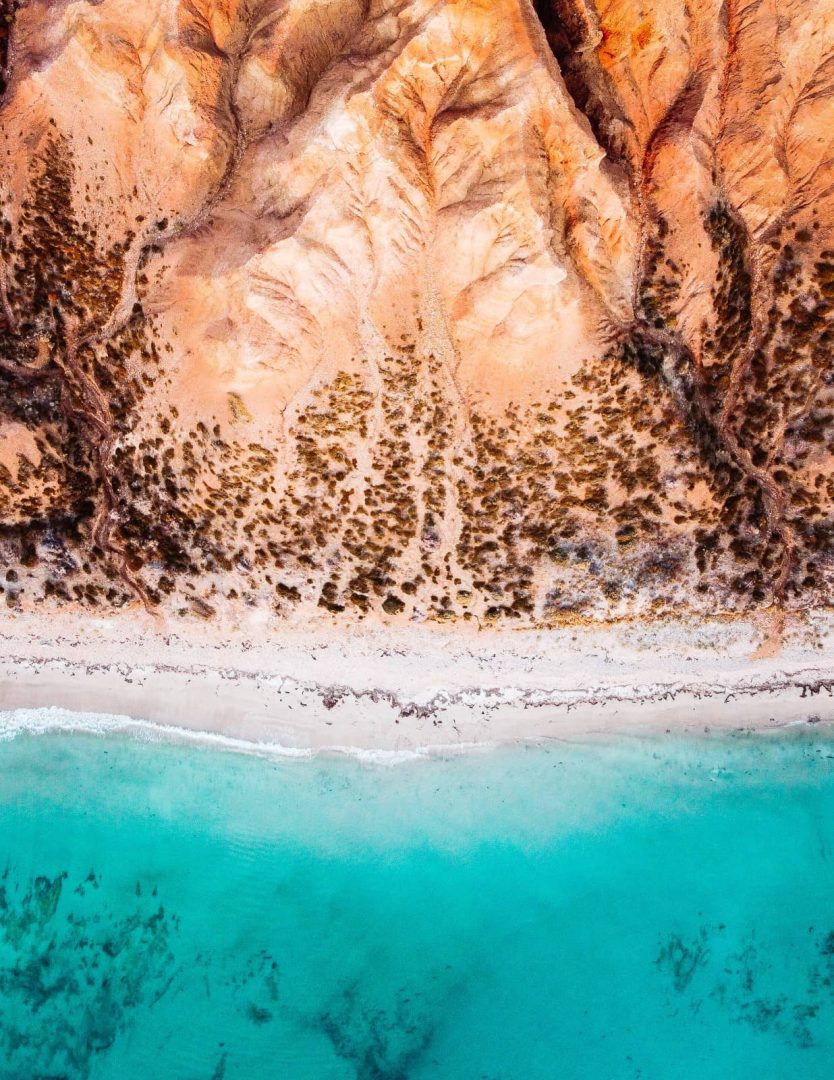
Where to stay in Adelaide?
If you want to be right in the thick of things, the Adelaide CBD is the way to go. The Mayfair Hotel is a bit fancy, while the Adelaide Riviera Hotel is more budget-friendly but still comfy.
Prefer the beach? The Lakes Hotel and Atlantic Tower Motor Inn both put you close to the sand, and you’ll still have easy access to the city.
If you’re travelling with a van or just like the vibe of a caravan park, Aspen Holiday Park is super handy to the city. Discovery Parks West Beach and the one in Adelaide Beachfront are both solid picks if you want to wake up near the water, too.
Day 6-10: Adelaide & Kangaroo Island
Adelaide has plenty to do, which is why this itinerary includes 3 days in the city and 2 days in the nearby Kangaroo Island!

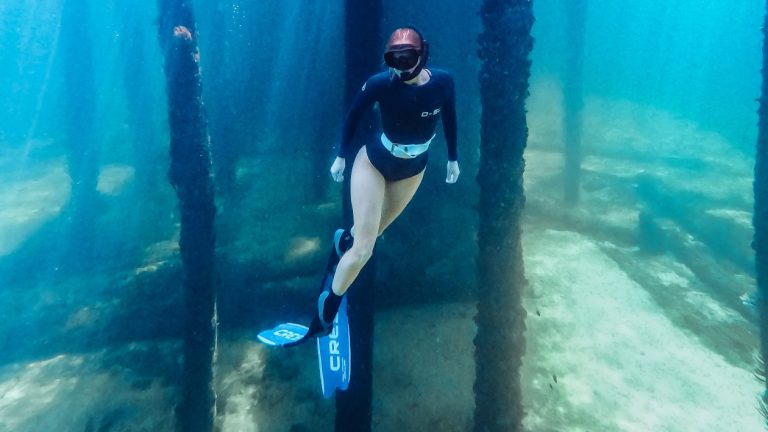
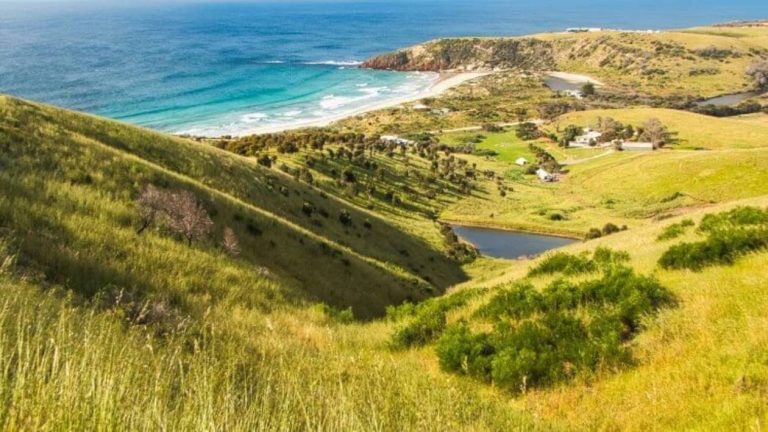
Kangaroo Island Port Noarlunga jetty and reef

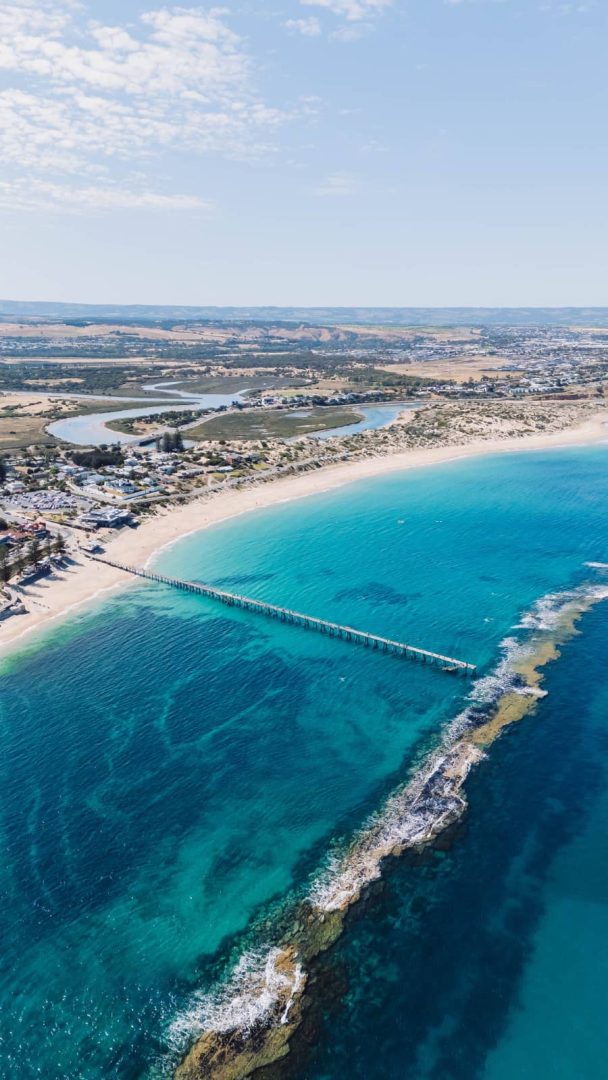
Here are some ideas on what to do in Adelaide:
- Explore the beautiful Botanic Gardens
- Head to Glenelg for a beach swim and sunset drink.
- Snorkel at Port Noarlunga Reef and see if you can spot a leafy seadragon.
- Go for a surf at Southport, Seaford Reef, or Middleton Beach, all solid picks!
- Head out to Barossa Valley or McLaren Vale for wine-tasting
- Grab a bite and a coffee at the Adelaide Central Markets.
- Wander down North Terrace and check out a few museums or galleries.
Here are some top-rated tours in Adelaide if you’re keen:
And definitely don’t miss Kangaroo Island if you’ve got the time!
It’s a bit too far for a day trip from Adelaide, but if you can spare a couple of days, it’s totally worth the detour. Here’s what to do with 2-3 days there:
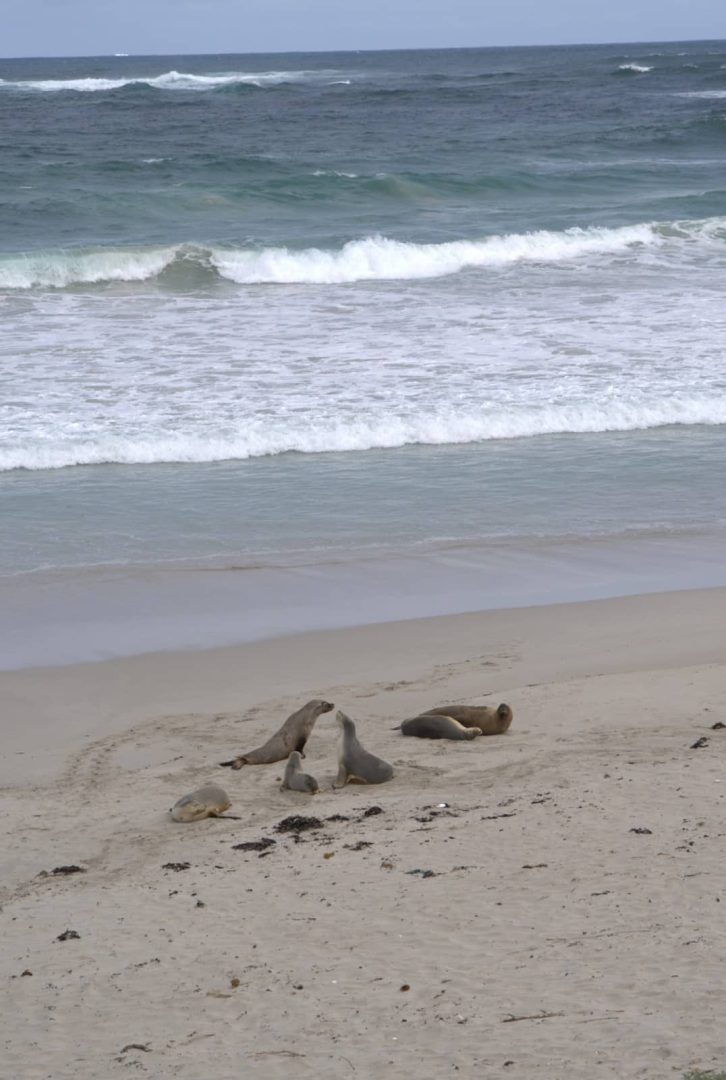
- Swing by Seal Bay Conservation Park to see sea lions up close. There’s an entry fee, but it’s 100% worth it.
- Spend a day beach-hopping between Snelling Beach, Stokes Bay, and Emu Bay, they’re all stunning.
- Check out Remarkable Rocks and Admirals Arch for some epic coastal views.
- Keep an eye out for platypuses, seals, echidnas, and possums, the island is packed with wildlife.
- Grab the famous King George whiting burger from Vivonne Bay General Store, it lives up to the hype.
Day 11: Adelaide to Port Augusta (3.5h, 320km)
Leaving Adelaide, you’ll see the drive is mostly flat and straight, but the landscape starts to dry out as you head north.
There aren’t heaps of stops, but here are a couple worth pulling over for:
- Port Wakefield. Good spot for a bakery brekkie or a quick coffee. There’s a nice foreshore if you need to stretch your legs.
- Port Pirie. If you’re keen for a proper break, this town has a waterfront, a few old pubs, and a decent info centre if you want to learn about the area’s industrial history.
Fuel up before you leave Port Pirie, there’s not much between here and Port Augusta, and prices can jump.

The last stretch into Port Augusta is pretty dry and dusty, so don’t expect much scenery. You’ll know you’re getting close when you see the Flinders Ranges pop up on the horizon!
Once you roll into Port Augusta, you’ll think there isn’t much to do, but you could easily spend 2-3 days checking out the area!
Our guide for things to do in Port Augusta will give you some ideas.
Where to stay in Port Augusta?
Port Augusta has quite a few places to crash, since most people are just passing through. You’ll find everything from caravan parks to motels and apartments.
Here are some good ones:
- Discovery Parks Port Augusta is our pick if you’re rolling in with a caravan or camper. It’s got all the basics, and you won’t have to drive far off the highway.
- Pampas Motel is a good option if you’re watching your budget. It’s clean, comfy, and doesn’t sting the wallet too much.
- Majestic Oasis Apartments are worth a look if you want your own space to cook and spread out.
Day 12: Flinders Ranges full day
You could easily spend a week in the Flinders Ranges, so definitely do so if you can! Even 2-3 days would be incredible.

But you can still see some highlights in a day. They’re a short drive from Port Augusta so don’t miss the opportunity. Here are some things we recommend doing:
- Wilpena Pound. This is a massive natural amphitheatre with walking trails for all fitness levels!
- Dutchman’s Stern hike. If you’re up for a longer walk, this one’s got sweeping views and fewer crowds than Wilpena, check this guide for more info.
- Wangara Lookout. Short walk, big views. You’ll get an epic view over Wilpena Pound without too much effort.
- Bunyeroo Gorge. The drive-in is unsealed but suitable for 2WD in the dry season. It’s worth it for the classic Flinders scenery and a good chance to spot wildlife.

You’ll need a park pass for most of these, get it here. Also, bring plenty of water! It gets hot and dry, even in winter. The roads can be rough, so take it slow if you’re not in a 4WD.
Day 13: Port Augusta to Coober Pedy (540 km, 5h 30m)
Big drive today, so get an early start and settle in for a long one. There’s not much shade or phone reception, so keep your water topped up and don’t skip the fuel stops.
Here are a few spots worth pulling over for:
- Woomera. A quick detour with a weird, ghost-town feel and a bunch of old rockets and space gear from its missile-testing days.
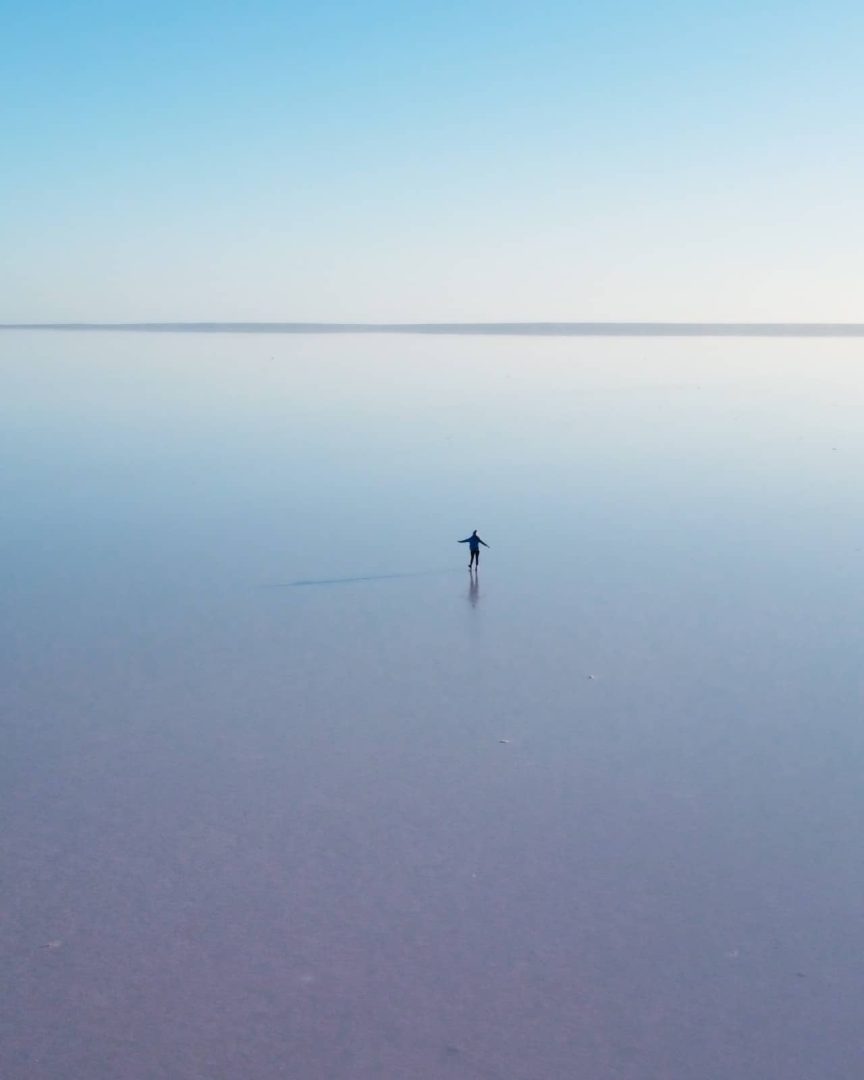
- Lake Hart. This salt lake is a classic Outback photo stop, especially if there’s been rain and the water’s shimmering. There’s free camping here if you want to break up the drive or just wake up to a wild view.
- Spud’s Roadhouse and Glendambo Roadhouse. Both are good for fuel, snacks, and a stretch. Glendambo has basic rooms if you’re over the drive.
There are a few other rest stops along the highway, but don’t expect much more than a loo and a bin.
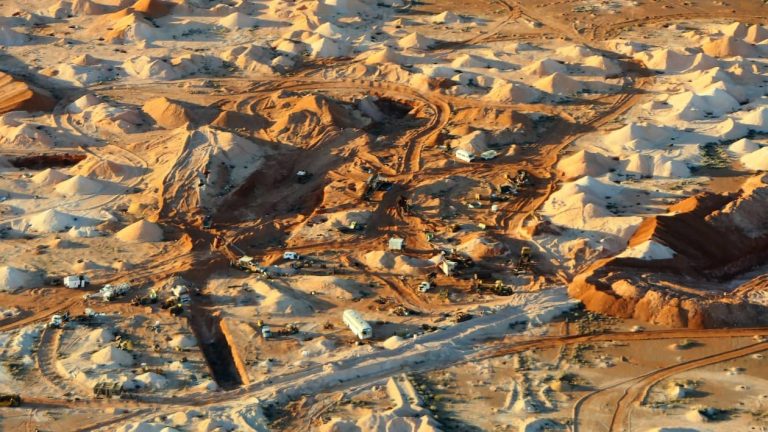
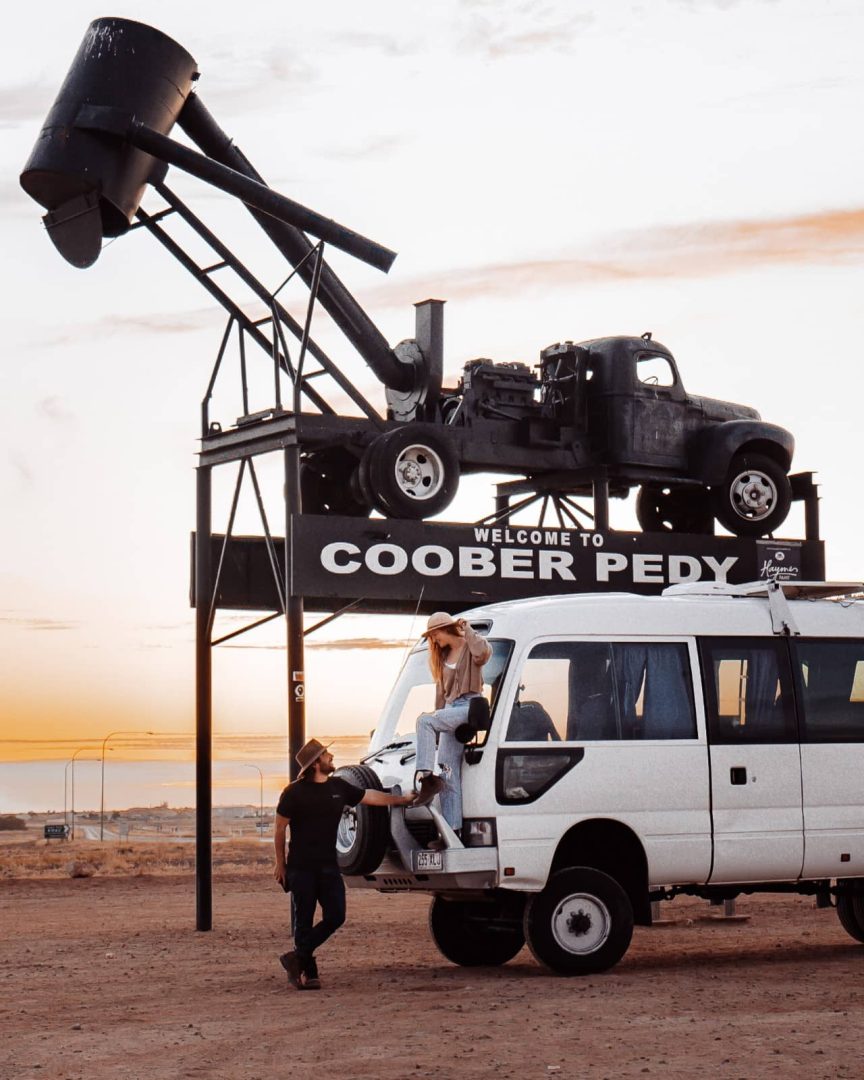
Once you roll into Coober Pedy, you’ll understand why it’s so iconic. It feels like you’ve landed on another planet.
The town is famous for its opal mines and underground homes, and you’ll be staying here for two nights to explore it!
Where to stay in Coober Pedy?
If you’re up for something different, try an underground hotel. It’s the classic Coober Pedy experience and a clever way to escape the brutal Outback heat!
The Underground Motel is a favourite. The rooms stay cool and quiet, but be warned, it gets pitch black when you turn the lights off. It’s a bit strange at first, but worth it for the experience.
If you’re not keen on sleeping underground (or get claustrophobic), there are plenty of above-ground options.
The Opal Inn covers all bases with hotel rooms, motel units, and a caravan park
Just make sure to book ahead if you’re visiting in peak season. Places fill up fast, especially the underground ones.
Day 14: Coober Pedy
Today you’ll spend the whole day exploring Coober Pedy! This town is unlike anywhere else and it’s a good spot to recharge after all those hours on the road.

Here are some things to do while you’re there:
- Head out to Kanku-Breakaways Conservation Park for wild, colourful landscapes you won’t see anywhere else. The views are unreal, especially at sunrise or sunset, but bring water and don’t expect much shade.
- Check out the Umoona Opal Mine and Museum. It’s a proper look at the town’s underground life and you’ll learn heaps about opal mining (plus it’s cool down there, literally).
- Have a go at fossicking for opals in the public noodling area. You probably won’t strike it rich, but it’s fun to give it a crack and see what you find.
- Visit the Serbian Orthodox Church, which is carved right into the rock. It’s quiet, beautiful, and a good break from the heat.

Coober Pedy’s underground spots are a lifesaver when it’s roasting outside, so don’t rush. Take your time and enjoy the weirdness!
Day 15: Coober Pedy to Erldunda (486 km, 5 hours)
You’ll be crossing from South Australia into the Northern Territory today, so check this guide to see what you can and can’t bring over the border.
The drive is classic outback – flat, red, and wide open. There’s not much in the way of towns or shops, so make sure you’ve got a full tank and plenty of water before you leave Coober Pedy.
There are a few rest stops along the Stuart Highway if you need to stretch your legs or have a snack, but don’t expect much.
Once you hit Erldunda, you’ll find the Erldunda Roadhouse. It’s pretty much your only choice for a proper bed tonight. If you’re camping, there are a few spots nearby for a bush-style setup.
Day 16-21: Explore the Red Centre (Uluru, Kata Tjuta, Kings Canyon, West MacDonnell Ranges)
If you’ve already ticked off the Red Centre, drive the 2 hours from Erldunda to Alice Springs and jump to Day 22.
But if you haven’t, this is your chance for the classic Red Centre detour! Most of it is 2WD-friendly and there are some fun 4WD detours if you’re keen.

This is the Red Centre itinerary we’d do for the next few days:
Day 16: Erldunda to Yulara (250 km, 2.5h)
Yulara is the closest town to Uluru, about half an hour away, and it’s where you’ll find all the accommodation and fuel.
Keep an eye out for Mount Conner on the way. There’s a lookout and it’s worth a quick stop! It looks a lot like Uluru, which is why it’s called “Fooluru”. We got tricked the first time too LOL.
Once you roll into Yulara, go to the Uluru-Kata Tjuta Cultural Centre if it’s open (7am to 6pm, free entry last time we checked).
You’ll truly understand why Uluru is so significant and it adds another layer to the visit.
You’ll be spending 3 nights in Yulara, and all the accommodation here is run by Ayers Rock Resort.
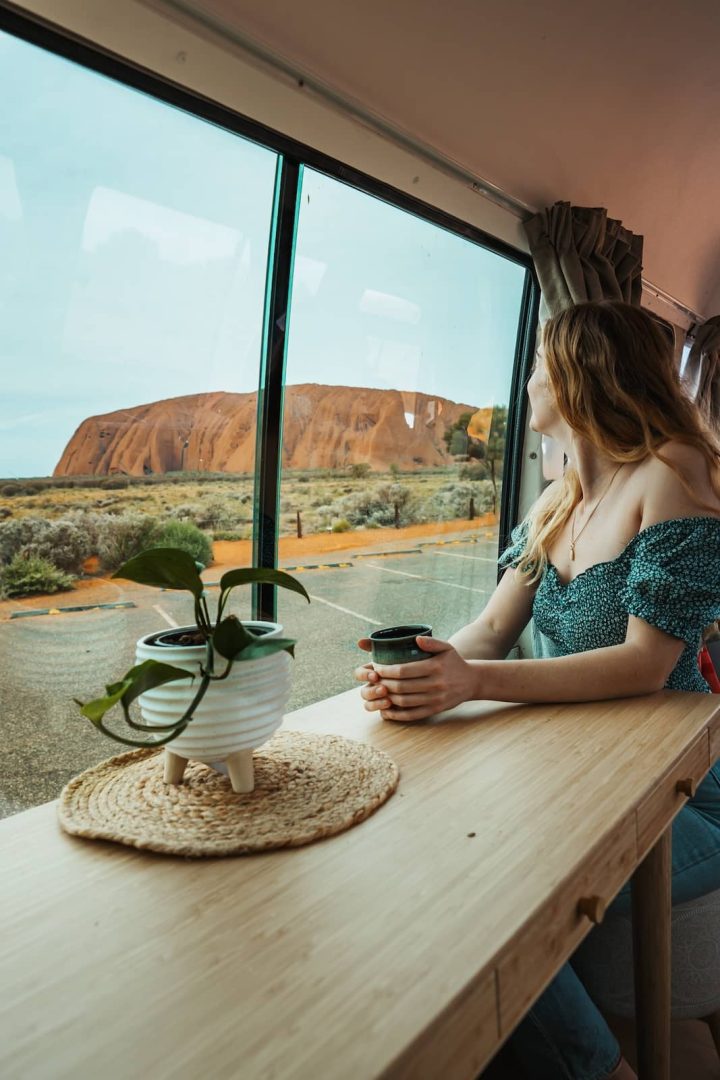
The Ayers Rock Campground is the pick for campers and van travellers. It’s the closest you’ll get to Uluru, and you’ve got shops and facilities nearby, which makes life a lot easier out here.
We found out there’s an “overflow” campground that’s not advertised, but if you call and ask, they might squeeze you in (they did for us).
Day 17: Uluru
Set your alarm early, watching the sunrise over Uluru is one of those things you’ll remember forever. There’s a lookout and it can get a bit busy, but it’s worth it.
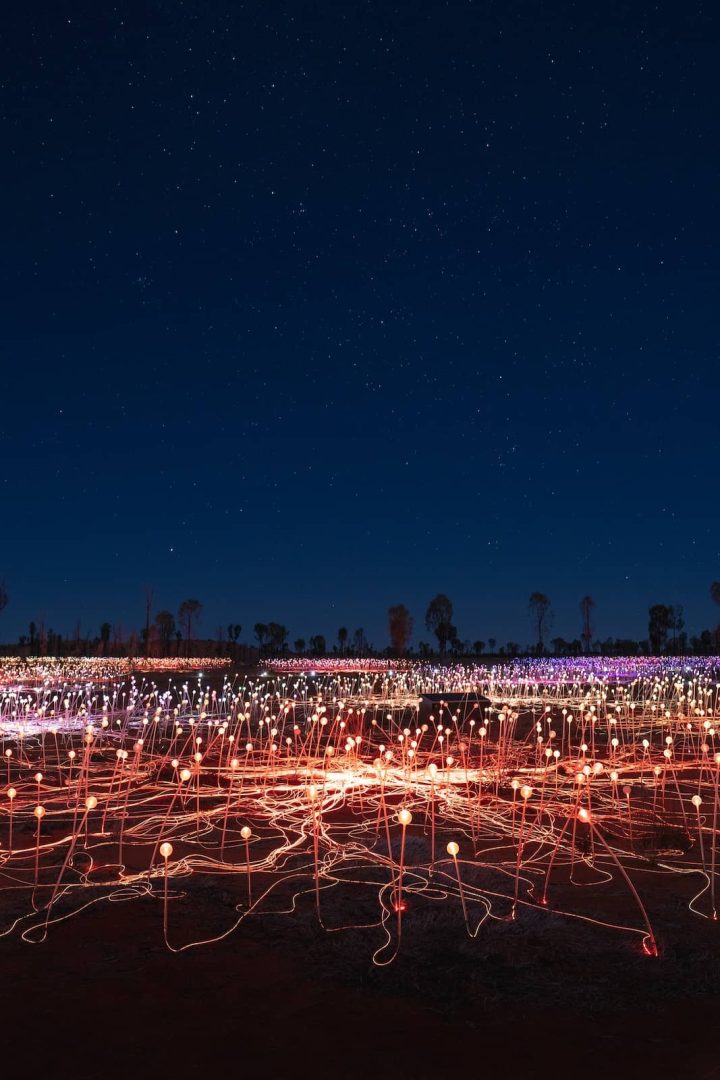
Another option (and our fave if you ask us) is to book the Field of Lights sunrise tour.
It was SO impressive to see 50,000 lights flicker in the desert as the sun came up! It’s a bit pricey, but it’s not something you’ll find anywhere else.
Then, here are some things to do on this day:
- Visit the Uluru-Kata Tjuta Cultural Centre if you couldn’t go yesterday. Seriously, don’t skip it! There’s heaps to learn about the traditional owners, and you’ll get way more out of your visit if you understand the significance of what you’re seeing.
- Walk or cycle the full 10km base track around Uluru. It’s mostly flat but can get hot and dusty, so bring water and start early. We hired bikes (book ahead, they go quick) and took our time.

- Treat yourself at the Sound of Silence Dinner. Think sunset drinks, a bush tucker-inspired three-course meal, and Dreamtime stories under the stars. It’s on the formal side, so dress accordingly and book well ahead.
Honestly, we wish we’d done even more tours while we were there. Uluru is incredible and you might only get there once, so make the most of it!
Here are some top-rated tours in Uluru if you’re keen:
Day 18: Katja Tjuta / The Olgas
Today is all about Katja Tjuta (also called The Olgas), which means “many heads” in the local language. These massive domes are just as impressive as Uluru but in a different way.
You can only access the area via two main hikes, both worth your time:
- Walpa Gorge Walk (2.6km, about an hour): This one’s short and sweet, taking you right between the domes. The scale is wild up close, and it’s usually less busy than Uluru’s base walk.
- Valley of the Winds Walk (7.4km full circuit, allow 3-4 hours): If you’re up for it, this is the best way to see Katja Tjuta. Go early, there’s barely any shade and it gets brutally hot by mid-morning. The views are unreal and you’ll feel the ancient energy of the place.
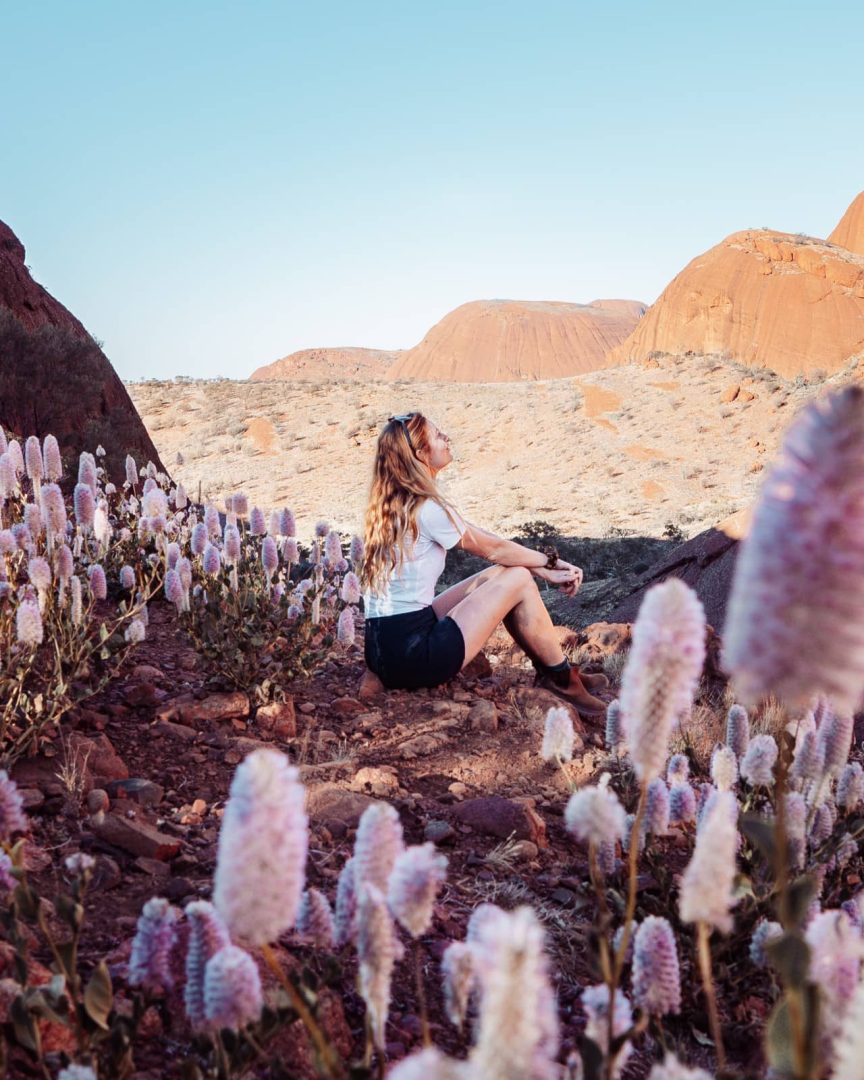
Please stick to the trails, out of respect for the local Anangu people, the Traditional Owners. This area is sacred to them.
There’s also a dune viewing area if hiking’s not your thing. It’s a short walk to the lookout, and it’s particularly impressive at sunrise or sunset.
Bring plenty of water, a hat, and sturdy shoes. No need to book the walks, but check for trail closures if it’s hot (they shut the longer walk after 11 am if temps hit 36°C).
Day 19: Yulara to Petermann (3h, 305km)
Today you’ll head to another highlight of the Red Centre, Kings Canyon! Petermann is the closest town, so you’ll spend the night there.
The drive is pretty uneventful, so grab snacks and fuel before you leave Yulara.
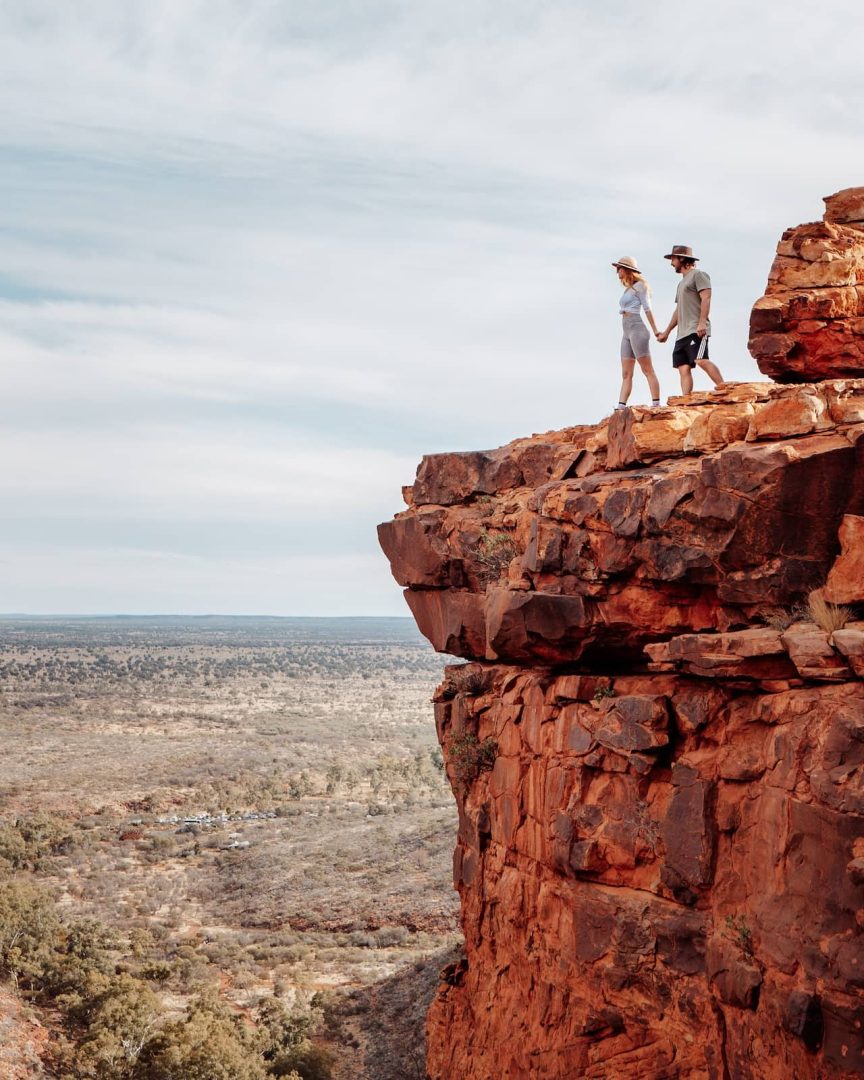
Google Maps might try to send you down random dirt tracks, so just stick to the Lasseter Highway and Luritja Road, both are sealed.
About halfway, consider stopping by the Karrke Aboriginal Cultural Experience. It’s a small, family-run tour that gives you a proper insight into local culture. We didn’t do it but it looks incredible!
Once you reach Petermann, here’s what you can do this arvo:
- Check out the Light Towers art exhibition. It’s a trippy light installation from the same artist as the Field of Lights. Tickets here.
- Head to the Luritja Sunset Viewing Platform. The views over the canyon are unreal at sunset, and you can have some drinks while you’re at it.
Now, there are only two spots to stay near Kings Canyon, so options are pretty limited. Kings Canyon Resort is the closest, just a ten-minute drive to the canyon itself.
If you don’t mind being a bit further out, Kings Creek Station is about 25 minutes away. It’s a working cattle station with a more laid-back vibe.
Neither is cheap, but you’re paying for the location.
Day 20: Kings Canyon
Today you’ll tackle the Kings Canyon Rim Walk.
It’s a 6km loop and takes 4-5 hours, so start early, you don’t want to be racing the sun like we did! The heat and lack of shade make this a tough one if you leave it too late.
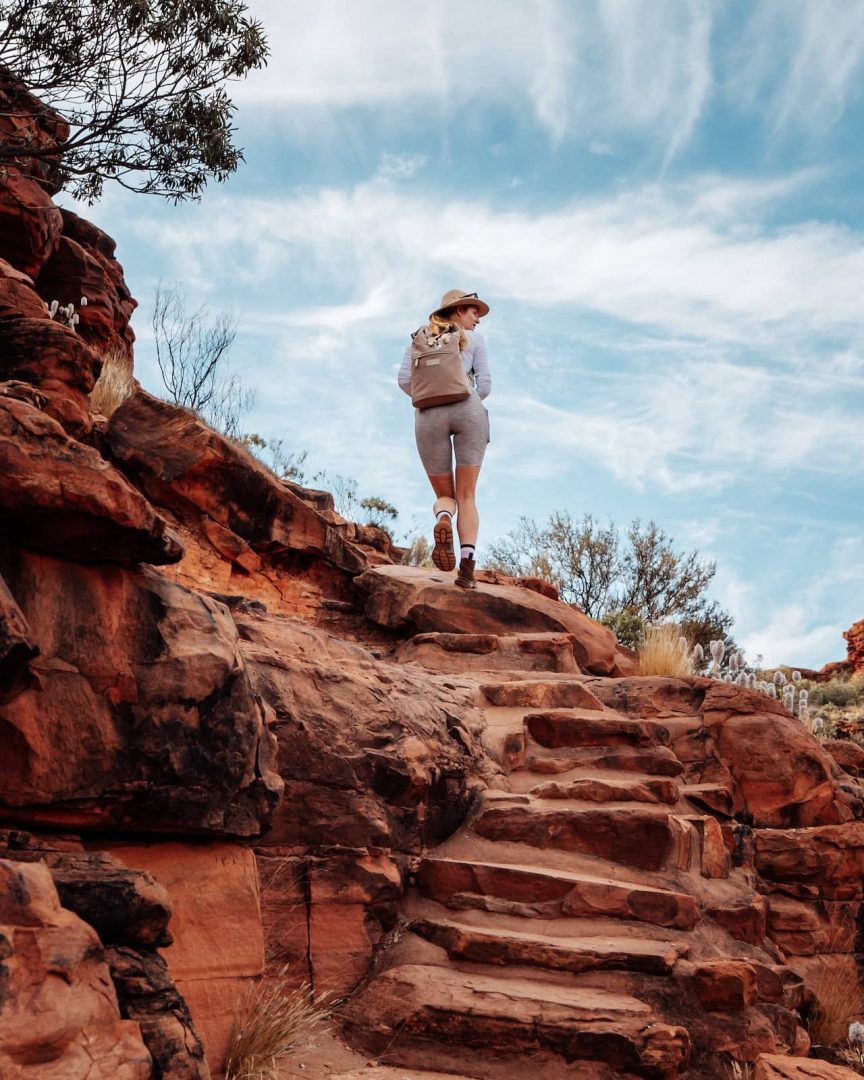
Here are some epic things you’ll see on the hike:
- The Stairway to Heaven, the first section of the hike and a brutal one TBH, but it’s over quick and the views are worth every sweaty step. After that, the track levels out and you can catch your breath.
- Priscilla’s Crack, the famous split in the rock from that movie, and a great photo spot.
- The Lost City, wild, beehive-shaped domes that look like something from another planet.
- The Garden of Eden, a lush waterhole down a side track, perfect for a break (no swimming though).
Bring heaps of water, a hat, and snacks, there’s no shade or facilities once you’re up there. The track is rocky and uneven, so good shoes are a must.
After the hike, grab a meal at the resort or campground and get an early night. Tomorrow is a big one!
Day 21: Kings Canyon to Alice Springs (5h, 475km)
If you’re in a 2WD, you’ll need to backtrack to Ghan (a bit north of Elrdunda) and then head north to Alice Springs. It’s not tricky, just a long stretch of bitumen.
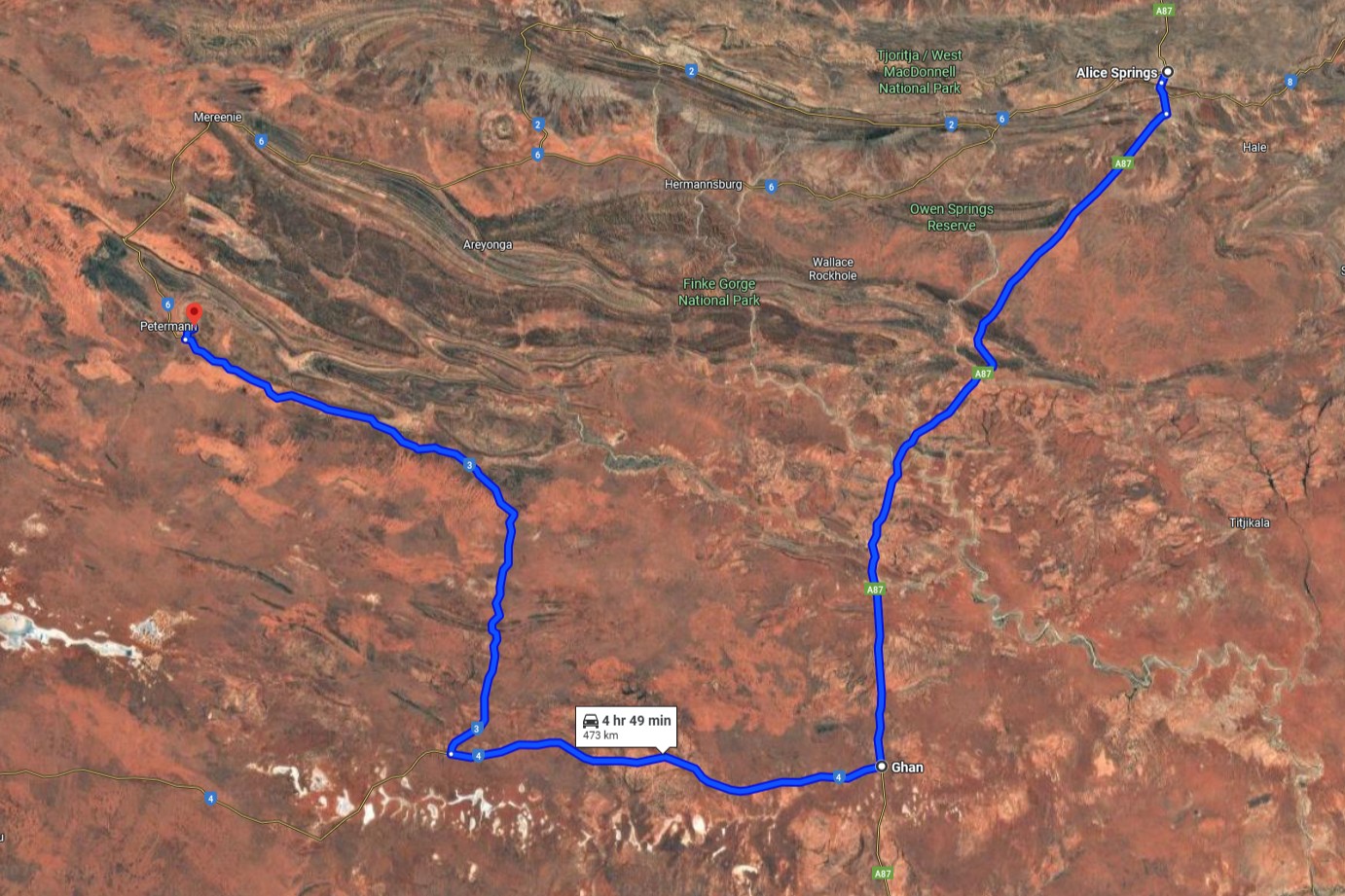
If you’ve got a 4WD, you have two options:
- Drive to Alice Springs via the Ernest Giles Road. It’s a 4-hour drive, consider stopping by the Henbury Meteorites Conservation Reserve on your way to Alice!
- Finish the Red Centre Way. Add an extra day and drive north towards Glen Helen and the West Macs, via the Mereenie Loop (you need a permit for that).
We recommend the latter!
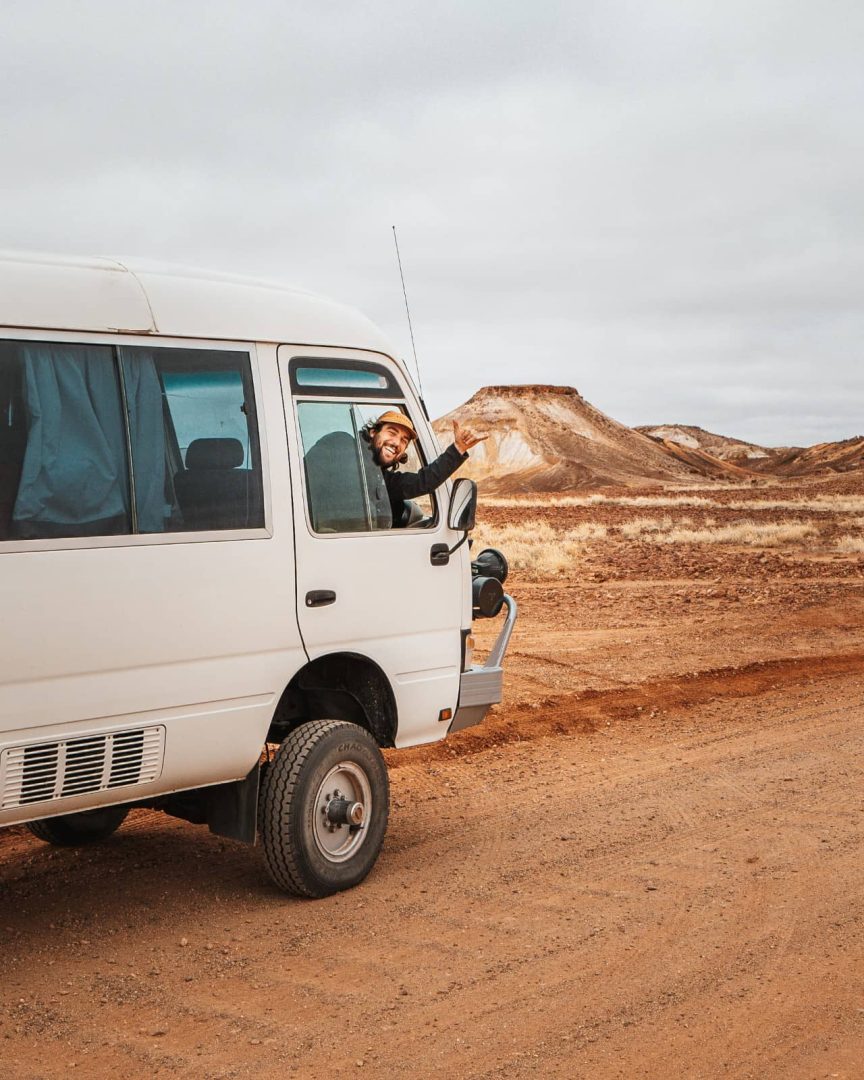
First, you’ll drive from Petermann to Glen Helen (3-4 hour drive) staying at one of the many campgrounds in the area.
You’ll drive an unsealed section of the Larapinta Drive to get there, and you need the “Mereenie Loop Permit” for that.
Then, you’ll go from Glen Helen to Alice Springs via the West Macs (2-3 hour drive). There are heaps of things to see on the way – Ochre Pits, the Standley Chasm, Simpsons Gap…

Standley Chasm Ellery Creek Big Hole
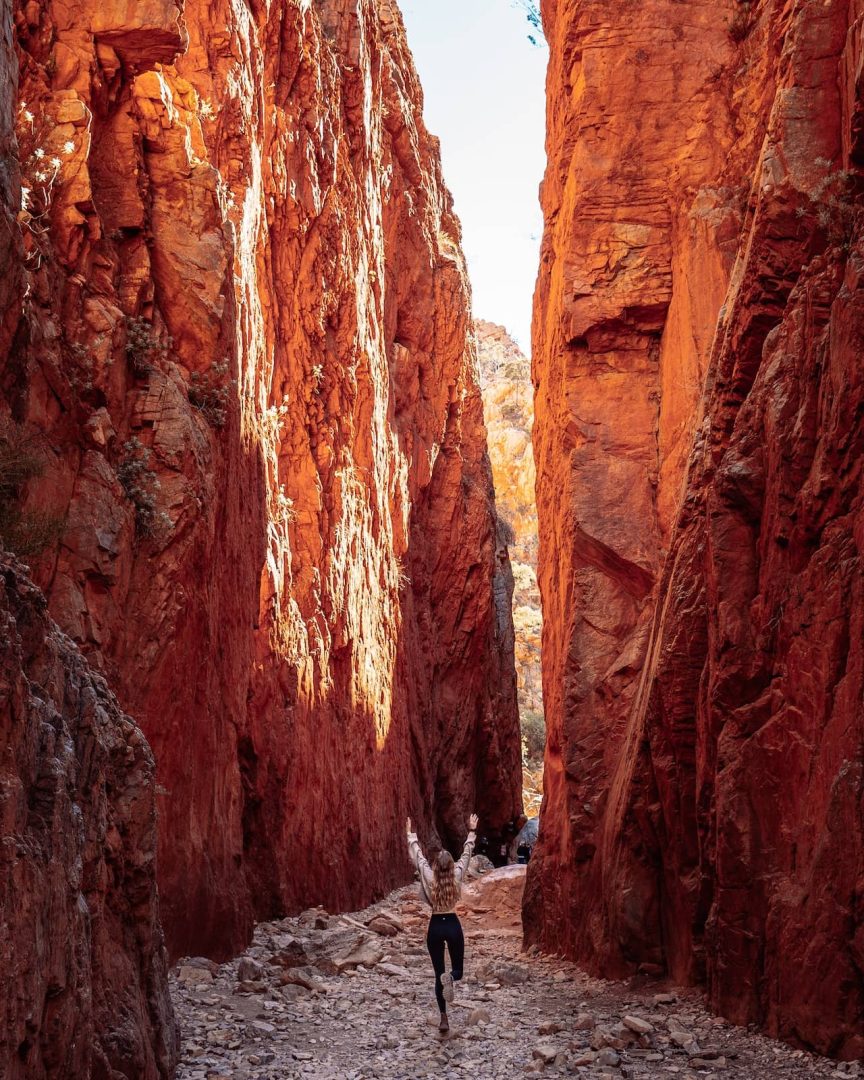
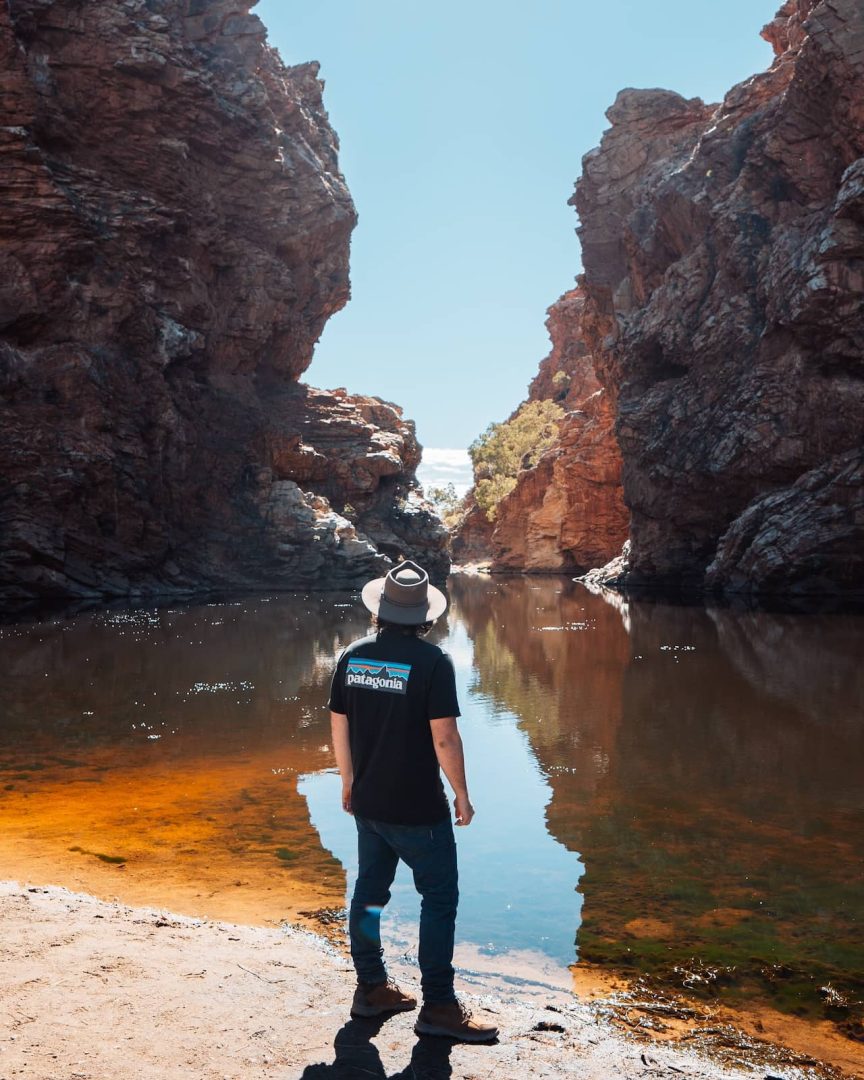
Take your time and enjoy the drive! Once you roll into Alice Springs, don’t stress too much about the bad reputation.
Just use common sense: lock your car, don’t wander around late at night, and avoid places like Gap Road and Todd Mall after 10pm. If you’re out late, grab a cab.
Where to stay in Alice Springs?
Alice Springs has a decent mix of places to stay, whether you’re going in with a van or you’re after a comfy bed. It’s the biggest town in the Red Centre, so you won’t be short on options!
The local Discovery Parks is a solid pick if you’re camping or travelling in a van. It’s got all the basics covered, with good facilities, a pool, and it’s not far from town.
If you’re keen to splurge a bit, the DoubleTree by Hilton is one of the fancier hotels in town.
There are also a few motels and smaller hotels dotted around, but prices can jump up during peak season, so book ahead if you can.
Day 22: Alice Springs
After yesterday’s big drive, take it easy and check out a few of Alice’s best spots:
- Walk up ANZAC Hill for the best views over town, especially at sunrise or sunset. It’s a quick climb and you get a proper sense of the outback from up top.
- Alice Springs Desert Park is a good way to get your head around the local wildlife and plants.
- If you’re here in April, don’t miss Parrtjima, a free 10-day festival! We’ve never been but we’re told it’s epic, with art installations, live music, and talks.
There’s plenty more to do if you’ve got the energy, though! Check out our full list of things to do in Alice Springs here.
Day 23: Alice Springs to Devils Marbles (4 hours, 410 km)
Today you’re heading north to Devils Marbles (Karlu Karlu), one of those spots that’s way better in real life than it looks in photos!

The drive is long but dead easy, just follow the Stuart Highway. There’s not much on the way, other than a couple of roadhouses if you need fuel or a pie.
Once you arrive, you’ll see the boulders scattered everywhere. Some are massive, and they look like they’ve been plonked there by a giant.
It’s a top spot for a wander, especially at sunrise or sunset when the rocks change colour.
Camping there is basic but worth it if you want the place to yourself after the day-trippers leave. You’ll need cash for the campground, and there’s no phone reception, so plan ahead!
We recommend doing this if you can, the night sky will blow your mind.
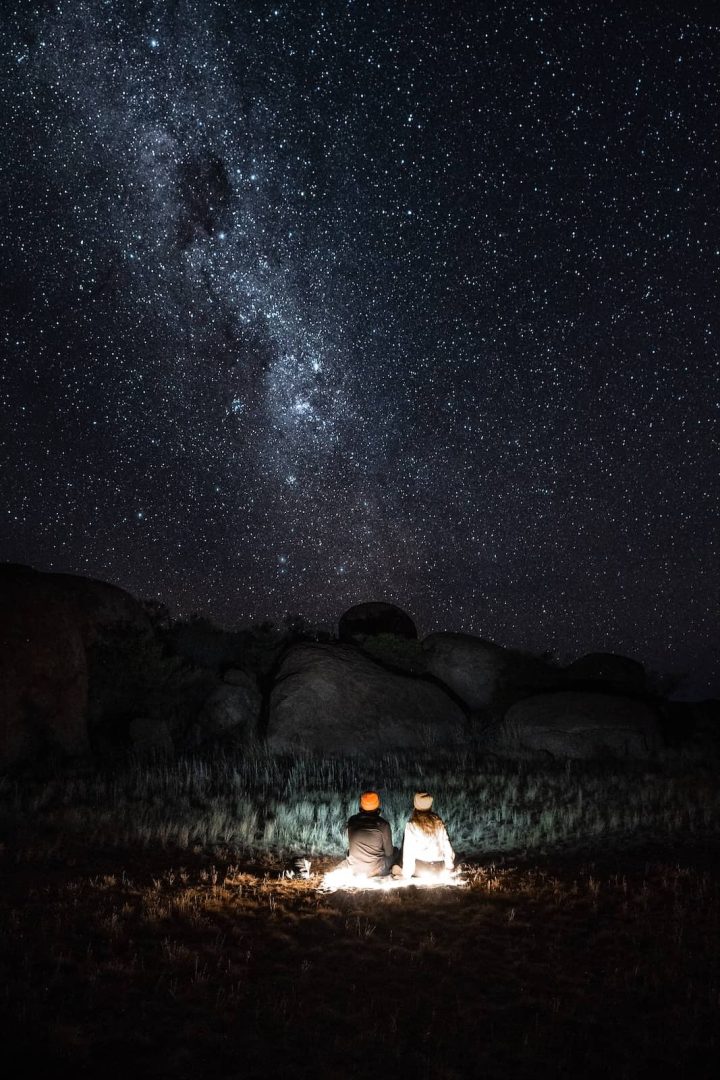
If you want a proper bed and a hot shower, Devils Marbles Hotel is about 15 minutes down the road. It’s nothing fancy, but it does the job after a long day.
For a few more comforts, Tennant Creek is an hour away and has more options. The Safari Lodge Motel is reliable and usually pretty clean.
We reckon the campground is worth it if you’re up for a bit of roughing it, but the other spots are handy if you need a break from the dust.
Check out our Devils Marbles guide for all the details!
Day 24: Devils Marbles to Daly Waters (5h 15m, 500 km)
It’s a long, straight drive today, and there’s not much between Devils Marbles and Daly Waters.
If you didn’t stay in Tennant Creek last night, it’s worth a quick stop.
The Battery Hill Mining Centre might be pretty interesting if you’re into gold rush history. But otherwise, Tennant Creek is a practical pit stop for fuel, groceries, and a stretch.
Back on the highway, you’ll pass endless scrub and the odd herd of cattle, classic Northern Territory driving. Keep an eye out for road trains!
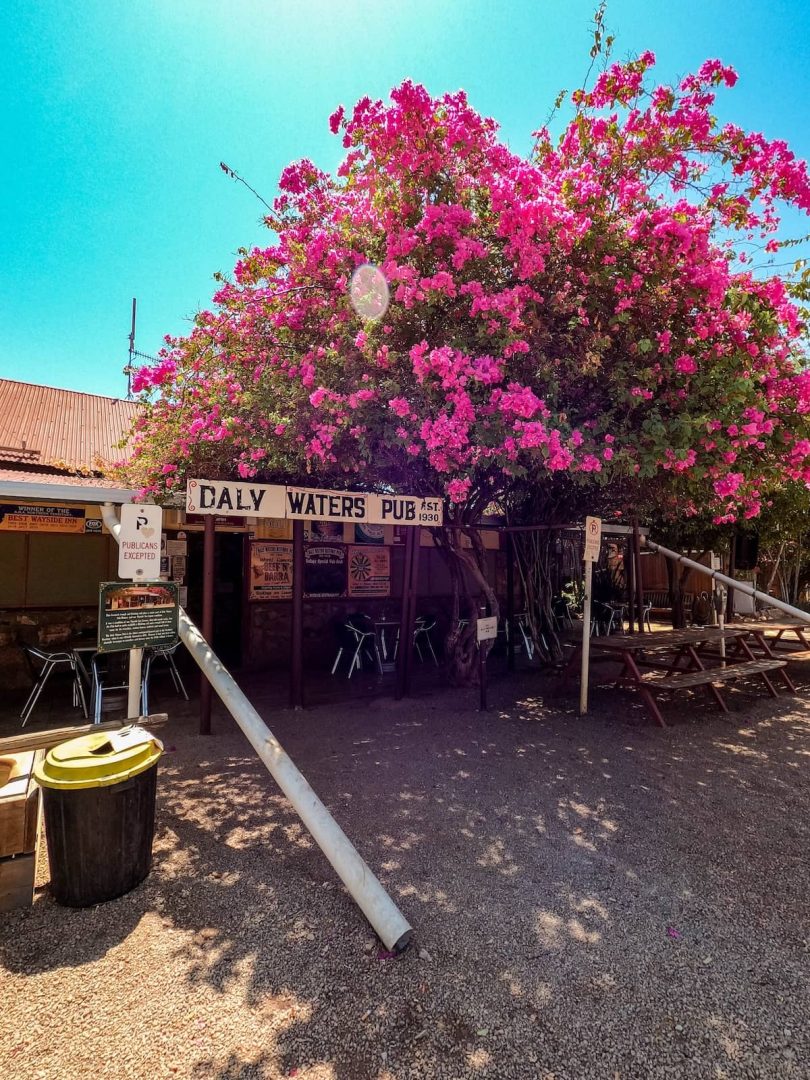
Once in Daly Waters, you’ll see it’s all about the pub.
It’s a fun, quirky place with walls covered in bras, banknotes, and all sorts of random traveller offerings!
The food is hearty, the beers are cold, and there’s usually live music out the front.
Stay at the pub’s caravan park. It has powered and unpowered sites, plus some decent cabins if you want a break from the van. It gets busy in peak season, so check availability here.
Day 25: Daly Waters to Katherine (3 hours, 270 km)
You’ll notice the scenery starts to shift on your way to Katherine. There’s less red dirt, more green, and the air gets a bit stickier as you head north.
If you’re keen for a break, swing by Mataranka about halfway!

The thermal pools in Elsey National Park are perfect for a swim, and you can grab a bite in town before getting back on the highway.
Once you arrive in Katherine, you’ll see why people love it for unwinding after a long drive. We recommend heading straight to the Katherine Hot Springs, they’re right in town.
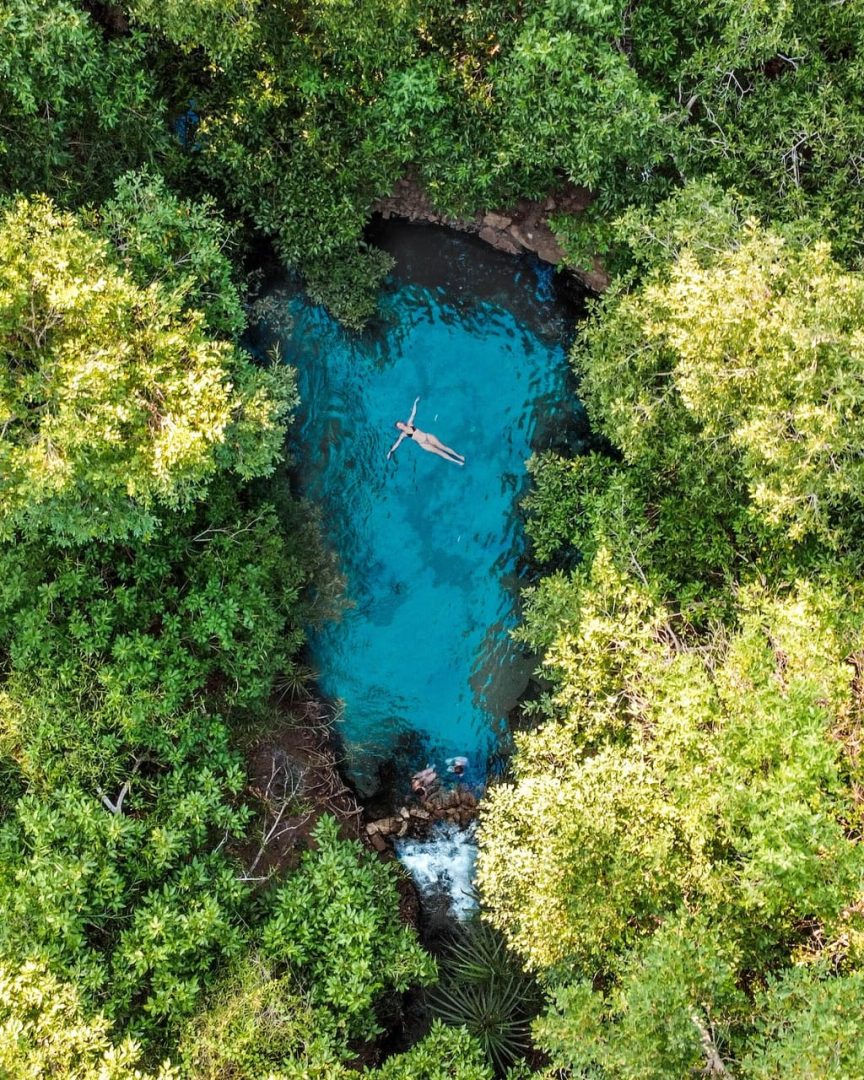
For dinner, try one of the local pubs or cafés serving barramundi. It’s a classic and usually super fresh.
There’s heaps to do in Katherine, so you’ll be hanging around for two nights.
Where to stay in Katherine?
Katherine has plenty of places to crash, but here are the ones we suggest:
- Riverview Tourist Village is our pick if you want to be close to the Hot Springs. They’ve got cabins and rooms for most budgets.
- Cicada Lodge is the go-to if you’re keen to pamper yourself.
There are also motels, hotels, and other caravan parks around town. Just make sure to book ahead if you’re coming in the dry season, places fill up fast, and prices jump.
Day 26: Katherine full day
You’ve got a full day in Katherine, and there’s plenty to keep you busy! Here are some great things to do in one day:
- Katherine Hot Springs. The water’s warm but not boiling, so you can actually relax without feeling like you’re in a soup.
- Nitmiluk National Park (Katherine Gorge). Incredible place with several walking trails, but definitely try booking a boat cruise.
- Cutta Cutta Caves. The caves are full of cool formations and a bit of local history. You’ll need to book a tour for this one.

If you’ve got extra time, check out the Katherine Museum for a bit of local history. It’s a pretty relaxed spot, so don’t stress about cramming too much in.
Day 27-29: Katherine to Litchfield OR Kakadu National Park (1h 30m OR 2h 45m)
Here’s the million-dollar question: on your way to Darwin, should you stop at Litchfield or Kakadu?
We’ve done both, and honestly, they’re both unreal, but they’re pretty different.
Edith Falls Florence Falls
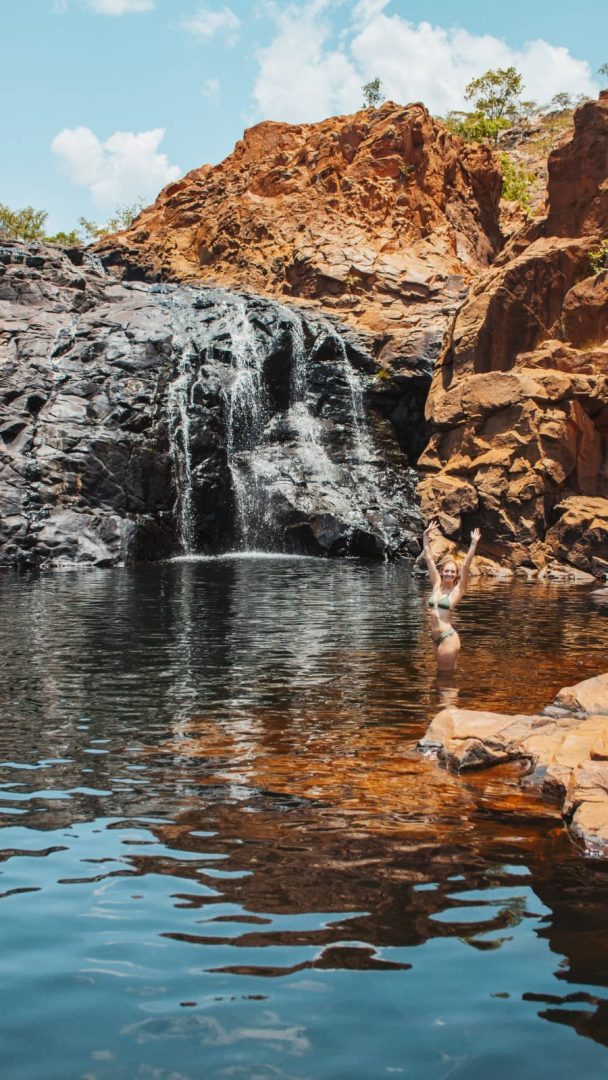
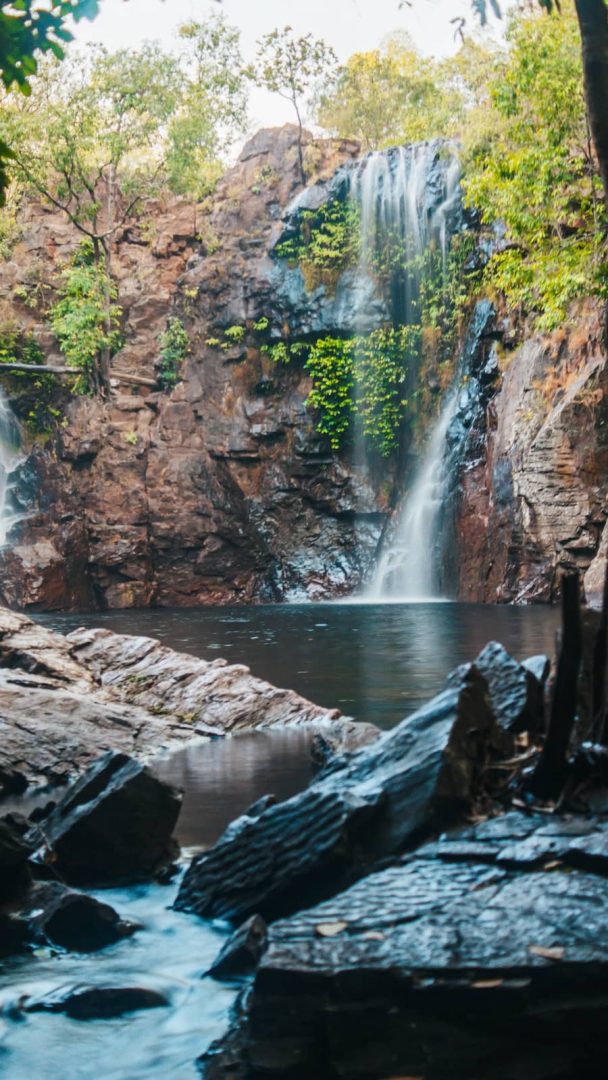
Litchfield is smaller and you can tick off the main sights in a day or two. Kakadu is massive, so you’ll want at least 2-4 days to do it justice.
Both parks have highlights you can reach in a 2WD. But you’ll need a 4WD if you want to see some highlights, like the Lost City and Sandy Creek in Litchfield, or Jim Jim Falls and Moline Rockhole in Kakadu.

Jim Jim Falls, Kakadu (Dry Season) Termite mound in Litchfield

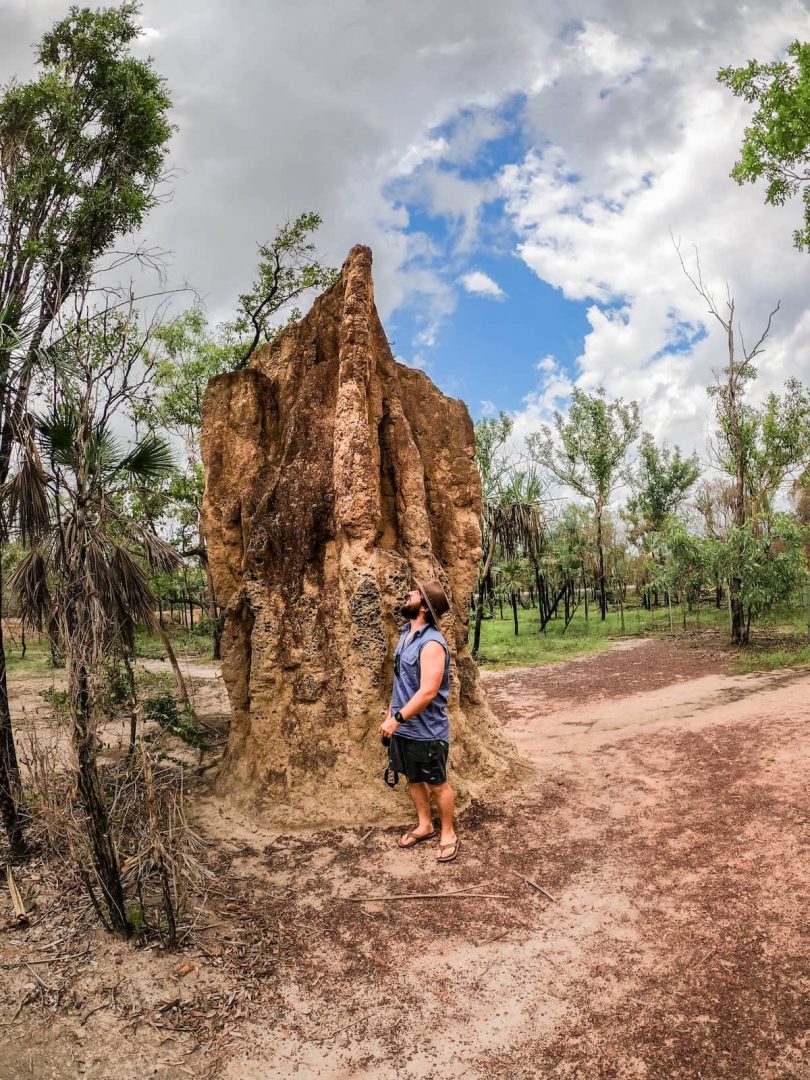
Also, keep in mind that the NT park pass covers Litchfield, but not Kakadu. You’ll need to pay extra for Kakadu entry.
Our recommendation:
- If you’re in a 2WD, go to Litchfield. It’s closer to the main road, and you’ll get easy access to waterfalls, swimming holes, and those wild termite mounds.
- If you’ve got a 4WD and can add an extra day or two, Kakadu is worth the detour. The best spots are off the bitumen.
Day 30: Drive to Darwin
The drive to Darwin is pretty cruisy:
- From Litchfield, it’s only about an hour, so you can take your time packing up.
- From Kakadu, it’s closer to three hours. Grab a coffee in Jabiru before you hit the road, there’s not much else until you get closer to town.
Keep an eye out for road trains and wandering cattle, especially if you’re driving early or late. There’s a couple of roadhouses along the way if you need fuel or a snack.
Once you hit the outskirts of Darwin, traffic picks up fast! Time to wash off the red dust, enjoy a cold drink, and reminisce about the road trip you just finished.
What to do after Darwin: Why not head to Broome? It’s another iconic road trip! Here’s our guide with routes for 2WD and 4WD itineraries.

Planning your road trip from Melbourne to Darwin
Renting a car or a caravan
You can rent a car in Melbourne and drop it off in Darwin. We always check Booking’s car rental and Discover Cars to find the best deal for our dates.
If you’re keen on a caravan, there are a few solid options that might offer pick up in Melbourne and drop off in Darwin:
- Travellers Autobarn – Budget-friendly, good vans but no bathrooms, so you’ll need to plan your pit stops.
- JUCY campervans – Mid-range, great prices, and if you can snag one with a bathroom, your trip will be way easier.
- Star RV – Top-end, these are basically homes on wheels with all the comforts.
Just double-check your rental agreement. Some companies have sneaky rules about where you can take their vehicles, especially if you’re heading off the main highways onto unsealed roads.
Camping along the road
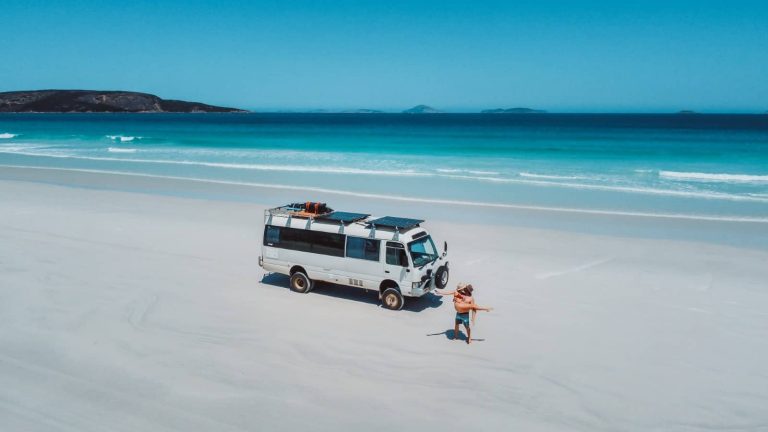
There are heaps of rest stops along the road where you can pull up for a free night. These spots are best if you’re self-contained and just need somewhere to park and sleep.
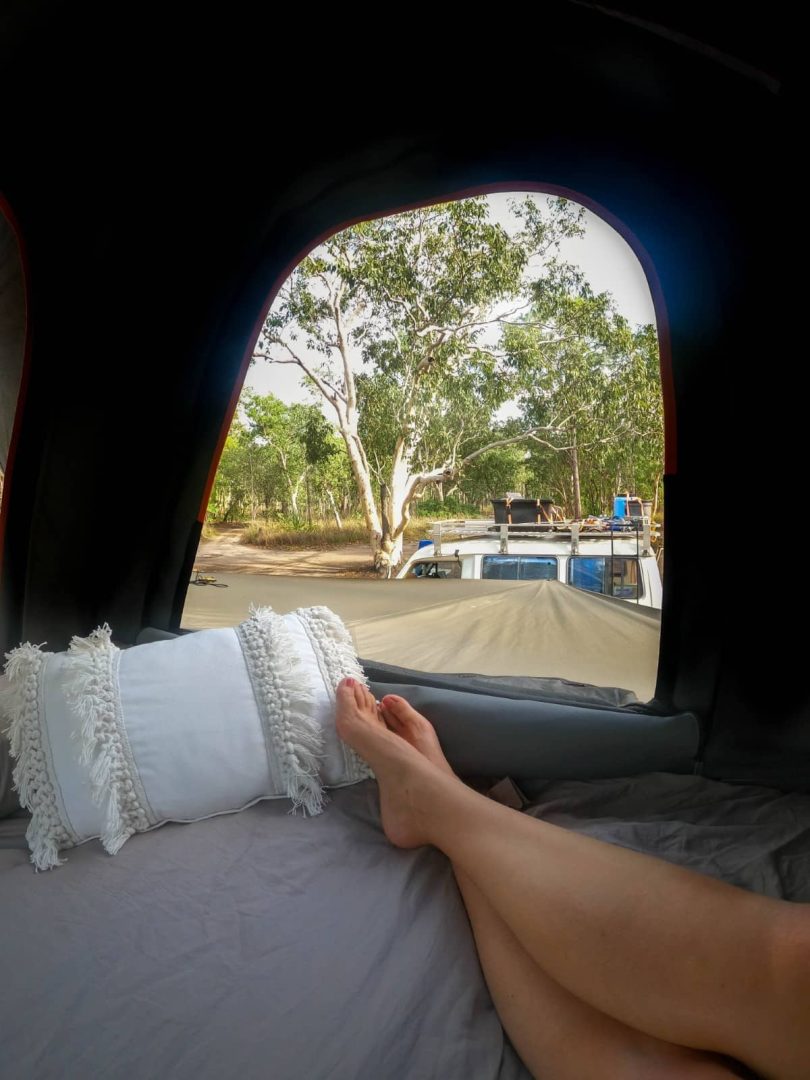
Facilities are pretty much non-existent, though. Don’t expect toilets or water, maybe bins. But assume you’ll need to be fully set up and take all your rubbish with you.
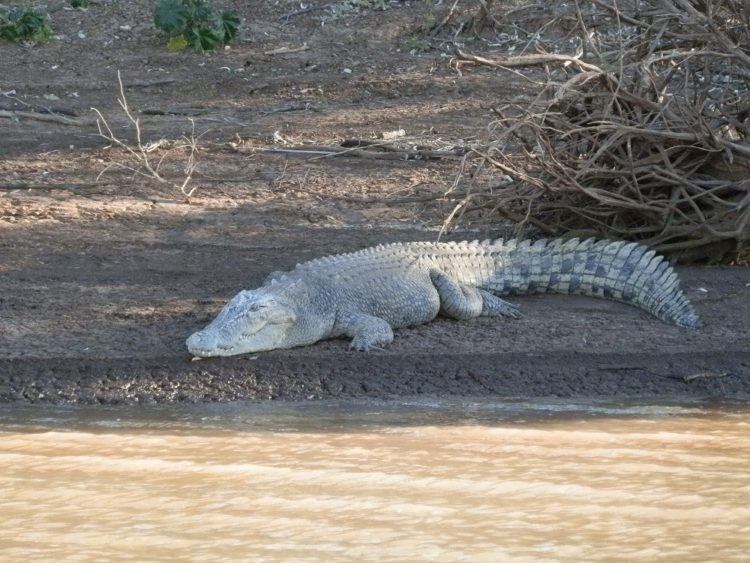
Dingoes are common around campgrounds too, so keep your food locked away and don’t leave scraps out. They’re curious but not aggressive, just use common sense.
Access to National Parks
Several national parks on the SA side are free to enter. But for this route, you’ll need to pay an entry fee for Flinders Ranges, here.
Once you cross into the NT, you’ll need a Park Pass for most of the territory’s national parks. But the pass doesn’t cover Uluru-Kata Tjuta or Kakadu, those two have their own separate entry fees.
If you’re planning to visit a few different parks or go in and out over a week or two, the 1 or 2 week NT parks pass usually works out cheaper than buying single-day passes each time.
You can check the latest entry fees and grab your passes online at the NT Parks website.
Best time to do this road trip
If you want the best weather and smoothest roads, the dry season (May to September) is pretty much your only choice.
Days are sunny and sit in the mid-20s, so you won’t be melting in the car or dodging flooded tracks.
Plus, if you’re keen on wildlife, winter is a treat! You’ll have a good shot at seeing flocks of budgerigars in the Red Centre, one of our favourite memories from the trip.
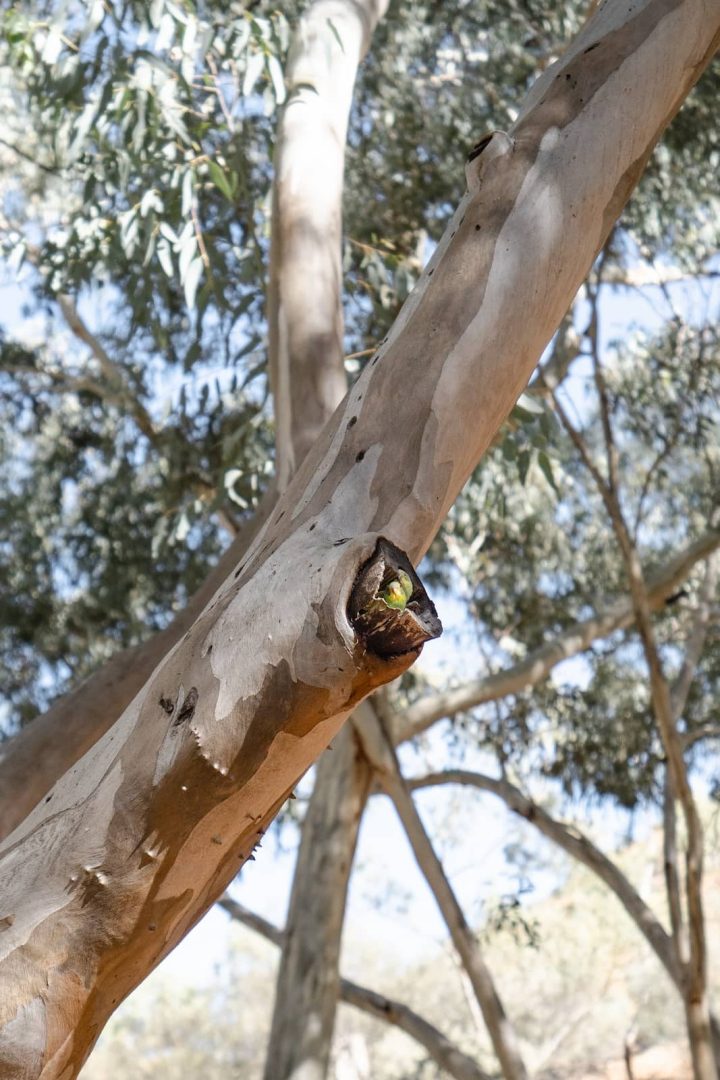
Nights can get surprisingly cold, though, sometimes down to 1 degree! So bring a warm jumper or two.
The worst time to go is the wet season (October to April), especially during summer. The heat is brutal (~ 45°C), the flies are relentless, and heavy rains can shut down roads around Darwin in a flash.
FREE Melbourne to Darwin road trip map
Top Tips
Fill up on fuel whenever you spot a servo. Some stretches, like between Coober Pedy and Erldunda, go for ages without a single pump.
Wildlife is a real hazard, especially at dawn and dusk. Kangaroos, emus, and even cattle can pop out of nowhere, so avoid driving at night if you can help it.
You’ll cop a fair bit of red dust, so don’t bother packing white shirts. It gets into everything, so just embrace it!
Did you know?
The Stuart Highway is named after John McDouall Stuart, a Scottish explorer who was the first European to make it all the way across Australia from south to north back in 1862.
His journey wasn’t just a wild trek, he made it possible for the Overland Telegraph Line to connect Australia to the rest of the world.
Nowadays, the highway pretty much follows his original route, stretching from Adelaide right up to Darwin.
It’s still the main road linking the top and bottom of the country, and you’ll feel just how remote and vast the interior is as you drive it.
FAQs
How long does it take to go from Melbourne to Darwin?
It takes at least 7 days, driving 5-6 hours a day. This way you get it done without burning out. We’d stretch it to 9 or 10 days if possible, remember that this drive is a marathon, not a sprint.
Have these ready before you hit the road!
Now you’ve got your Melbourne to Darwin itinerary sorted, it’s time to make sure you’ve got everything you need for the trip! It’s a long one, so a bit of planning here saves a heap of stress later.
Here are our recommendations:
Our Essential Travel Toolkit
🤩 Wise Card – Online bank to hold money in different currencies worldwide and lowest fees in the market! (FREE debit card here)
🤩 Trip.com – Consistently great accommodation and hotel deals.
🤩 Hostelworld – Looking for the cheapest accommodation? We especially love the “book now, pay later” feature.
🤩 Discovercars.com – Best range, super easy to compare prices rental car and motorhome prices.
🤩 Viator.com – Easily book tours and experiences at the lowest rate. Great selection all over Australia.
🤩 Tripadvisor.com – Other than our website…😉 the best place to find things to do
🤩 Airalo – eSIM store that solves the pain of high roaming bills by giving travelers access to eSIMs (digital SIM cards).
🤩 Caravan RV Camping – Traveling Australia in a van, caravan or bus? This is the best place to get all your gear.