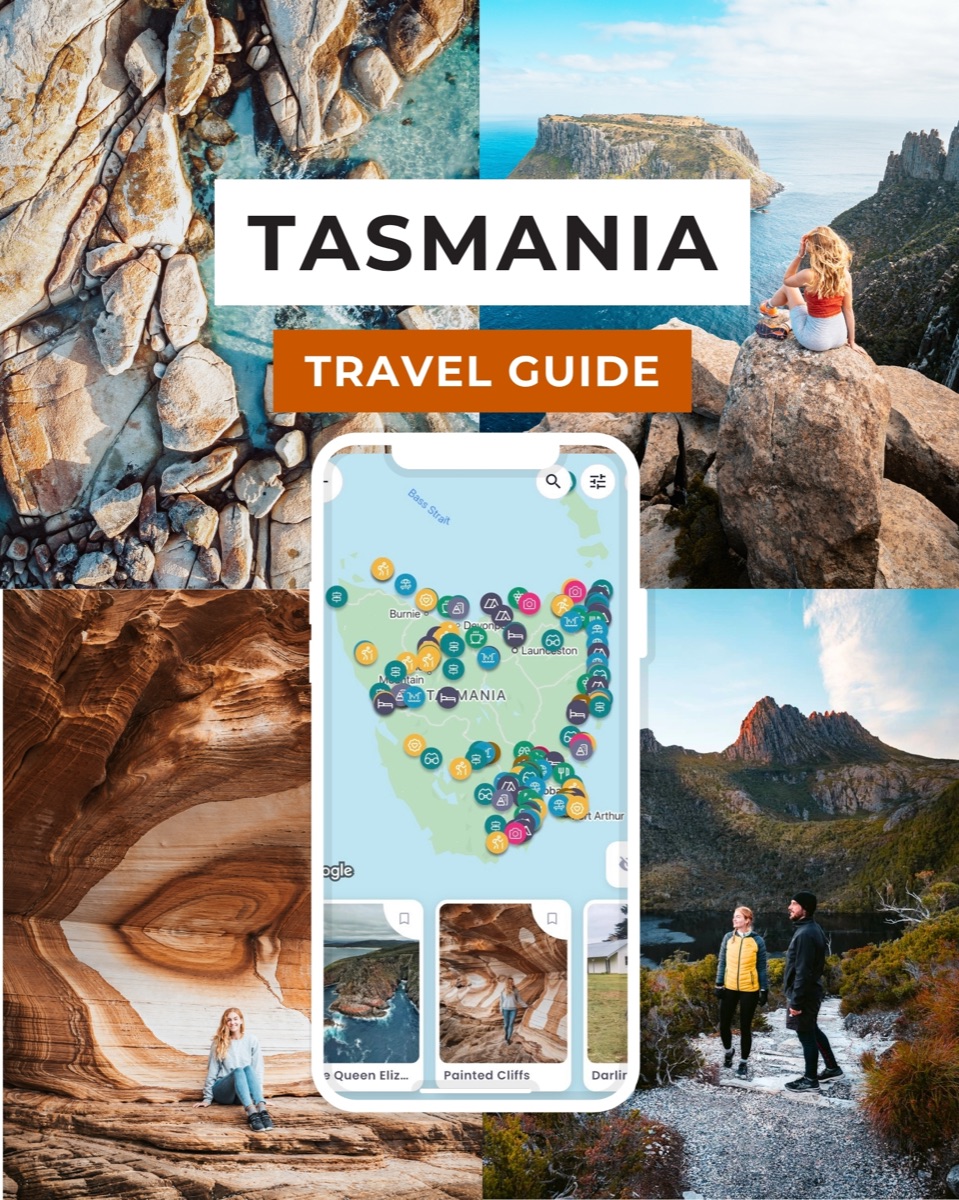
Our 30 Favourite Things To Do In Tasmania (From A 2-Month Stay)

29 min read Jump to section
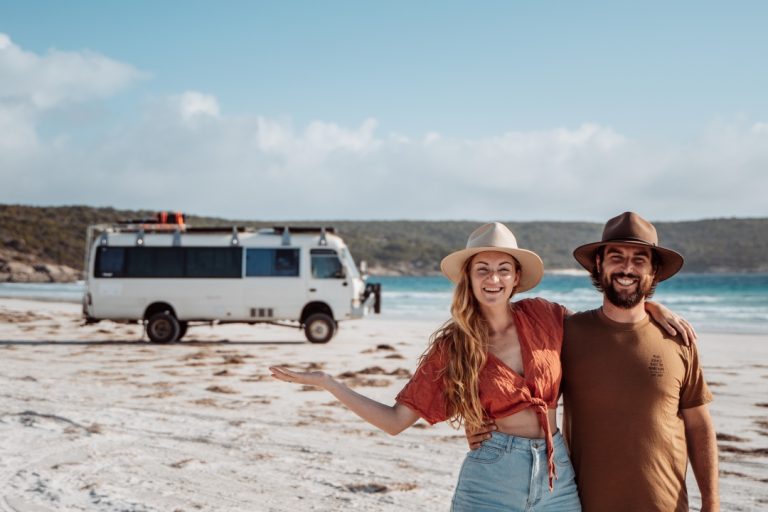
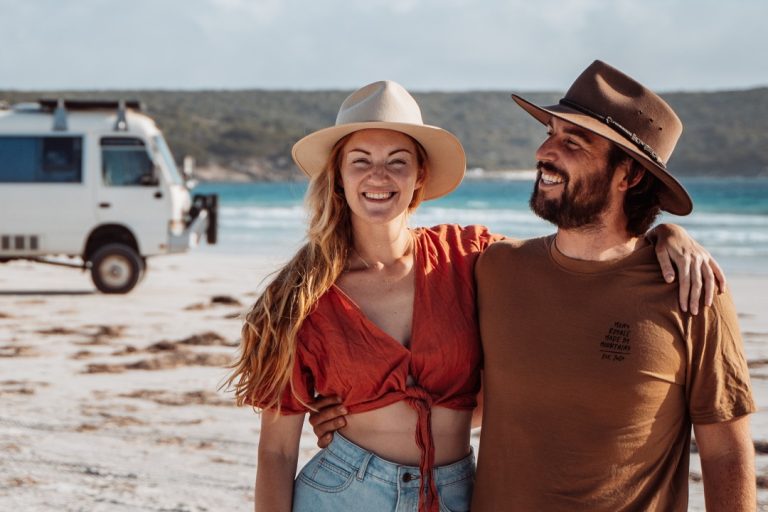
We first visited Tasmania on a rushed one-week trip while we were still working office jobs. That limited time was all it took for us to fall in love with Tassie!
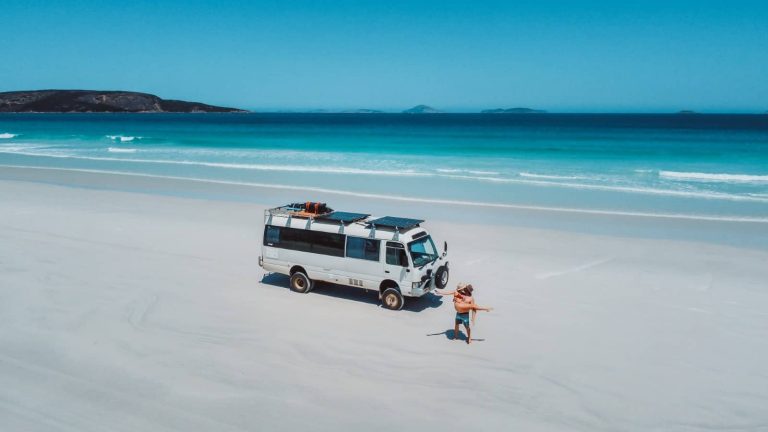
So when we sold everything and hit the road in 2020 to do the Big Lap, Tasmania was of course a non-negotiable.
We spent over 2 months exploring every corner of the island. We did the Three Capes Track (for free btw), stayed at Maria Island, camped at Bay of Fires, hiked Cradle Mountain, and much more!

So we came up with this list of our absolute favourite 30 things to do in Tassie. It’s stuff we actually did and loved, not just what Google tells you to check out.
Because it’s so frustrating to see MONA being the top “thing” to do in Tasmania.
Don’t get us wrong, it’s a really interesting spot (it’s on this list, at #30) but there’s wayyy more to see and do…
And you don’t have to drive far from Hobart! Or hold your breath because of the smell, for that matter (Cloaca, we’re looking at you).
We’ll also cover stuff like when to go, how to get there, what camping’s really like, and a bunch of practical tips so you know what to expect from your first (or third) visit to Tassie!
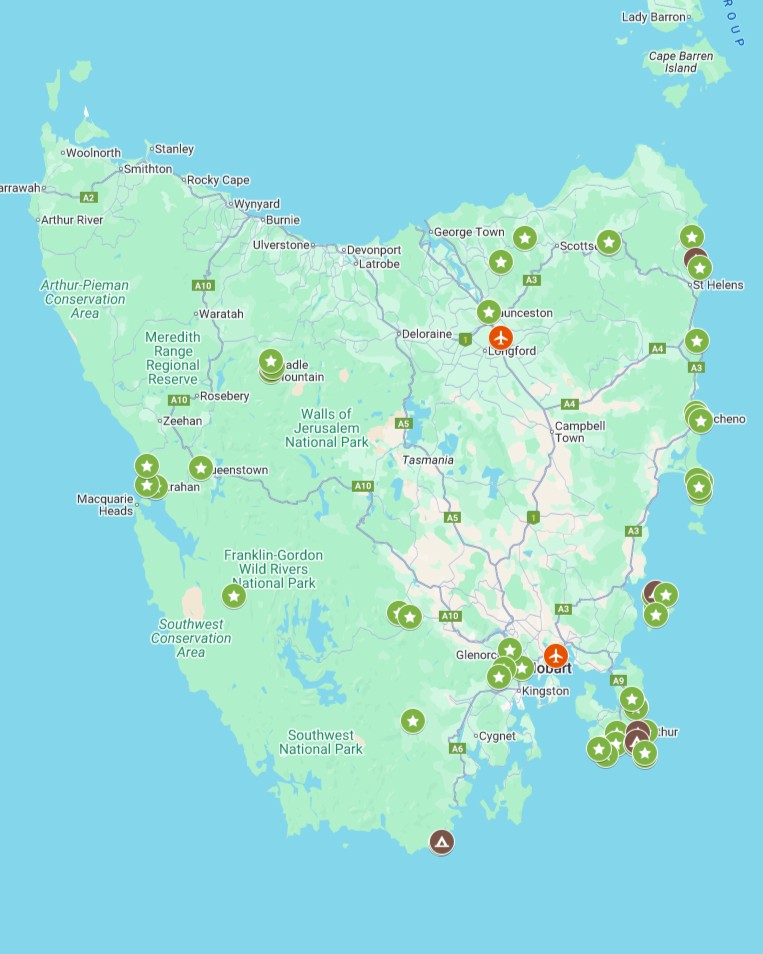
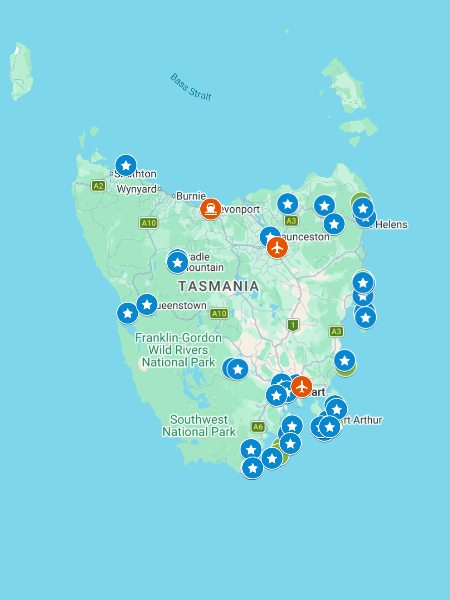
We’ve also included a FREE map with every location in this guide (and a couple more) so you can see where everything sits and save it to Google Maps while planning.
We recognise the Traditional Owners of these lands, the Muwinina, Palawa, and Nueonne Peoples.
1) Maria Island
Maria Island was one of our favourite spots in Tassie, which is why it’s right up the top of our list. The whole island is car-free, packed with wildlife, and has ocean views everywhere you look.
Plus, it’s home to the iconic Painted Cliffs!
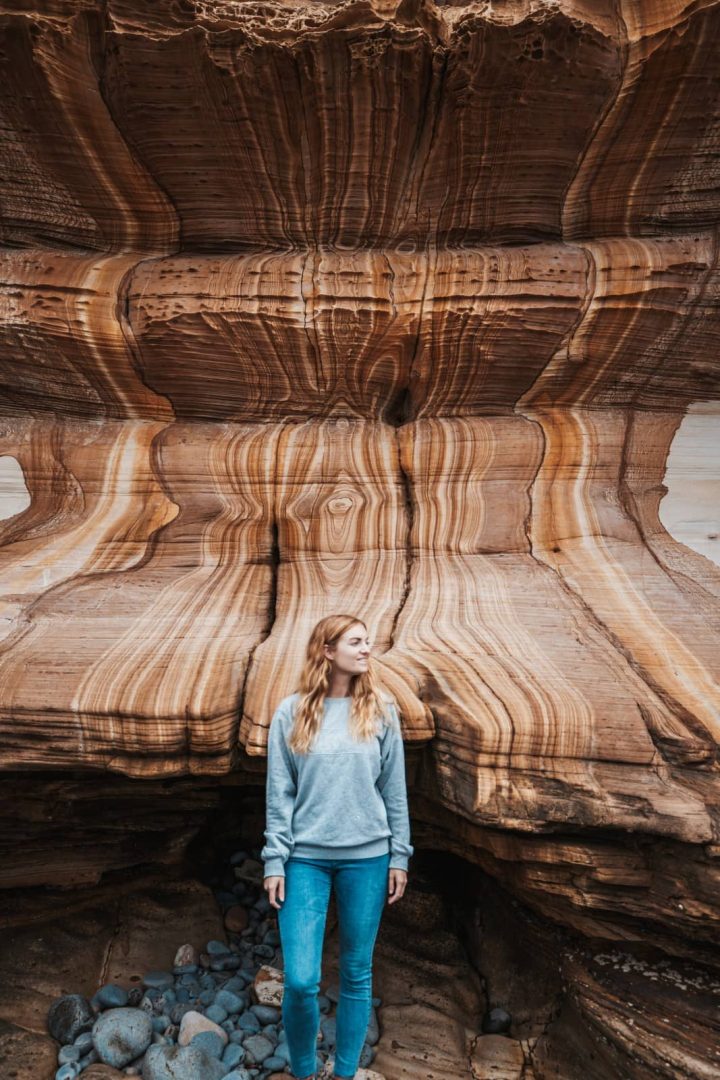
They’re beautiful wave-carved sandstone cliffs with wild colours, only seen at low tide. We love them so much that they actually have a spot on this list further down.
Here are other things we loved doing in Maria Island:
- Bishop and Clerk hike, a rocky 14km return walk (~5 hours) with epic views from the top.
- Wildlife spotting, there are wombats everywhere! Plus you might spot Tasmanian devils at dusk.
- Camping. There are a handful of campgrounds around the island, no facilities, so bring everything you need.
If you can, stay at least one night. It’s perfect if you want to properly switch off and get back to basics, as the only places to stay are campsites or the old penitentiary bunks.

There’s no shops or reception, though, so you’ll need to bring all your food, water, and gear with you.
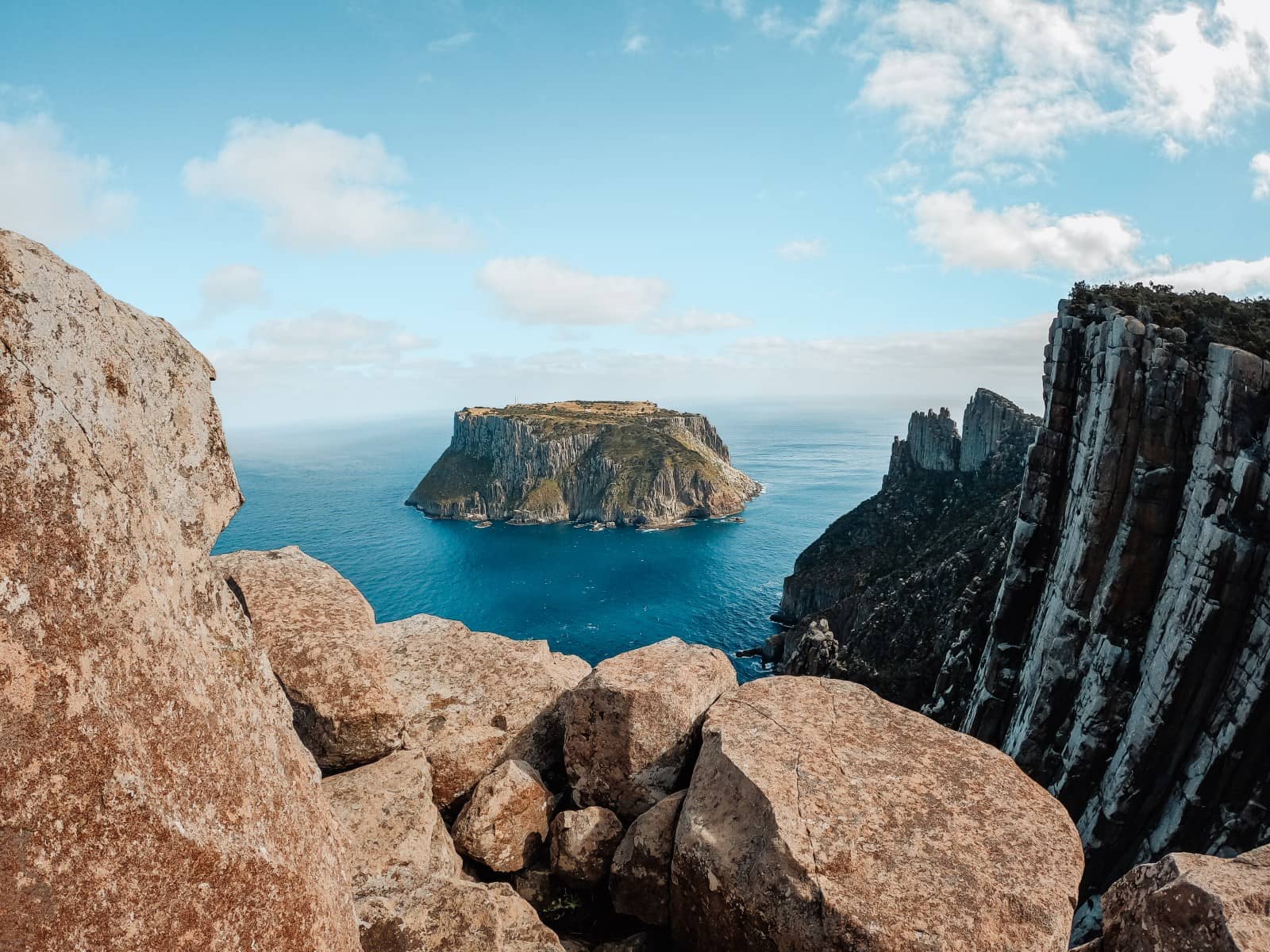
2) Three Capes Track
This is one of the best multi-day hikes we’ve done in Australia. Full stop.
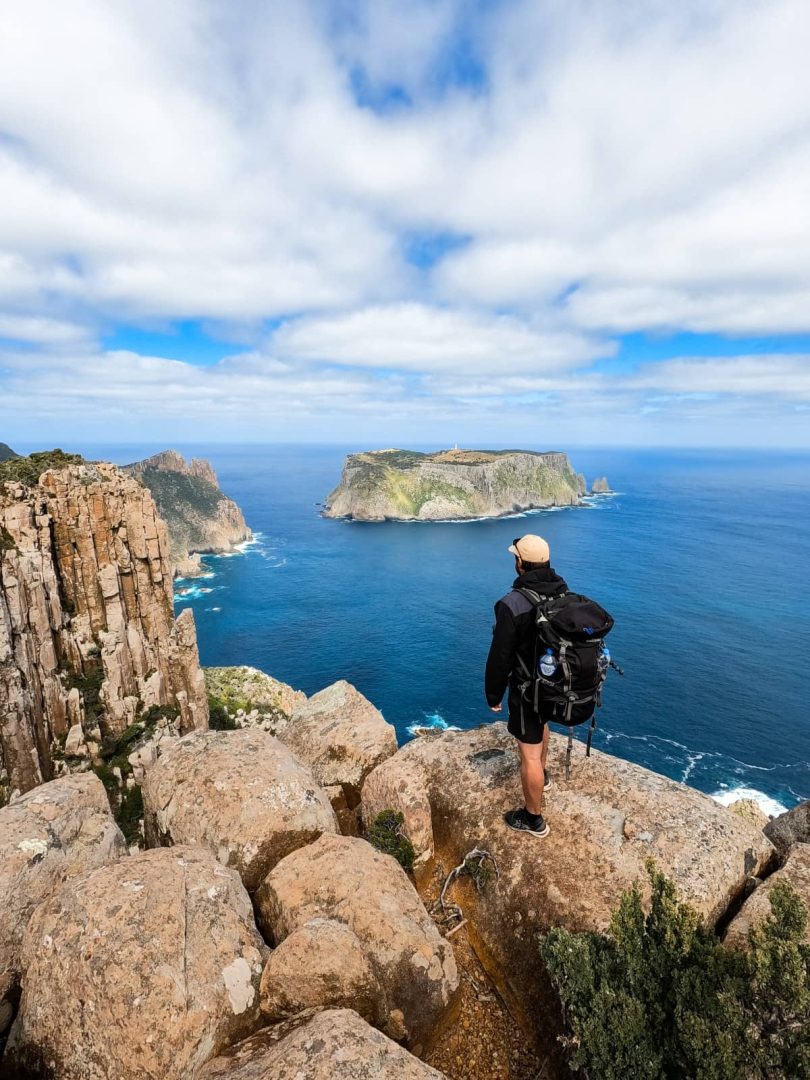
The Three Capes are Cape Pillar, Cape Hauy, and Cape Raoul. Each one is a different hike with varying lengths, most are accessible from Fortescue Bay. And all the views are jaw-dropping!
We recommend doing at least one of the Capes during your visit. You’ll never forget that hike.
Most people do the paid version, which is 3-4 days long and includes pretty much everything (even a cruise).
But we did it for free! Arranging everything was very easy, so if you’re keen on keeping it budget-friendly, definitely consider doing it.
You’ll need a park pass, and you’ll have to bring everything. Also, prepare for all weathers, it might be sunny one second and foggy the next!
3) Cradle Mountain
Cradle Mountain is one of Tassie’s most iconic spots, and we’re happy to say it actually lives up to the hype!
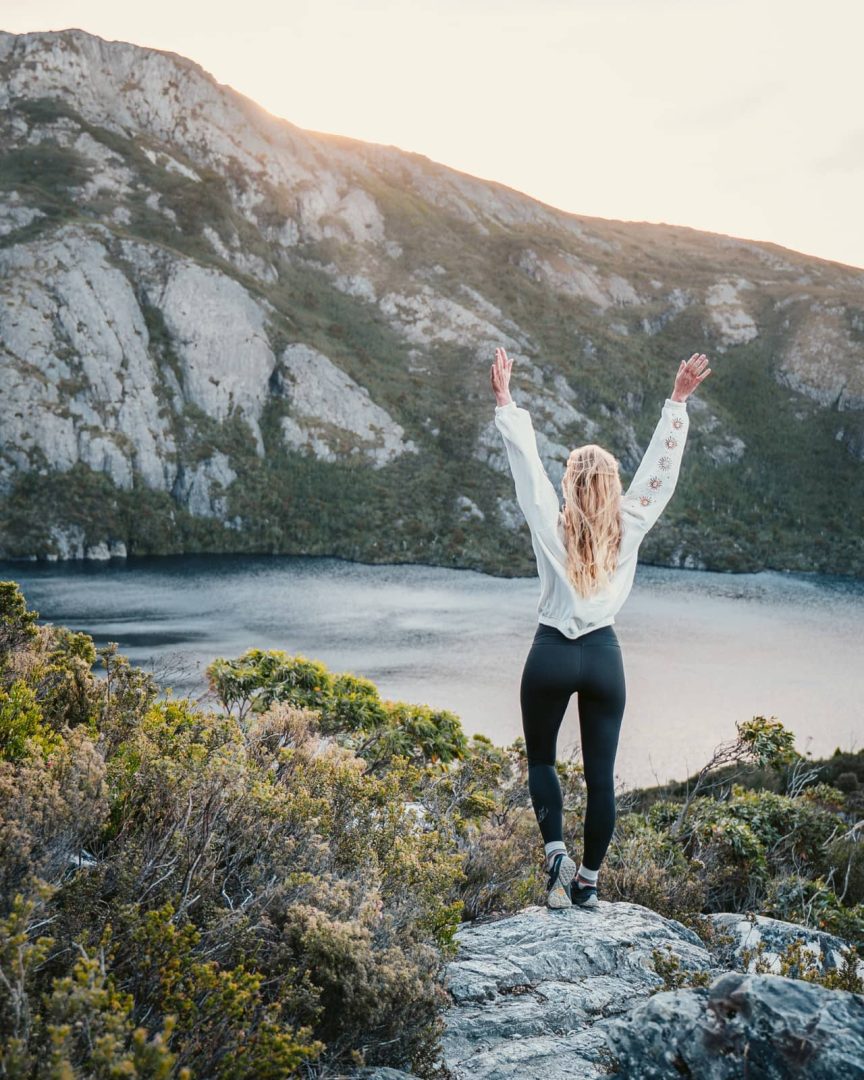
And we saw more wombats here than anywhere else on the island. So if you want to see wildlife up close, this is the place.
There are a few walks to pick from:
- Cradle Mountain Summit. 12.8 km return, 8–10 hours. Tough hike with steep boulder scrambles, only for the experienced.
- Marion’s Lookout. 3–4 hours return. Steep in sections with chains to help. Epic views over the summit and Dove Lake.
- Dove Lake Circuit. 6 km loop, 2 hours. Easy stroll with classic views, best at sunrise or sunset for photos.
The weather is all over the shop, so pack for cold, wind, and rain, even if it’s the middle of summer (talking from experience).
You’ll want at least a day or two to do a couple of hikes and catch sunrise or sunset! There’s plenty of accommodation nearby.
4) Mount Wellington
If you want some of the best views of Hobart, go to Mount Wellington! It’s one of Tassie’s easiest big experiences, as you can literally drive right to the summit.
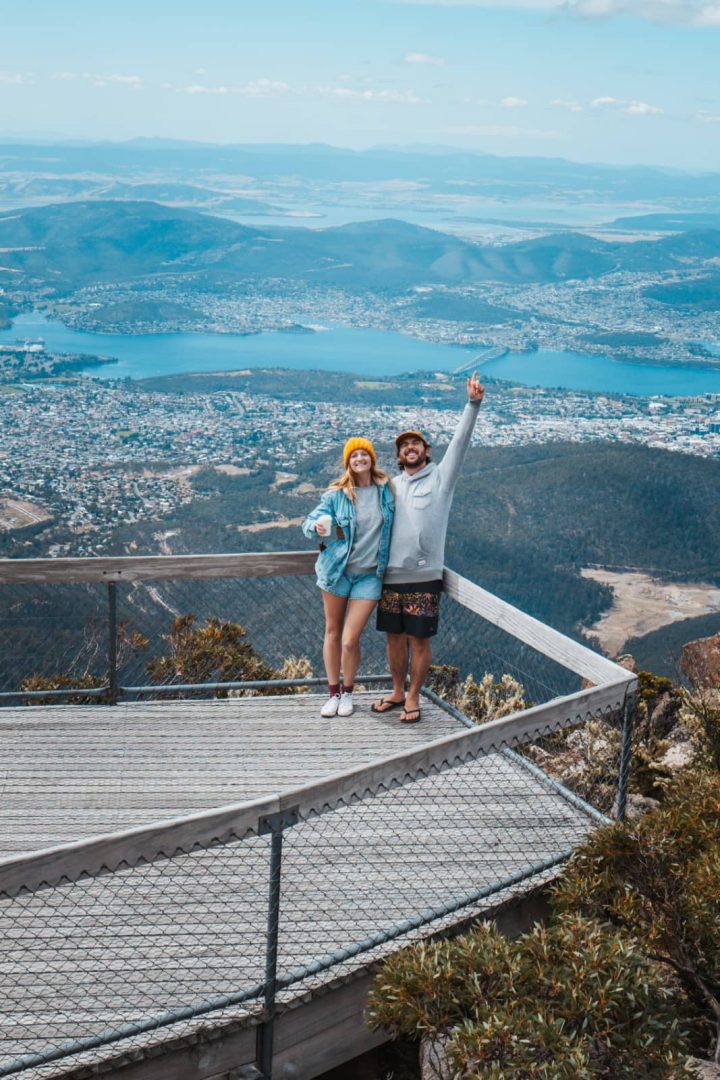
It’s a short drive from the city, so definitely go there if you can. Plus, no park pass needed!
We’ve been there in both snow and sunshine, and both times were unreal. There’s a small café near the top, and the road is sealed all the way.
The Disappearing Tarn is also there. It’s a beautiful lake that only shows up after heavy rain and, well, disappears after a couple of days.
The walk there is a bit tricky as it’s not well signposted, but worth it for experienced hikers. Here’s the route if you’re keen!
5) See the Aurora Australis
Catching the Southern Lights was honestly one of the highlights of our trip! Most people don’t even realise you can see them in Australia.
There’s no guarantee, but Tassie is your best bet, especially from May to September.
It’s a natural show, so you’ll need patience and a bit of luck. To improve your chances, download an aurora forecast app like this one and try to visit during a new moon.
Some top spots to try your luck:
- Cockle Creek. Super remote, dark skies, and perfect if you’re camping (we loved it).
- Bruny Island. Cloudy Bay and The Neck are favourites for aurora chasers.
- Cradle Mountain. Alpine air and, if you time it right, epic reflections on the lakes.
- South Arm Peninsula. There’s low light pollution and only a short drive from Hobart.
- Mount Wellington. Also close to Hobart, freezing at night, but you get city lights and sky in one view.
6) Bay of Fires
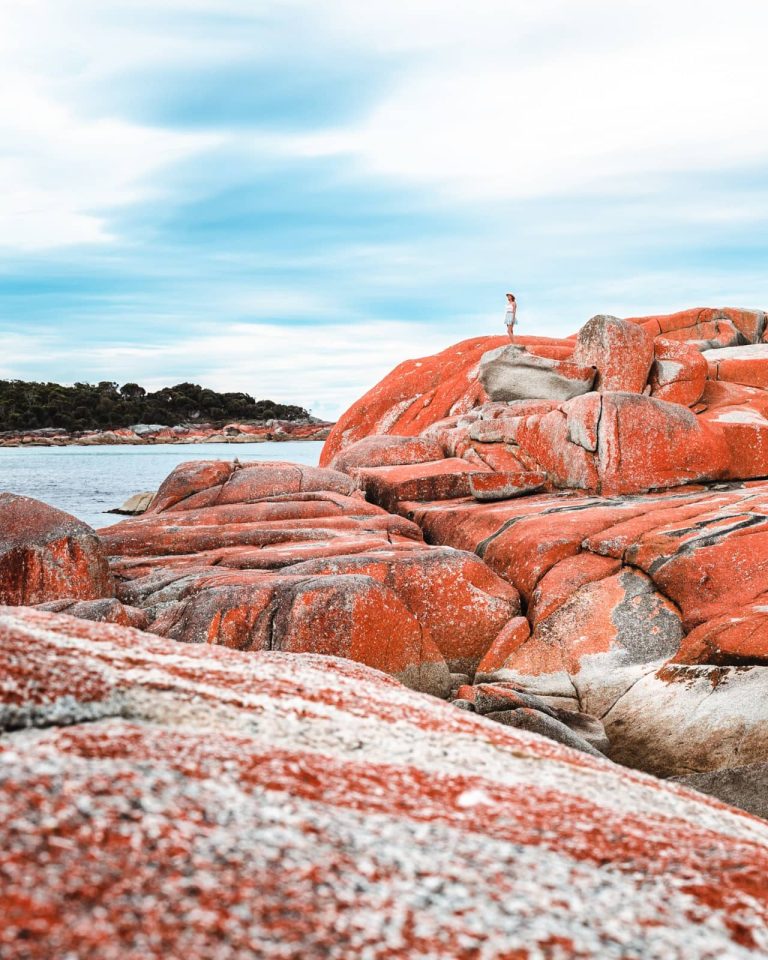
Bay of Fires blew us away with some of the best free beach camping we’ve ever done!
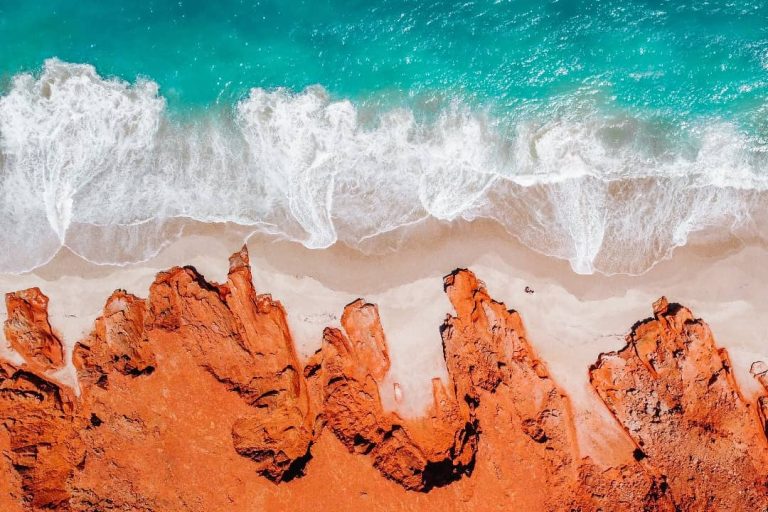
The glowing orange rocks are very impressive, and water so clear you’ll want to jump in even if it’s freezing.
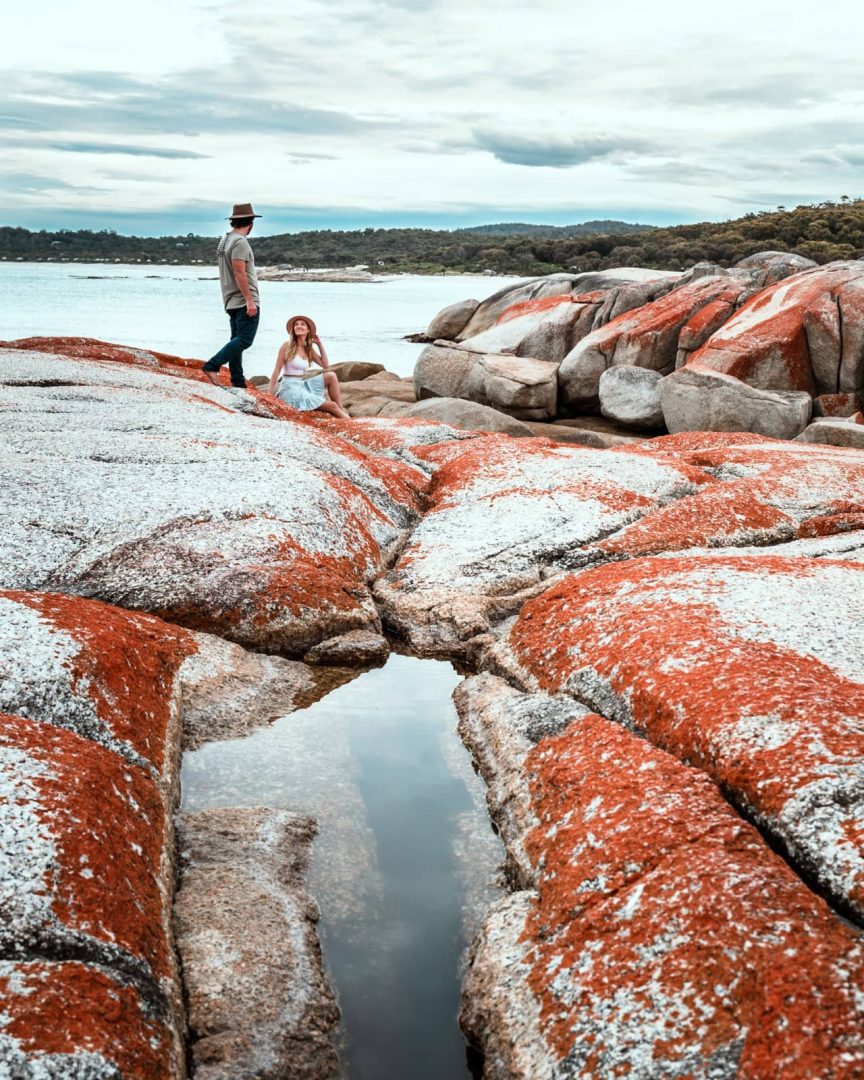
The area runs along Tassie’s north-east coast, but the best bits are around Binalong Bay and up towards The Gardens.
If you love camping or just wandering along wild beaches, this spot’s a winner. It’s all 2WD accessible, but some campsites are a bit tight for bigger vans or buses.
You’ll want a few days here to slow down, explore the coastline, and just soak up the scenery. There’s not a heap to “do,” but that’s the point!
7) Bruny Island
Bruny Island is one of Tassie’s best all-rounders, with epic hikes, wild beaches, incredible camping, top-notch local food, and plenty of wildlife!
The island itself is split into North and South Bruny, joined by a skinny strip called The Neck.
Some people squeeze Bruny into a day trip from Hobart, but honestly, you’ll want at least 3 days to do it justice.
Here are a few things we loved there and recommend to everyone:
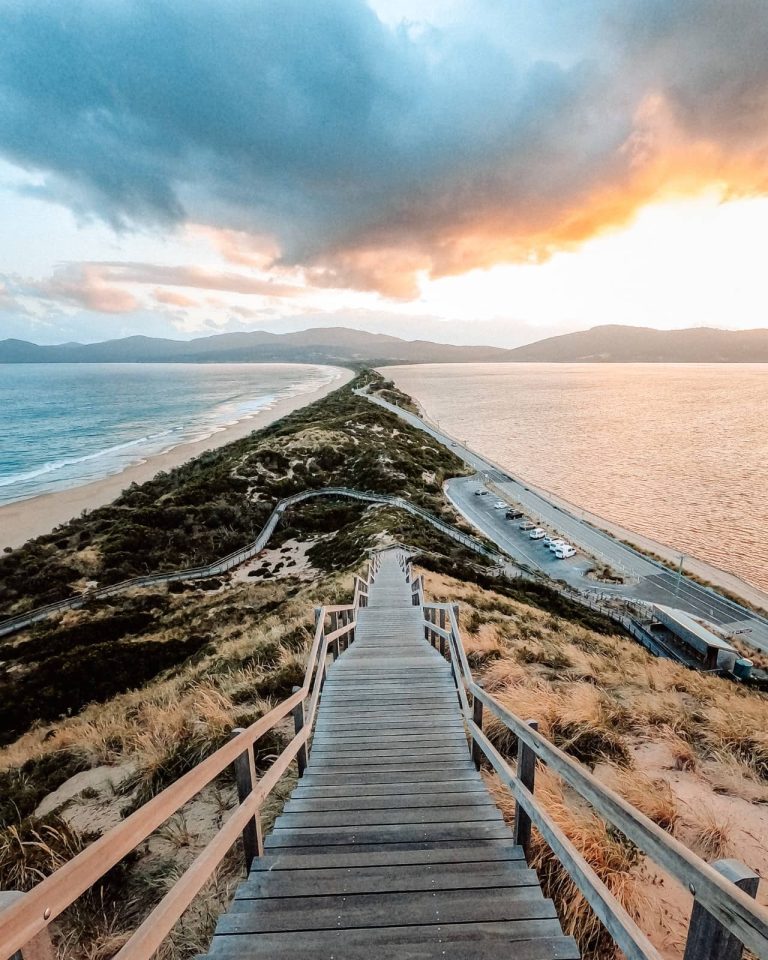
- Truganini Lookout. Climb up for that classic view where you see The Neck, with the ocean on both sides.
- Fluted Cape Walk. A 2.5-hour (4km) loop with massive cliffs and ocean views.
- Get Shucked oyster bar. Drive-through oysters, and they’re some of the best we’ve tasted!
- Cloudy Bay. Surf beach with remote campgrounds, we loved staying there. It’s perfect for sunsets and stargazing.
- Cape Bruny Lighthouse. Southern tip of the island with dramatic views and optional tours.
Bruny is also famous for honesty boxes selling fresh bread, cheese, berries, and other local goodies, so keep some cash or coins handy!
8) Snorkel at the Painted Cliffs
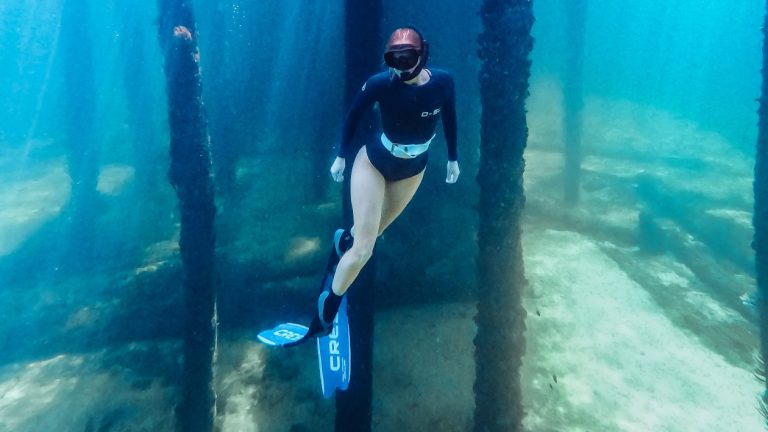
The Painted Cliffs are already worth a look, but snorkelling in the kelp forests just off the rocks took it up a notch.
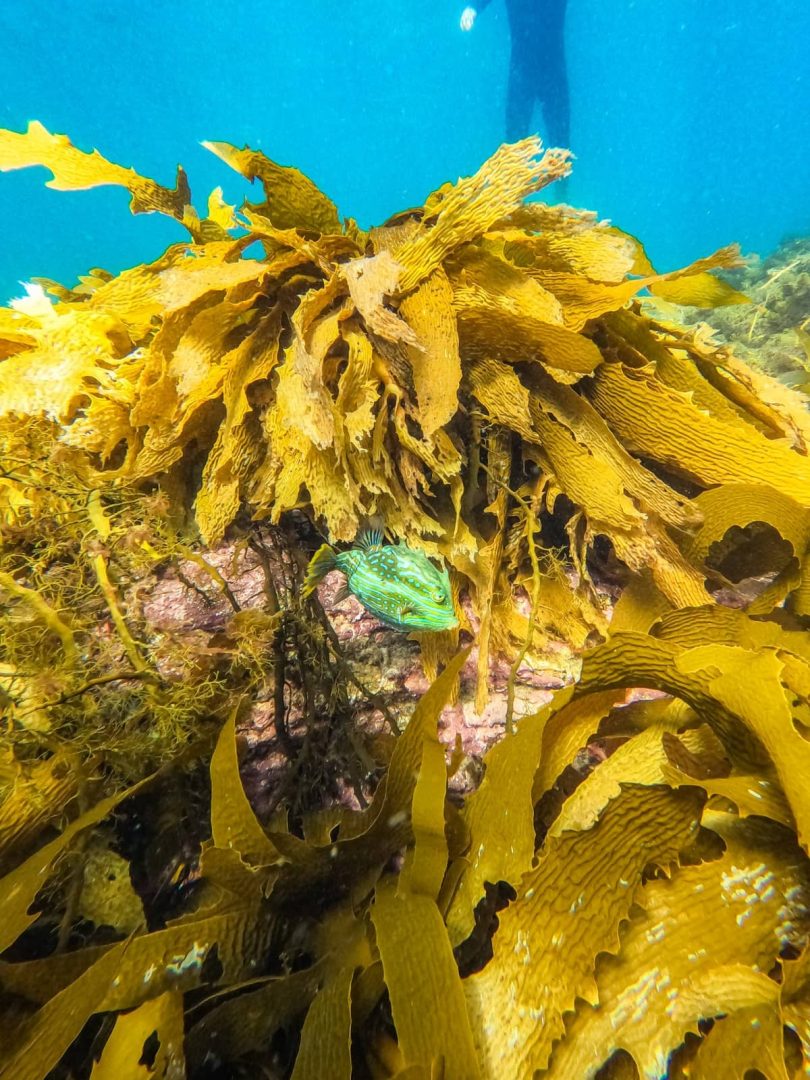
The area is a marine reserve, so you get healthy kelp, loads of fish, and crystal-clear water. It’s a short walk from Darlington, and you can snorkel straight off the rocks!
There’s nowhere to hire snorkel stuff on the island, though, so pack your own mask, fins, and wetsuit (water’s freezing even in summer).
9) Freycinet National Park
This is one of Tassie’s most famous national parks, you’ll see the curve of Wineglass Bay on half the postcards LOL.
It’s also worth the hype! There are great beaches, hiking trails, and excellent camping. We reckon you’ll get the most out of Freycinet by mixing up hiking with lazy beach time.
The classic lookout walk is worth it, but there’s a lot more going on here if you can spare a night or two.
For example, the Mt Amos hike. It was tough but worth every step, the views were incredible! Allow 3 hours return and only do it if it’s dry underfoot.
The car park fills up fast in summer, though, so aim for an early start if you want to beat the crowds.
10) Cloudy Bay
Cloudy Bay was our favourite spot to camp on Bruny Island. It’s remote, quiet, and honestly feels like you’re parked up at the end of the earth.
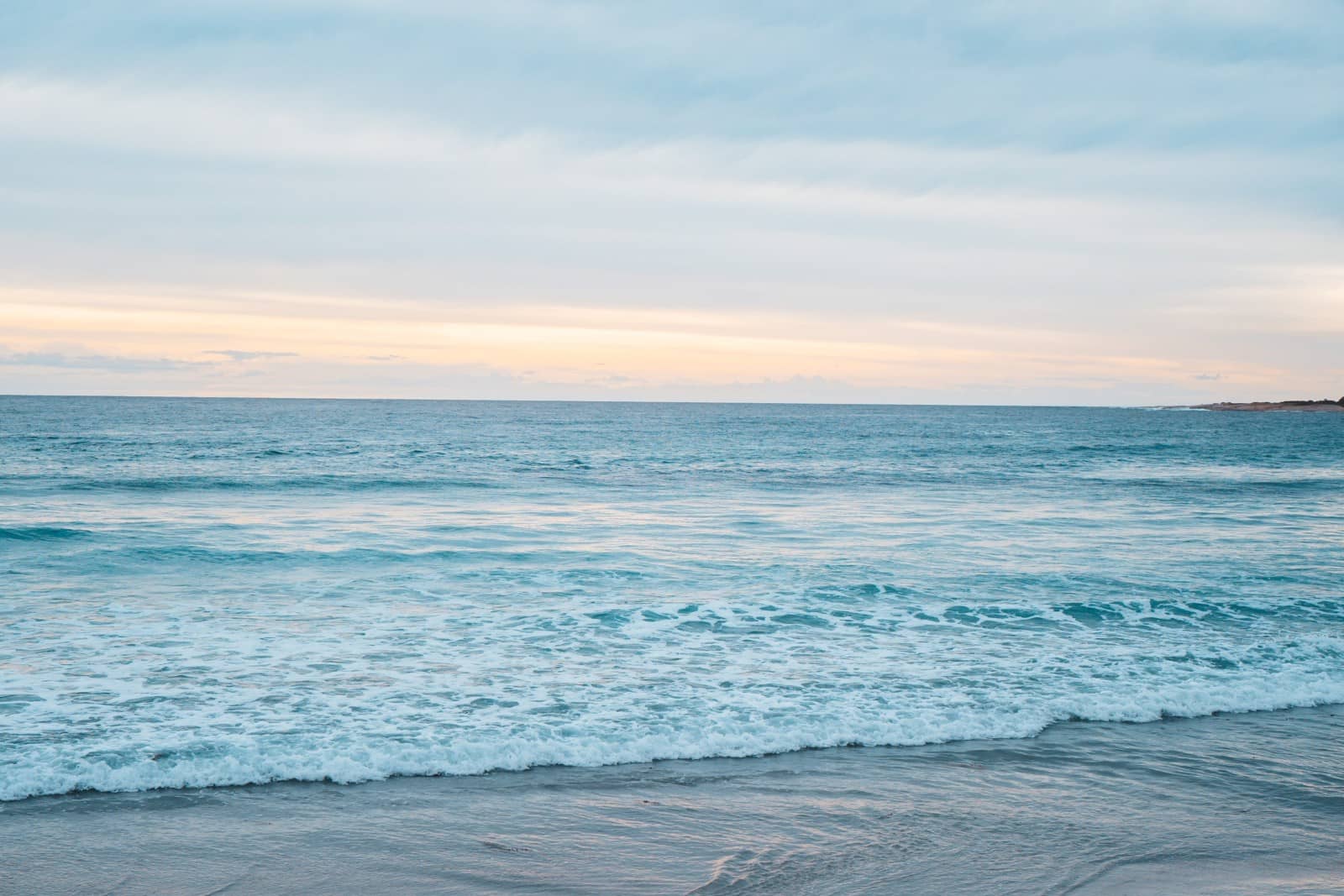
You can actually drive right along the beach to reach the southern campground, sunsets and stargazing here were next level. We’d recommend staying at least a night or two to soak it all in.
The road in is unsealed but manageable for 2WD if it’s dry. Campsites are basic (pit toilets and not much else), but you’re metres from the sand!
Surfing there is great too, and it’s one of the best spots in Tassie to spot the aurora!
It’s a brilliant base for exploring South Bruny, but bring all your supplies, there’s nothing out here except the sound of the waves.
11) Cockle Creek
Cockle Creek is as far south as you can drive in Australia, and it’s a favourite for campers who want to get away from it all (i.e. us).
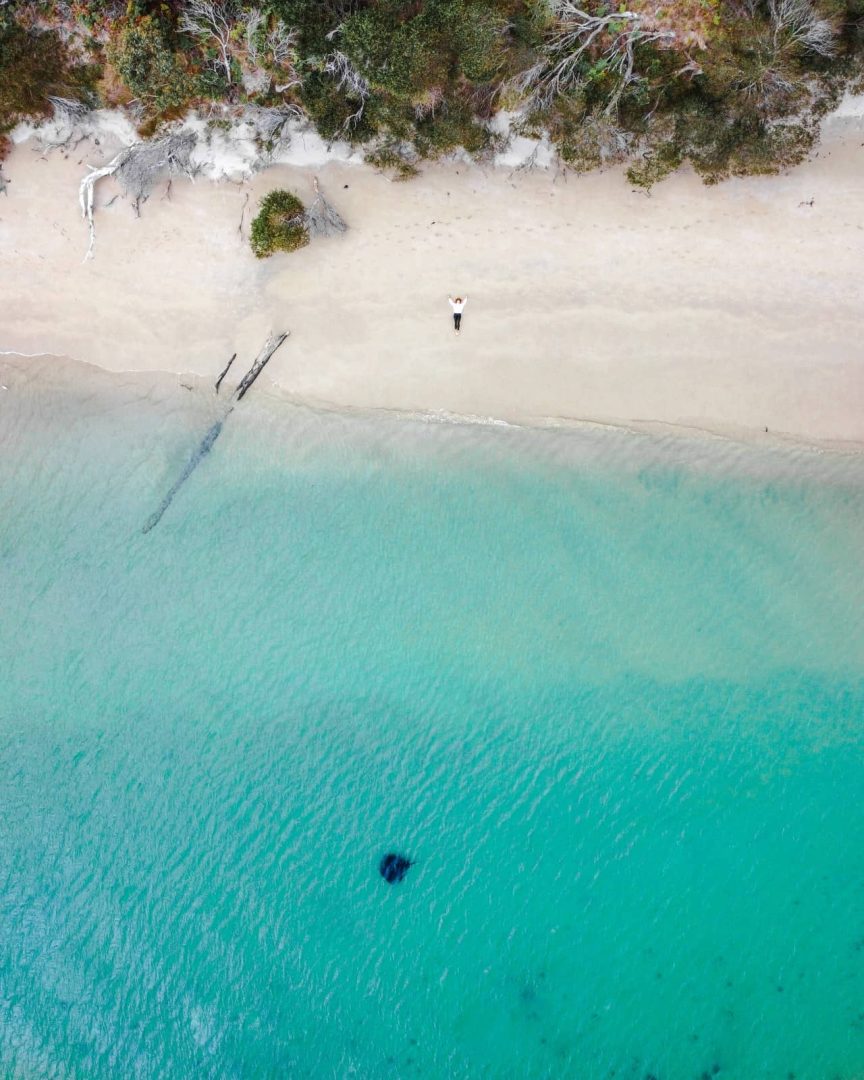
If you’re keen to disconnect, stay at least one night. The drive in is long and the last section is unsealed (gravel) but we think it’s fine for 2WDs if it’s dry.
There’s great free camping there, a couple of great hikes nearby, and really good surfing! You can also spot stingrays gliding on the water.
Just make sure to bring everything you need, including water and supplies, there’s no fuel or shops anywhere nearby.
12) Wineglass Bay
Wineglass Bay is the poster child for Tassie beaches, and the main reason Freycinet National Park is on so many bucket lists!
The lookout walk is short but steep, and gives you that classic curve of white sand and blue water from above.
If you want the best photos (and a bit of peace), hit the track early in the morning. The light’s better and you’ll dodge the tour groups.
You’ll need a National Parks Pass for this one, and in summer, get there early or you’ll be circling for a park.
13) Shipstern Bluff
Shipstern Bluff is famous for its monster surf break and wild cliffs. Even if you’re not chasing waves, the ocean views from the bluff are unreal and worth the walk.
Getting there is a bit tricky but honestly worth it.
It’s an 8km (return) hike near Cape Raoul on the Tasman Peninsula, sharing part of the same trail. It’s well signposted and with some steep bits, but manageable for most hikers.
The waves are only for experienced surfers, though. They can be up to 9 metres in height and quite dangerous, so be careful and keep your distance from the water.
14) South Cape Bay Track
This hike takes you out to one of the southernmost beaches in Australia, where you’ll get that wild, edge-of-the-world feeling.
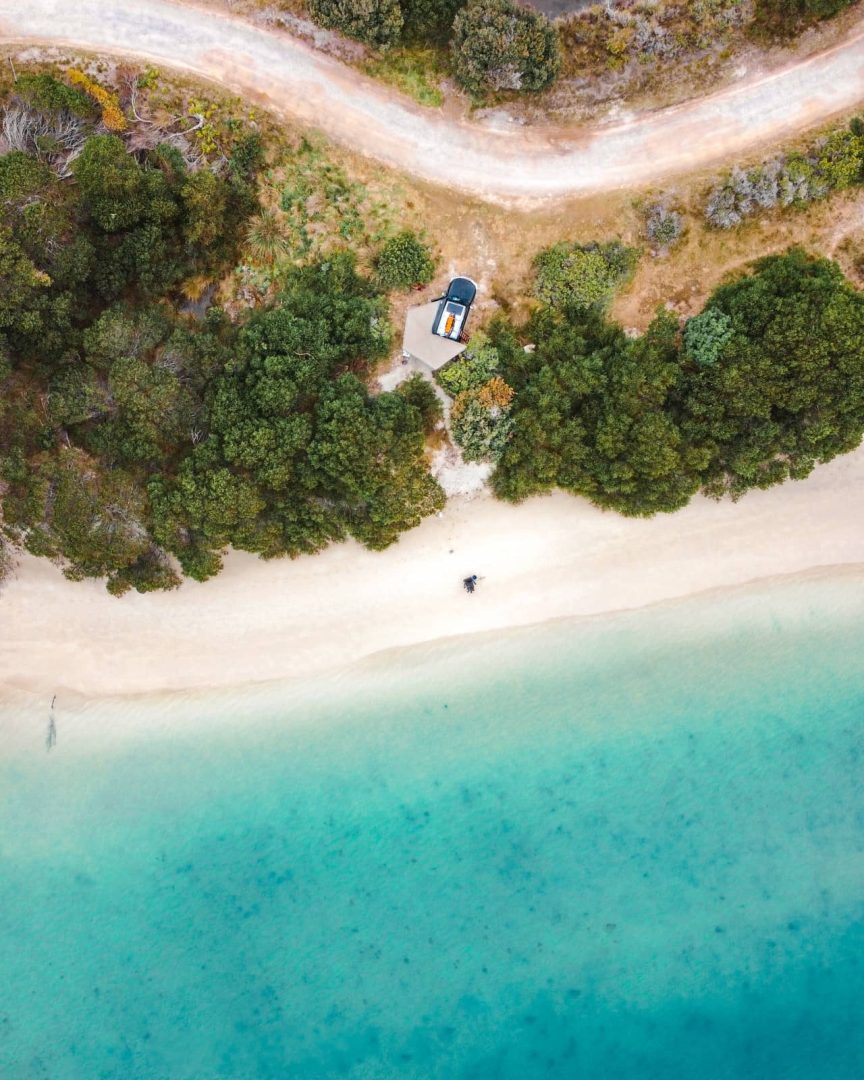
It’s part of Southwest National Park and starts from Cockle Creek, #11 on this list.
If you want a solid day hike without lugging a tent, this one’s for you! The track is mostly flat and well-formed, but it’s long, so you’ll feel it by the end.
Here are some things to know about the hike:
- It’s 16km (4-5 hours), return hike
- Trail is easy-moderate, a bit muddy with some easy cliffs
- There’s a beach at the end with epic surfing
- Sign the registration book before heading out!
Start early, pack plenty of food and water, and be ready for any weather, conditions can flip fast this far south.
15) Fluted Cape Walk
This was easily one of our favourite hikes on Bruny Island. It’s steep in parts but doesn’t drag on, and the views over the cliffs and ocean are next level.
The track loops up from Adventure Bay, with some sheer drop-offs and dramatic views. It’s about 4km long and usually takes 1.5-2 hours.
Plus it’s accessible, it starts at the end of Adventure Bay Road, with toilets and picnic tables at the car park.
16) Port Arthur Historic Site
Port Arthur is one of the most significant historic sites in Australia, no wonder why it’s on every list of things to do in Tassie.
It was a convict settlement back in the 1800s, and a lot of the old buildings are still standing or have been restored.
It’s also the site of the 1996 massacre that changed Australia’s gun laws. There’s a memorial garden here, quiet, respectful, and pretty moving. It’s a heavy part of the visit, but a really important one.
Give yourself at least half a day to look around. There’s a visitor centre with a café and some museum-style displays if you want to dig into the history a bit more or just grab a coffee.
It’s open every day, but you’ll need a ticket to get in, get it here.
17) Blue Derby for MTB
This small town in the north-east is packed with some of the best mountain biking trails you’ll find anywhere!
Chris was grinning ear to ear after every run, while Bec spent most of her time clinging on for dear life. So, let’s say it was an experience for both of us.
The trails here are famous for big descents and technical sections, but don’t stress if you’re new, there are plenty of beginner-friendly tracks too!
You can hire decent bikes in town and book a shuttle to get you up the hill, which saves your legs for the fun part.
The whole place is set up for riders, with cafés, a brewery, bike shops, and plenty of spots to crash for the night. If you’re keen to give mountain biking a crack or you already love it, Derby’s worth the detour.
18) Derby’s floating sauna
This floating wood-fired sauna on Lake Derby was Bec’s prize after the trauma of all the mountain biking LOL.
And honestly, even if you’re not riding, it’s still worth it!
You’ll sit in the steamy warmth, then jump straight into the icy lake. It sounds brutal, but it’s surprisingly addictive.
Sessions can be private or shared, and you’ll need to book ahead as it fills up fast, especially on weekends.
19) Bicheno
Bicheno was easily one of our favourite small coastal towns. It’s super relaxed, with top-notch seafood and a great spot to base yourself for the east coast.
If you’re keen on wildlife, this is one of the best places in Tassie to see penguins at night! Head down to the coast at dusk and you’ll see them waddling back to their burrows. Adorable.
There’s plenty to do around town, including walking to Diamond Island (so good it’s next on the list), Redbill Beach, and the blowhole.
We’d recommend staying 2 nights so you’re not rushing. There are a few good cafes, a small IGA for supplies, and a community garden right in the centre.
Everything’s close, so you can ditch the car and wander.
20) Diamond Island
Diamond Island was such a highlight that it deserves its own mention.
It’s a tiny island just off the beach in Bicheno, and you can reach it on foot at low tide via a sandbar!
But check tide times carefully, otherwise you might have to be wading or swimming back (we nearly did, not recommended).
It’s a great spot if you’re after a bit of adventure. There are rockpools, penguins’ nests nearby, and the views back to the coast are unreal for photos.
There’s nothing in the way of facilities, so bring what you need and leave no trace. Pair it with a wander along Redbill Beach for a top day out!
21) Truganini Lookout
This is that place in Bruny Island with the famous view of The Neck, with ocean on both sides and the skinny strip of land connecting North and South Bruny.
You’ll need to tackle about 250 steps to reach the top, but it’s a quick climb and the payoff is huge. The lookout gives you a proper sense of how wild and unique this part of Tassie is.

If you can, time your visit for sunrise or sunset, the light is unreal and you’ll dodge most of the crowds. Bring a jacket, though, it gets windy up there.
Also, few people know that little penguins nest down there and sometimes you’ll spot them waddling back in after a day at sea!
22) Mount Field National Park
This was one of our favourite spots for rainforest walks and waterfalls.
It’s an easy drive from Hobart, but once you’re among the mossy trees and giant ferns, it feels like you’ve landed in another world!
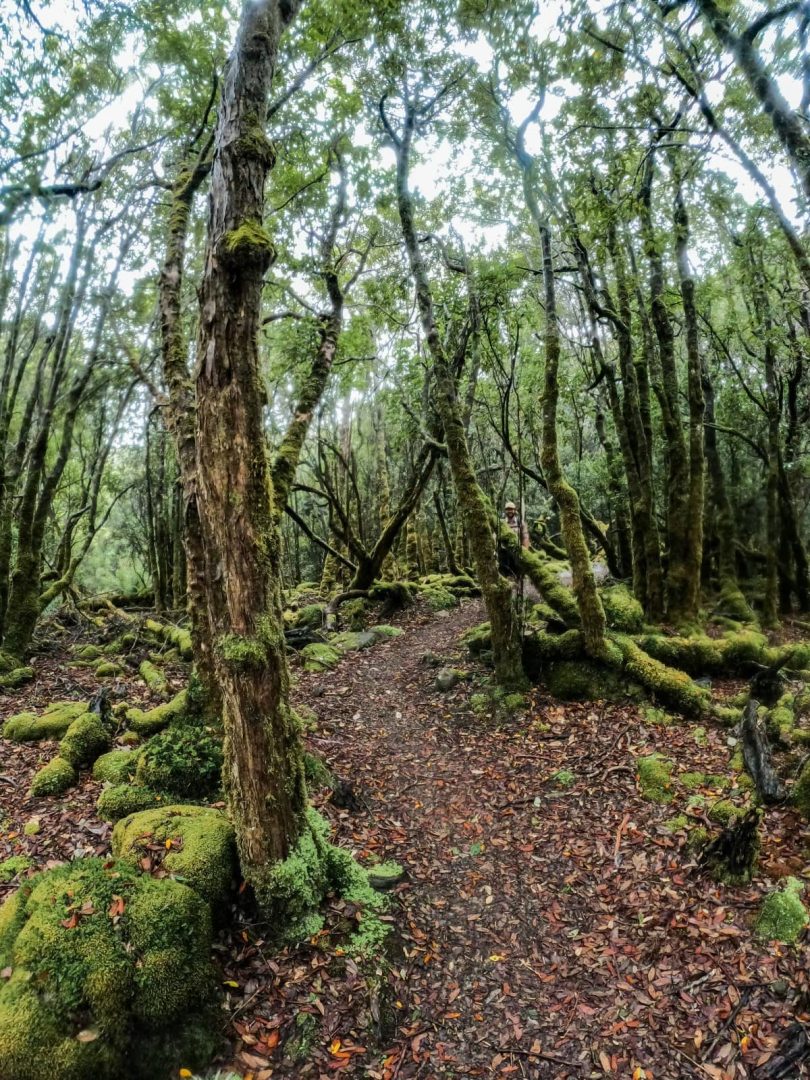
You don’t need a 4WD, sealed roads and good facilities make it a breeze for anyone keen on hiking or just wanting a quieter nature spot.
The most iconic thing to do there is visiting Russell Falls, one of Tassie’s most photographed waterfalls (it’s so good it has its own spot on our list).
There are also heaps of hikes to do there. Plus the park has toilets, picnic spots, and a small café for a post-walk coffee.
Keep an eye out for pademelons, echidnas, and if you hang around after dark, you might spot glow worms.
There’s a campground if you want to stay overnight (worth it), and you’ll need a National Parks Pass for entry.
23) Russell Falls
These falls are one of Tassie’s most iconic waterfalls, and you don’t have to be a hardcore hiker to get there.
It’s inside Mount Field National Park. Getting there is easy via a short 1.7 km return stroll from the visitor centre (about 30 minutes). The walk is sealed all the way, so prams and wheelchairs are fine.
If you’re keen for more, you can try these hikes:
- Tall Trees Walk. This 1 km loop takes you through a forest of towering swamp gums. It’s flat, takes around 30 minutes, and is suitable for most fitness levels.
- Lady Barron Falls Circuit. A 6 km return walk with a forest staircase. You can link it with Russell Falls and Tall Trees for a longer circuit if you’re up for it.
24) Cape Bruny Lighthouse
This is a great spot if you’re keen for some jaw-dropping views while in Bruny Island.
The lighthouse itself isn’t running anymore, but you can wander around the base and soak up the scenery.
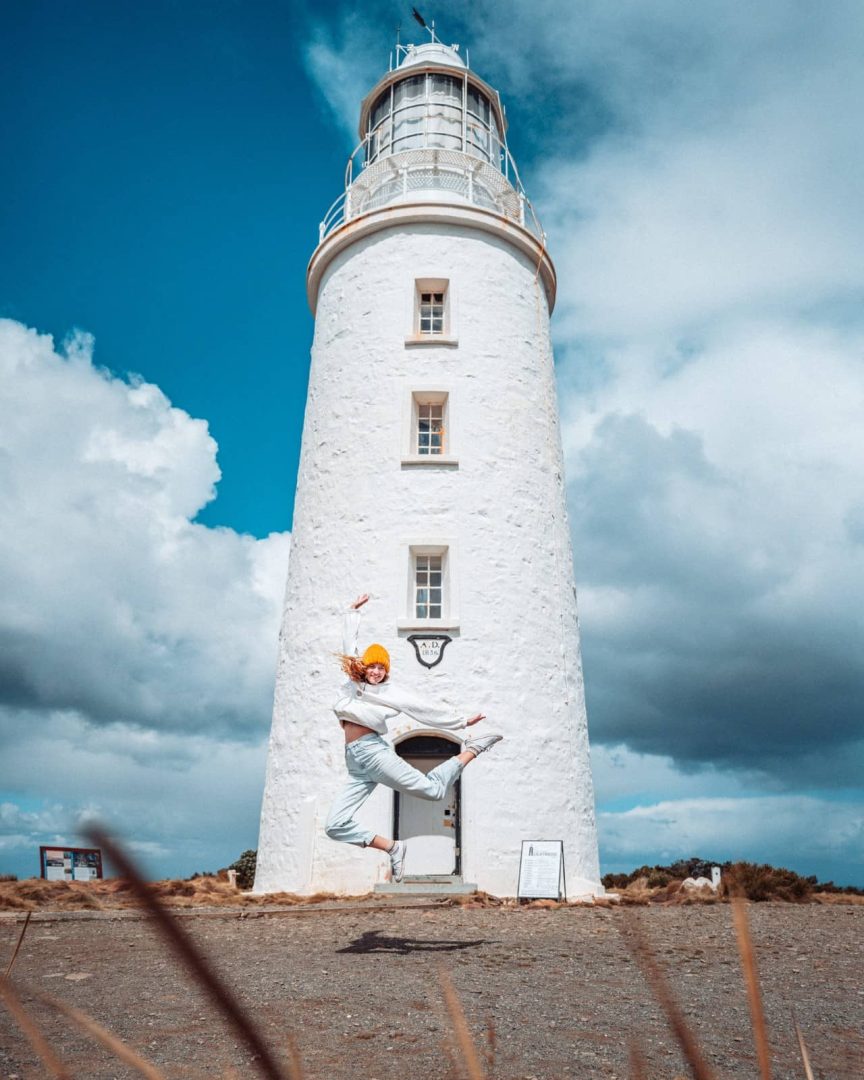
If you’re keen, there’s a guided tour you can do to head inside and climb up for an even better view.
It’s worth pairing this stop with a drive down to Cloudy Bay or one of the other lookouts nearby, there’s plenty to see in this part of the island.
The road out here is unsealed (gravel) but usually fine for 2WDs if the weather’s been decent.
Bring a jacket, it gets chilly even in summer, and don’t expect much phone reception out here.
25) Bridestowe Lavender Estate
This spot is probably one of the most Insta-famous spots on the island, with its thousands of rows of purple stretching as far as you can see.

You’ll find it up north near Nabowla, and the best time to visit is summer. January is when the flowers are at their brightest!
It’s worth popping in for the views and a wander through the fields, camera in hand. There’s a shop and café on site, so you can try the famous lavender ice cream or grab one of those lavender heat packs everyone raves about.
There’s an entry fee during the blooming season, and drones are a no-go unless you’ve sorted it with them first.
Last time we checked, they were open every day from 9 am to 5 pm, but always double-check before you head out. Here’s their official website.
26) Get Shucked for fresh oysters
Get Shucked is one of Bruny Island’s most popular food stops, and for good reason, the oysters here are some of the freshest we’ve ever had.
Chris is a big oyster fan, but even Bec (who usually skips them) couldn’t stop eating these!
It’s a drive-through oyster bar, so you don’t even have to leave your car, which makes the whole thing feel super relaxed.
The oysters are harvested straight from the bay next door, so you’re getting them as fresh as it gets.
We reckon it’s a great stop either on your way down to Adventure Bay or heading back north. Even if you’re not usually into oysters, give these a go, you might be surprised.
They were open daily from 9:30am to 4pm last time we checked, more info here.
27) Tasman Arch
This is a massive natural rock arch carved by the sea, sitting right on the edge of the Tasman Peninsula. It’s one of those spots that looks even better in person than in photos.
You don’t need to hike there, just park up and stroll a few metres to the viewpoint. It’s all flat and easy, so anyone can check it out.
Devil’s Kitchen and the Blowhole are just around the corner, all linked by short, well-marked paths from the same carparks. You can tick off a bunch of these wild coastal formations in under an hour.
Bring your camera, because the views are unreal, especially when the surf’s up. If you’re doing a day trip to the peninsula, swing by Tasman Arch before or after Port Arthur or the Three Capes walks.
28) Tessellated Pavement
This is surreal, it looks like someone’s laid giant tiles across the beach! It’s at Eaglehawk Neck, near Port Arthur.
It’s a quick detour on the way to the Tasman Peninsula. But you’ll want to time your visit for low tide, when the patterns really show up.
There’s a short, easy walk down from the carpark, so you won’t need hiking boots for this one.
29) Gordon River Cruise
If you want to see the wild side of Tassie’s west coast without slogging it out on foot, do this cruise!
It sets off from Strahan, and you’ll glide through ancient rainforest, with the river so still it’s like a mirror. It’s absolutely beautiful.
It also includes a stop at Sarah Island, which has a pretty grim convict history, but it’s also worth a look for its backstory and the boardwalk through the rainforest.
The whole cruise is a half-day trip, though, so plan ahead.
There are a couple of companies running these, but their offers are pretty similar, just different boats. We recommend this one if you’re keen.
You’ll need to book ahead, especially in peak season. It’s not cheap, but if you’re not planning to hike out here, this is your best shot at seeing the area’s real beauty.
30) MONA
And at last, the “top thing to do in Tasmania”!
MONA (Museum of Old and New Art) is probably the wildest museum you’ll ever visit, even if you’re not a museum person.
The building itself is a maze, 3 floors, and carved into the sandstone. The art ranges from clever to downright weird. Some exhibits are confronting, so go in with an open mind.
If you’re travelling with kids, we recommend doing a bit of research on what’s currently in the museum to decide whether to bring them or not, or which exhibitions to skip.
Give yourself a few hours, or even a full day. There’s a winery, restaurant, bar, and a big outdoor area to chill out if you need a break.
The best way to get there is by ferry from Hobart, grab a drink on board and enjoy the river views before you descend into the madness. You can also drive, but the ferry’s half the fun!
Tickets and ferry bookings are essential, sort it all out on their official site.
Cool tours to do in Tasmania if you’re keen
Best time to visit Tasmania
Honestly, there’s no bad time to visit Tassie, it’s always got something going on.
We went in summer and early autumn, which was spot on for hiking, camping, and even a swim, but the weather still threw us a few curveballs (pack for four seasons, trust us).
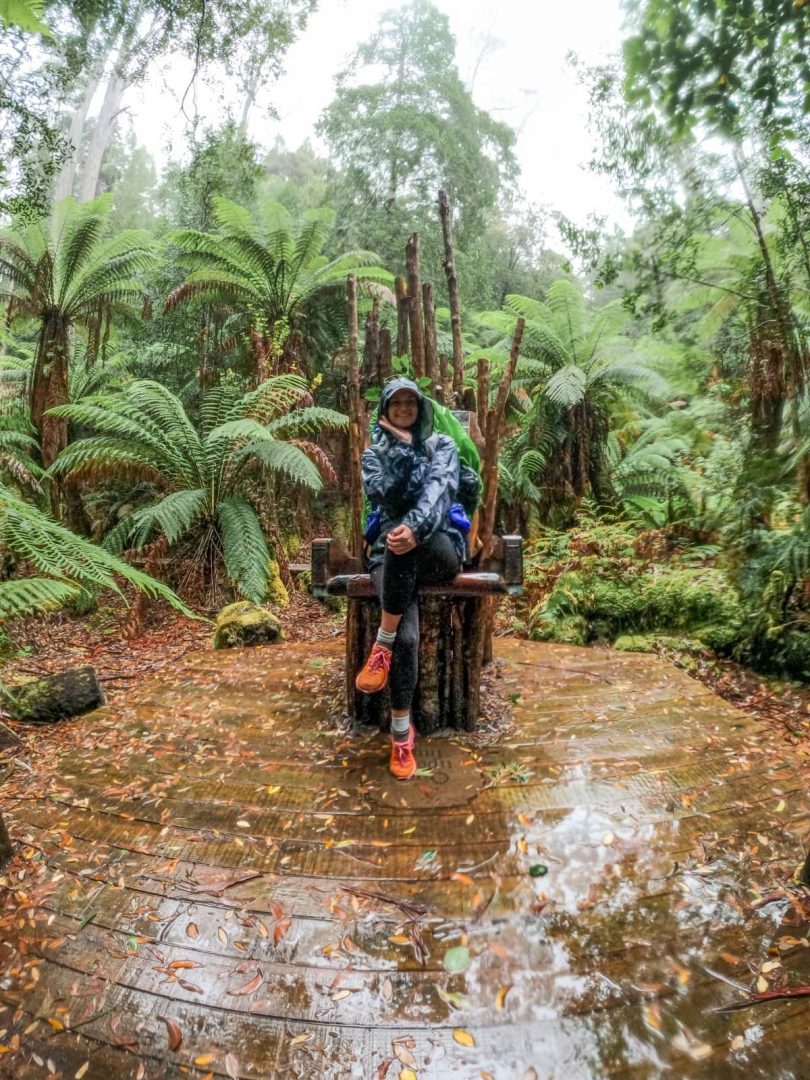
Most people reckon summer is the best time, though. Beaches are at their best, and the lavender fields are going off. Just know it’s peak season, so places book out and prices jump.
Spring and autumn are perfect if you’re into hiking. Spring has tulips everywhere, and in autumn you get the “turning of the fagus,” which sets the hillsides on fire with colour.
Winter is underrated. Oyster season is in full swing, and if you’re chasing the aurora australis, this is your window (March to September is best). Just watch out for snow on the roads, especially with Tassie’s endless bends.
How many days to stay?
You can technically do the full lap of Tassie in 7 days, but you’ll have to be strategic and stick to the schedule. A 10-day road trip will give you more room to check other things.
We reckon 15 days is the bare minimum for a full lap. 1 week is good if you’re sticking to Hobart and surroundings without rushing (i.e. Bruny Island, Tasman Peninsula, Mount Wellington).
But honestly, you could easily fill 2 weeks just on the east coast!
How to get to Tassie?
You’ve got two main options: fly or take the Spirit of Tasmania ferry.
Flying is of course the quickest. Just hop on a plane to Hobart or Launceston from most Aussie cities, and you can be on the ground in a couple of hours.
But you have to rent a car, as public transport is very limited outside of the main cities. We recommend checking in both Booking’s car rentals and Discover Cars and grab the one with the best deal for your dates.
As for the ferry, it leaves from Geelong and lands in Devonport, which is up north.
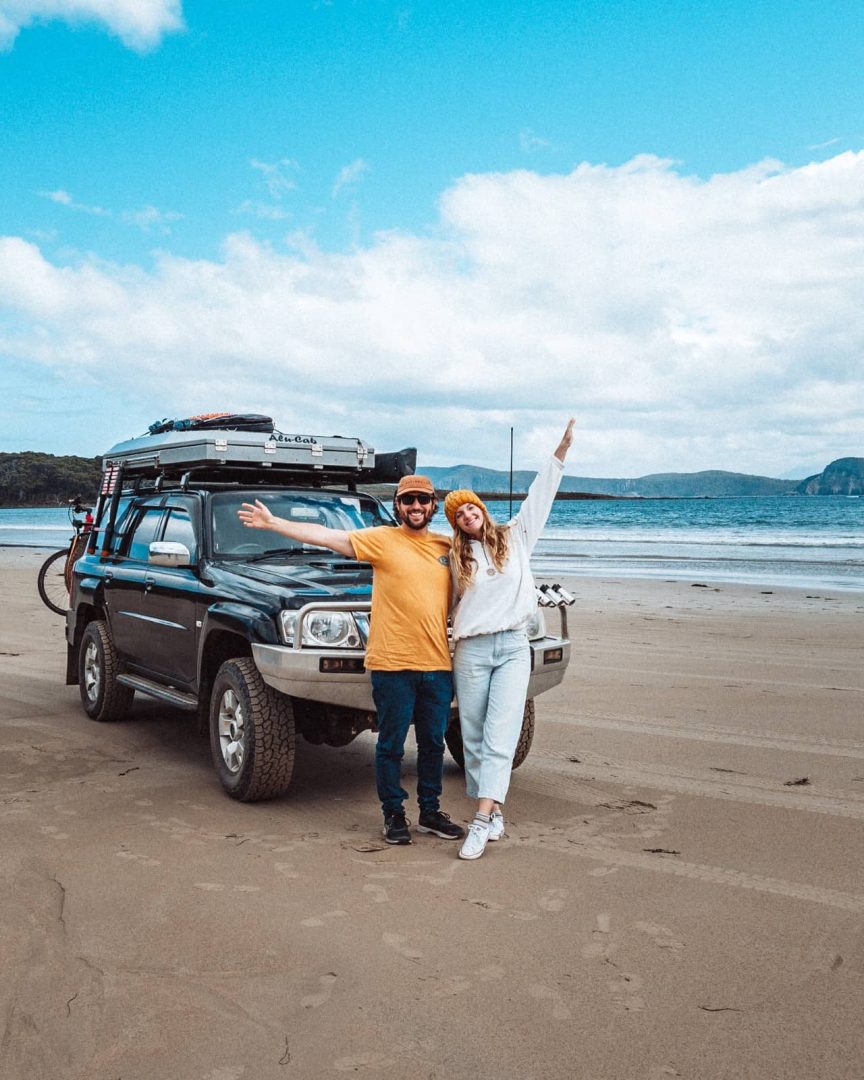
We brought our van across this way, and if you’re planning a road trip or a longer stay, it’s worth it for the freedom and comfort of your own setup.
The downside is that Devonport is a fair drive from Tassie’s big-ticket spots, which are mostly down south or along the east coast. But you do get to bring as much gear as you want.
Just keep in mind that ferry spots (especially for vehicles) can book out in peak season, so lock it in early if you’re keen.
Moving around Tassie
Tasmania is made for road trips, so you’ll want your own car or camper. Public transport is fine in Hobart or Launceston, but it won’t get you to the good stuff.
All the main roads are sealed and 2WD-friendly, so you don’t need a 4WD for most of the big sights. Some campsites and detours are on gravel, but they’re usually in decent shape, just take it slow, especially if it’s been raining.
Bruny Island’s southern end is mostly unsealed, but it’s well maintained and fine for 2WDs if the weather’s dry. If it’s been wet, check road conditions before you head down.
Distances can be sneaky, though, especially on the west coast. Google Maps might say two hours, but with all the bends and hills, you’ll have to drive slower than usual so plan for extra time.
Camping in Tasmania
Camping is the best way to experience Tassie in our opinion.
The state is super welcoming to campers, and we spent most nights either free camping or paying a small fee for a nice site. You can stay in beaches, national parks, pub carparks, and even the odd rec ground.
You’ll find a mix of free, donation-based, and paid campsites all over the place.
Most are unpowered and pretty basic so prepare to be self-sufficient, but you’ll wake up in some unreal spots! But keep in mind that if you’re staying in national parks, you’ll need a Parks Pass.
WikiCamps is a game-changer for finding and reviewing campsites. It’ll save you a heap of time and help dodge the duds.
Access to National Parks
Most of Tassie’s big-ticket natural spots (like Maria Island, Cradle Mountain, Freycinet, and the Three Capes) are inside national parks, so you’ll need a valid Parks Pass to visit.
Here are the options at the time of writing:
- Daily pass. It covers all parks except Cradle Mountain for 24 hours.
- Icon Daily Pass. Gives you access to Cradle Mountain for one day, including the shuttle, but not for the rest of the parks.
- Holiday pass. Best value, it covers all Tassie national parks for up to 2 months including Cradle Mountain (except shuttle).
You can grab your pass online or at select visitor centres and park entrances, but make sure it’s displayed clearly in your car.
FREE map with our top things to do in Tasmania
Top Tips
Lots of small-town cafés, bakeries, and even servos close after 7:30pm and might not open at all on Sundays, so plan carefully! If you need supplies, do it on Saturday or wait until Monday.
Also, make sure to book your ferries to Maria Island and back in advance. Don’t just show up and hope for a spot, especially in peak season, the last ferry back can book out!
And if you’re parking at the Wineglass Bay trailhead, get there before 9am in peak season. The carpark fills quickly, and overflow parking adds a steep walk before you even start the hike.
Did you know?
Truganini was a Nuenonne woman from Bruny Island and a central figure in the story of Aboriginal Tasmania. She lived through violent frontier conflict and is often cited as the last full-blooded Tasmanian Aboriginal person.
Maria Island played a key role in Tasmania’s convict era. It was used as a probation station in the 1800s, housing secondary offenders in a remote setting. In the 20th century, it became the site of a cement works, with remnants of that industry still visible today near the old settlement.
FAQs
What is the number one tourist attraction in Tasmania?
The Port Arthur Historic Site is considered the number 1 tourist attraction in Tassie, followed by Cradle Mountain, MONA, and Wineglass Bay
Next step: A Tassie road trip?
Now that you’ve seen our top 30 favourite things to do in Tasmania, it’s time to start planning your own adventure!
If it’s your first visit, we reckon the east coast is a great place to start. It’s got epic hikes, beaches, wildlife, and is super easy to road trip. Plus, like half of the things in this list are in that area!
If you’re keen, our full guide has everything you need: our recommended itinerary with stops, tips, and a free map you can check offline.
Our Essential Travel Toolkit
🤩 Wise Card – Online bank to hold money in different currencies worldwide and lowest fees in the market! (FREE debit card here)
🤩 Trip.com – Consistently great accommodation and hotel deals.
🤩 Hostelworld – Looking for the cheapest accommodation? We especially love the “book now, pay later” feature.
🤩 Discovercars.com – Best range, super easy to compare prices rental car and motorhome prices.
🤩 Viator.com – Easily book tours and experiences at the lowest rate. Great selection all over Australia.
🤩 Tripadvisor.com – Other than our website…😉 the best place to find things to do
🤩 Airalo – eSIM store that solves the pain of high roaming bills by giving travelers access to eSIMs (digital SIM cards).
🤩 Caravan RV Camping – Traveling Australia in a van, caravan or bus? This is the best place to get all your gear.