Our TESTED Tasmania East Coast Road Trip (14 Days) + FREE Map

23 min read Jump to section
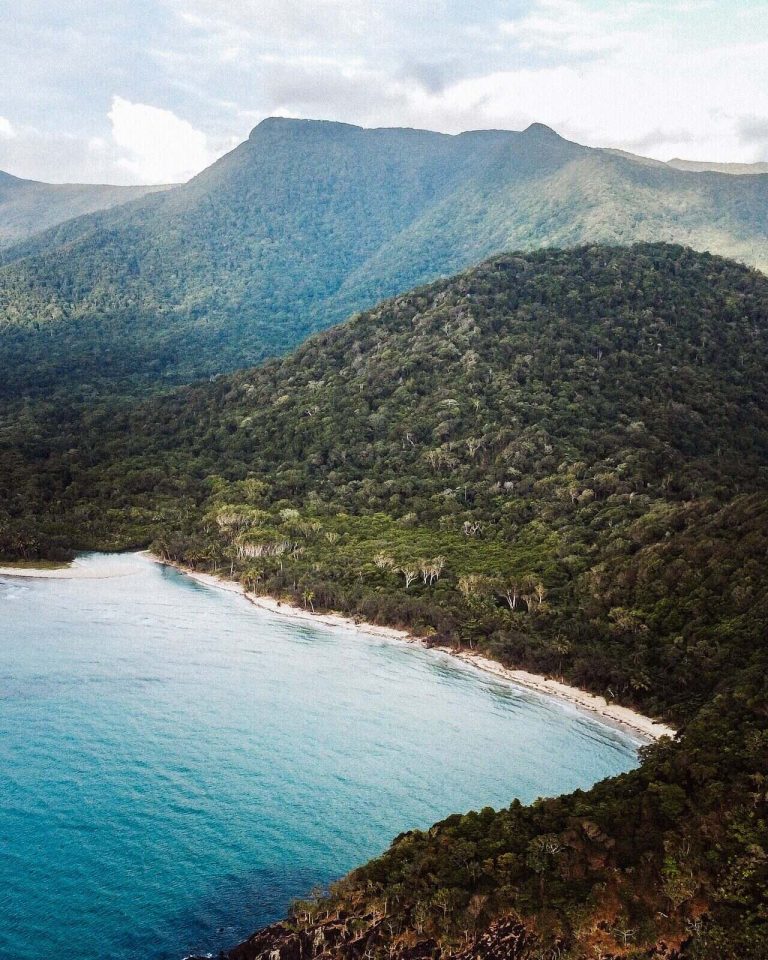
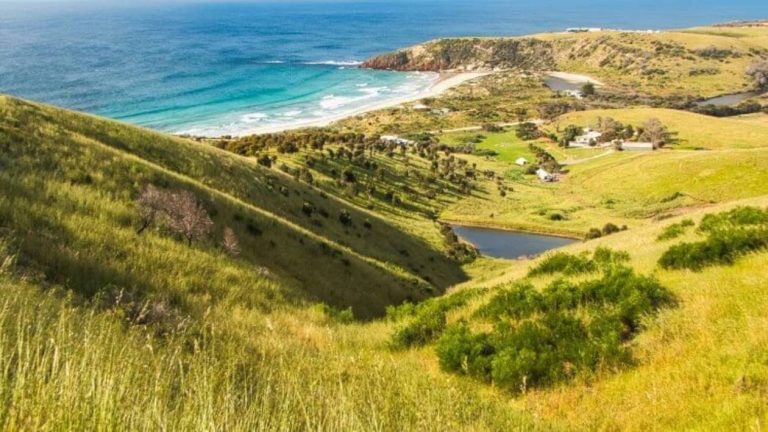
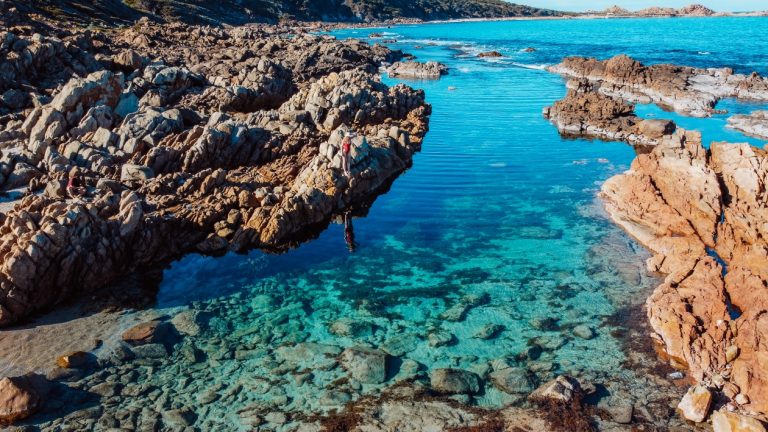
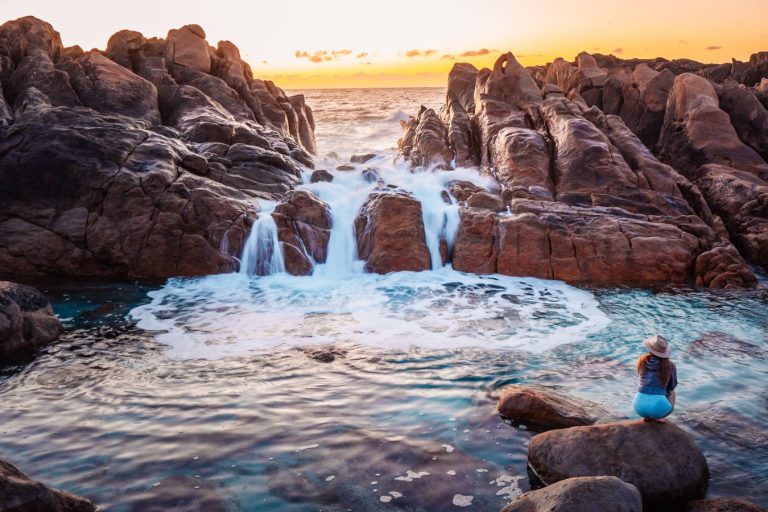
Tasmania’s east coast is easily one of the most beautiful regions in the whole country.
If you’re into wild beaches, big hikes, and the kind of camping you dream about for months after, this is the place!
We spent a big chunk of our 2-month Tasmania trip exploring this coastline, and honestly… we could’ve stayed longer.

So this guide is exactly what we’d do if we were driving the Great Eastern Drive again.
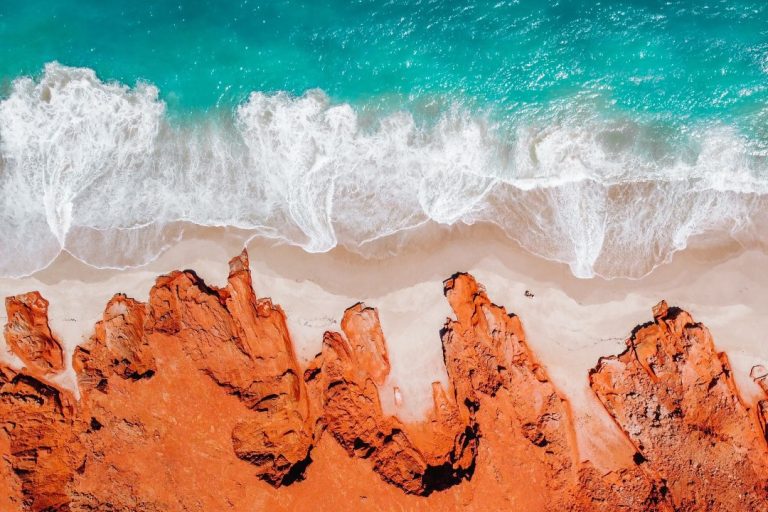
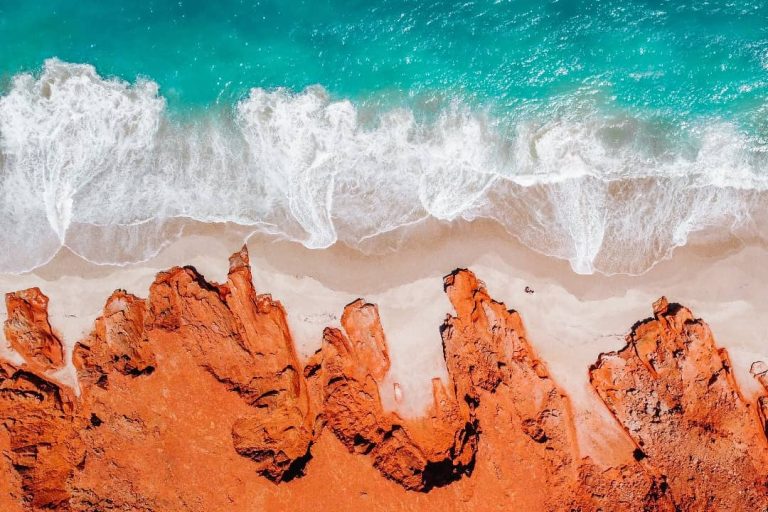
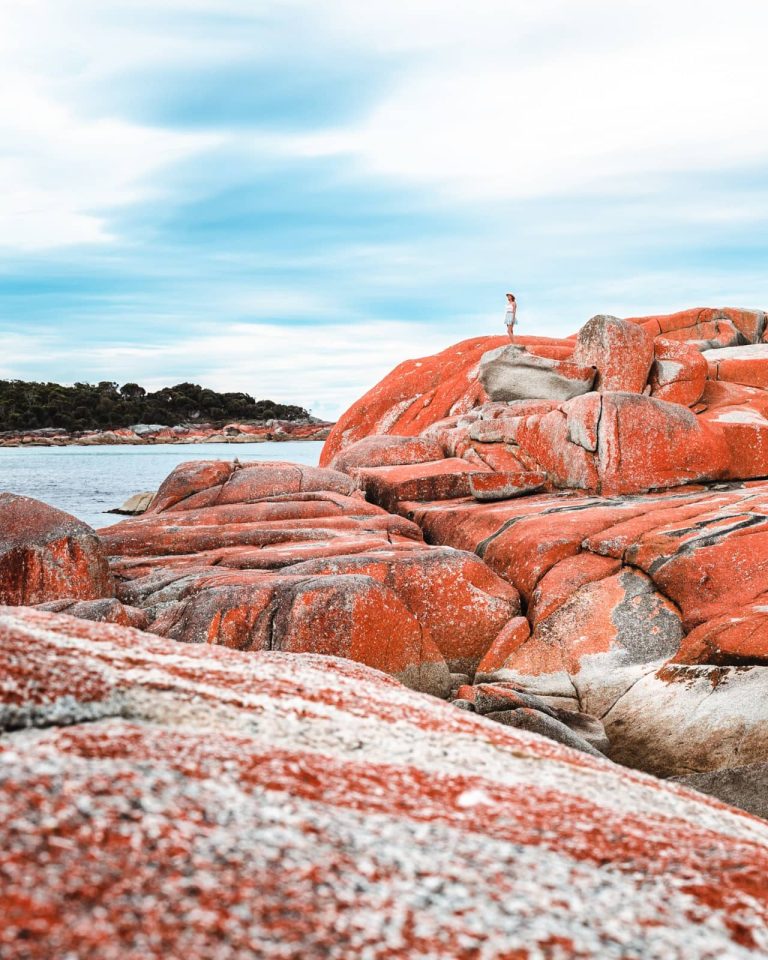
You’ll pass through some of our all-time favourite spots, like hiking the Three Capes track (for free), seeing the Painted Cliffs on Maria Island, spotting fairy penguins on Bicheno, and waking up to sunrise over the orange rocks at Bay of Fires.
We made this itinerary 2 weeks long because it gives you time to actually enjoy the places, not just race between them. But if you’re tight on time, you can easily shorten it to fit your trip.
This guide has everything you need: places to stay each night, things to do along the way, and tips we think everyone should know before tackling this road trip!
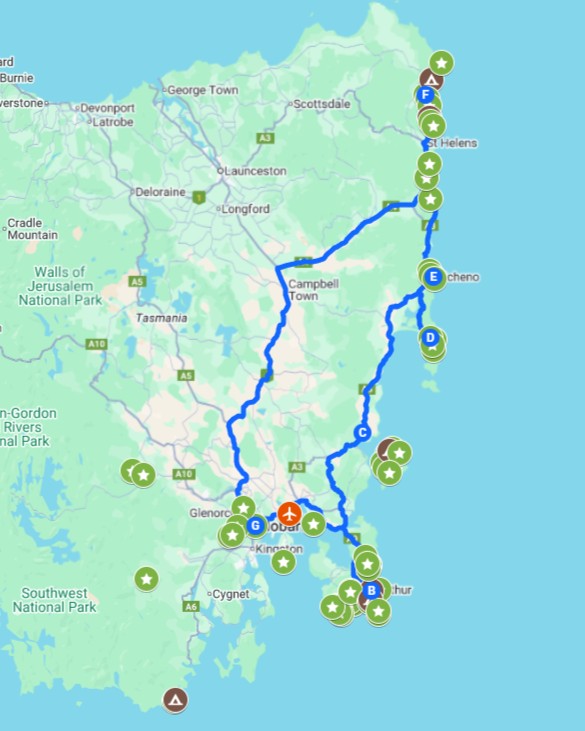
We’ve also included a free map you can save to Google Maps and use offline, which is super handy since the phone signal will be patchy out there!
We recognise the traditional owners of the lands we’re exploring in Tasmania, the Muwinina and Palawa peoples.
Day 1: Hobart to Port Arthur (1h 15m, 90km)
Leave Hobart early so you can take your time, there’s a lot to see on the way there! After Sorell, food gets pretty scarce, so grab snacks or lunch before you hit the open road.
Here are some cool things to do today:
- Tessellated Pavement, a weird rock formation that looks like someone tiled the beach, it’s crazy. Best seen at low tide, so check the timing if you can.
- Tasman Arch and Devil’s Kitchen. Both are dramatic coastal spots, and you barely have to walk from the carpark. Worth a look, they’re stunning.
- Waterfall Bay Lookout if you’re up for a short walk. It’s 3.5 km return (1-1.5 hours) and the views are massive!
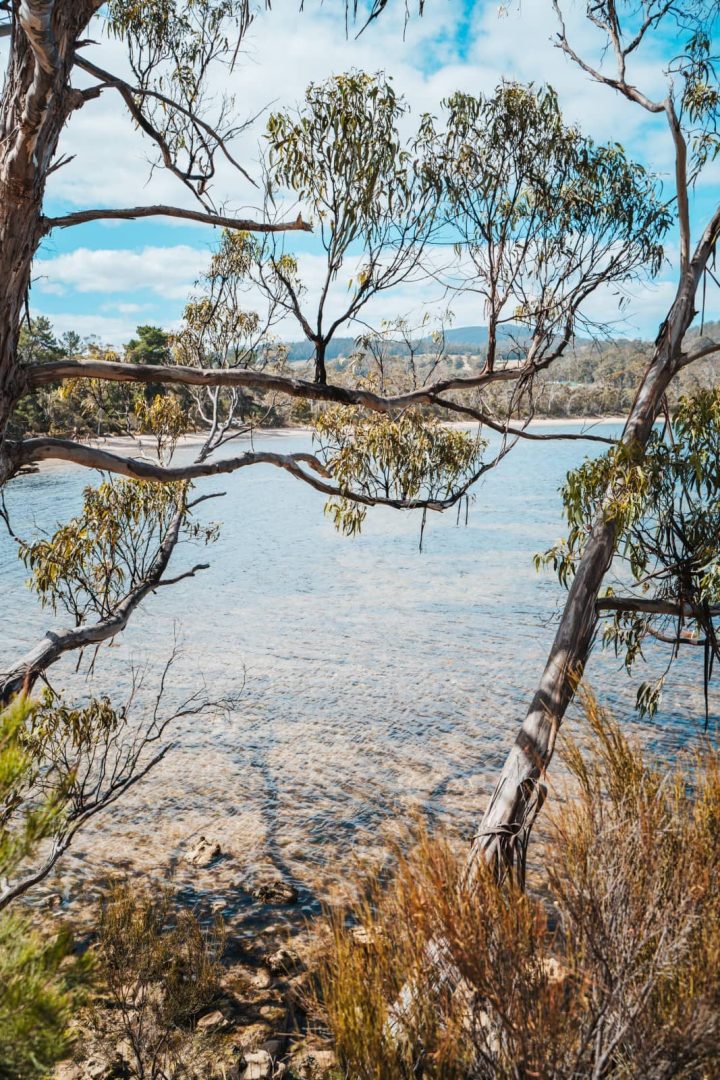
Once you reach Port Arthur, the Historic Site is one of the big draws. It’s one of the most important convict sites in the country, so give yourself at least 2-3 hours if you want to do it justice.
There’s also a memorial from the massacre that happened in 1996, which changed Australia’s gun laws forever. Being there feels heavy, but it’s part of what makes Port Arthur such a significant place to visit.
Then, end your day with fish and chips at the harbour. The seafood in Tassie is some of the best in the country, and it’s a solid way to wrap up your first day!
Where to stay in Port Arthur
Port Arthur and Eaglehawk Neck both have a few solid places to stay, but things book out fast in peak season, so don’t leave it too late.

Here are some spots we recommend:
- Fortescue Bay Campground is the best stay for this itinerary, as it’s right on the trailhead of the Three Capes Track. You’ll have to be self-sufficient, though.
- NRMA Port Arthur Holiday Park is a good pick for cabins or powered sites, and it’s close to the main attractions.
- Port Arthur Motor Inn is a budget-friendly hotel right near the historic site, so you can walk back after a long day.
- Lufra Beachside Hotel is a bit further up at Eaglehawk Neck, but it’s right next to the beach and has a relaxed vibe.
Days 2-4: Three Capes Track
This is hands-down one of the most rewarding hikes in Australia, and if you’re heading to Tassie, it should be right at the top of your list!
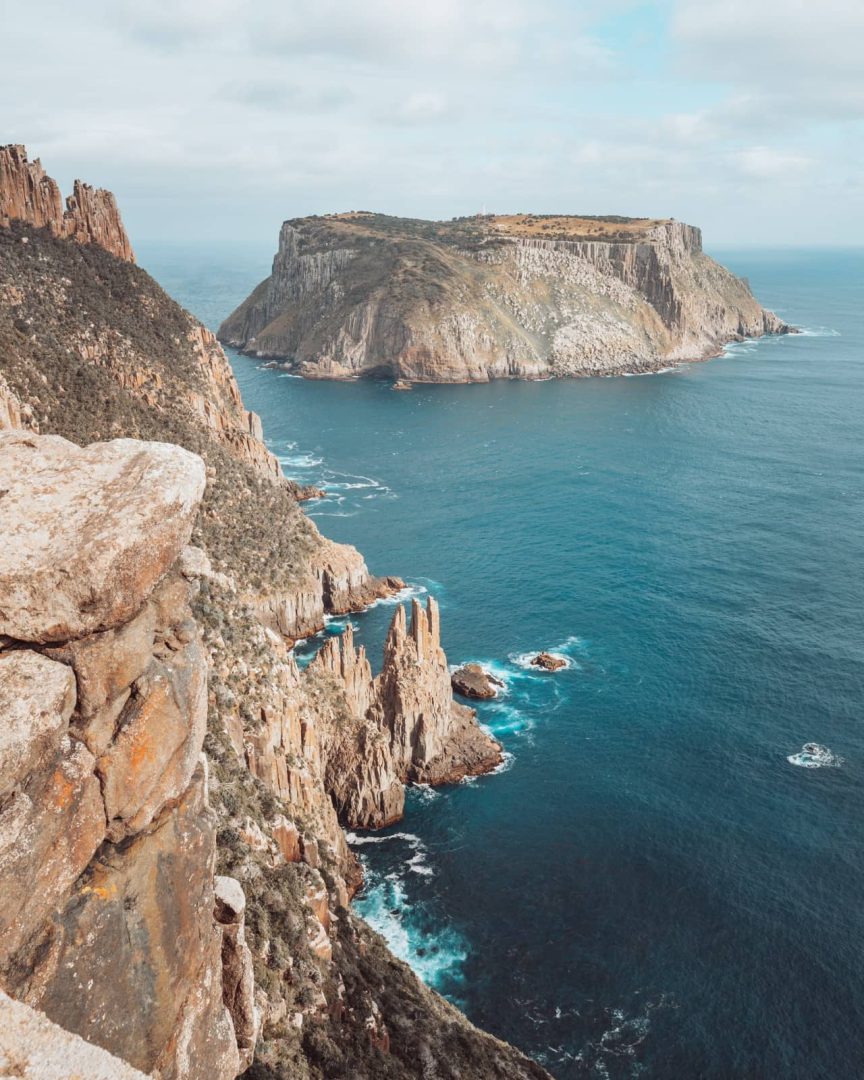
Most people pay around $500 for a 3-4 day hike to the Three Capes, but there’s a free version that gives you the exact same views, just without the fancy huts or the boat rides.
We did the free route and absolutely loved it! It’s called the Cape Pillar circuit.
All you need is a Parks Pass, book the campground, your own gear, and the legs to get through three days of solid walking.
This is what we did, it was a total of 40-45km:
- Start at Fortescue Bay.
- Hike to Bare Knoll campsite. It’s free and you should definitely stay there for the night. We didn’t, continuing to Cape Pillar instead – too many kms, we were dead at the end.
- Hike from Bare Knoll to Cape Pillar and back.
- Stay the night at Bare Knoll.
- Walk to Cape Raoul the next day, then back to Fortescue Bay.
You’ll finish these three days absolutely knackered but grinning!
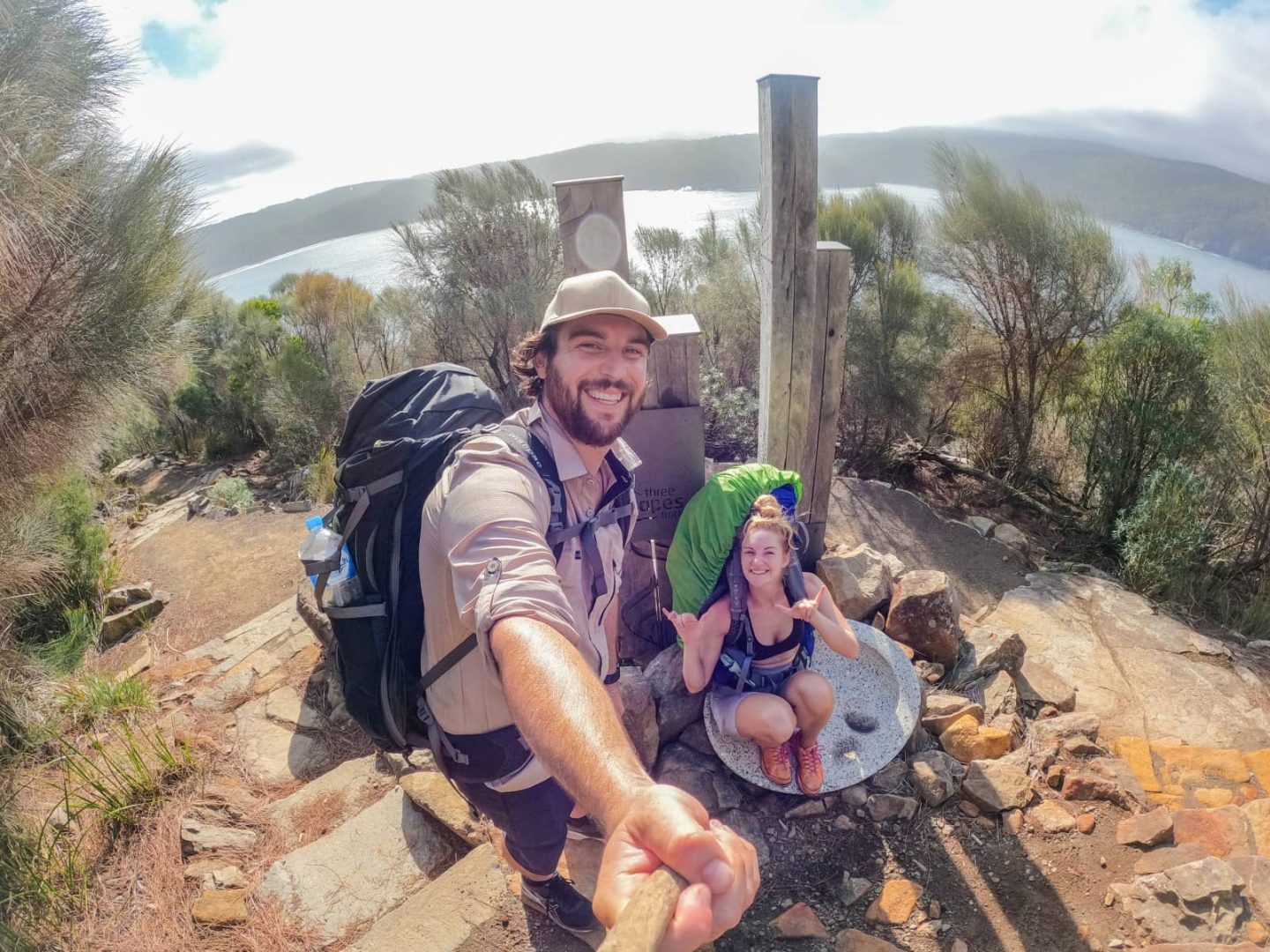
If you want to push yourself, you can tackle the Cape Huay too, it’s 10km from Fortescue Bay. Just add an extra day and you’ll get even more wild Tassie coastline.
A few things to know before you go:
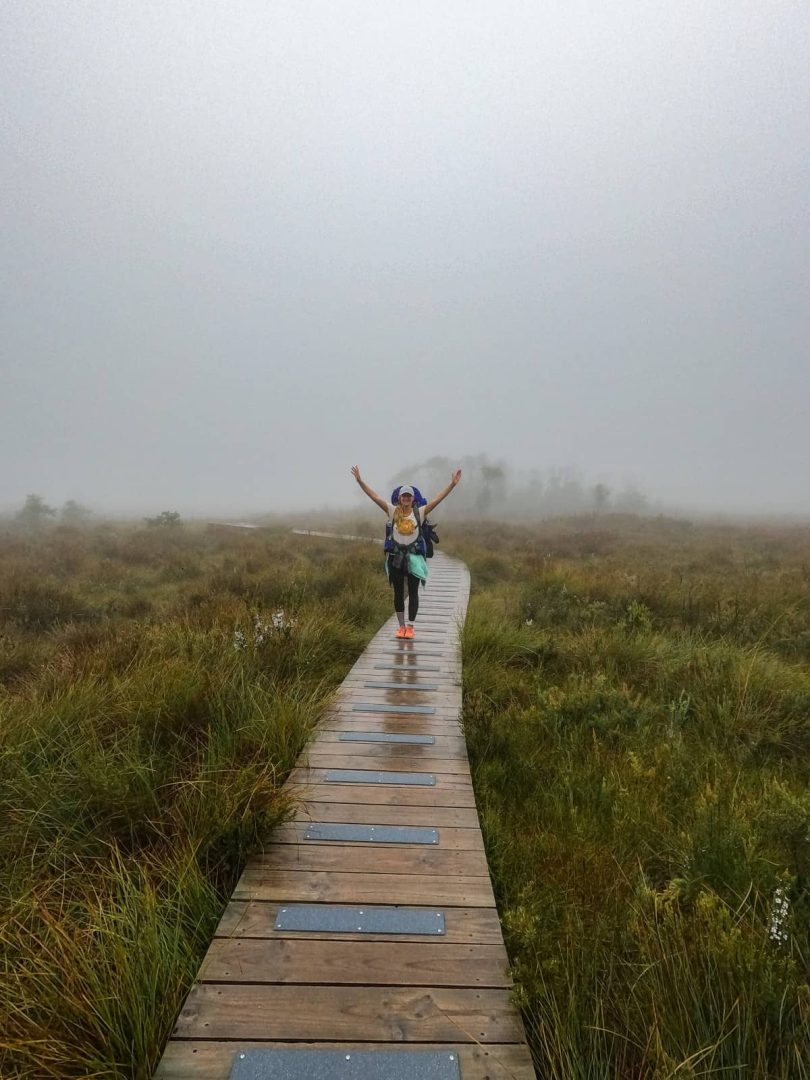
- Weather changes fast. One minute it’s sunny, the next it’s bucketing down or hailing. It happened to us, come prepared!
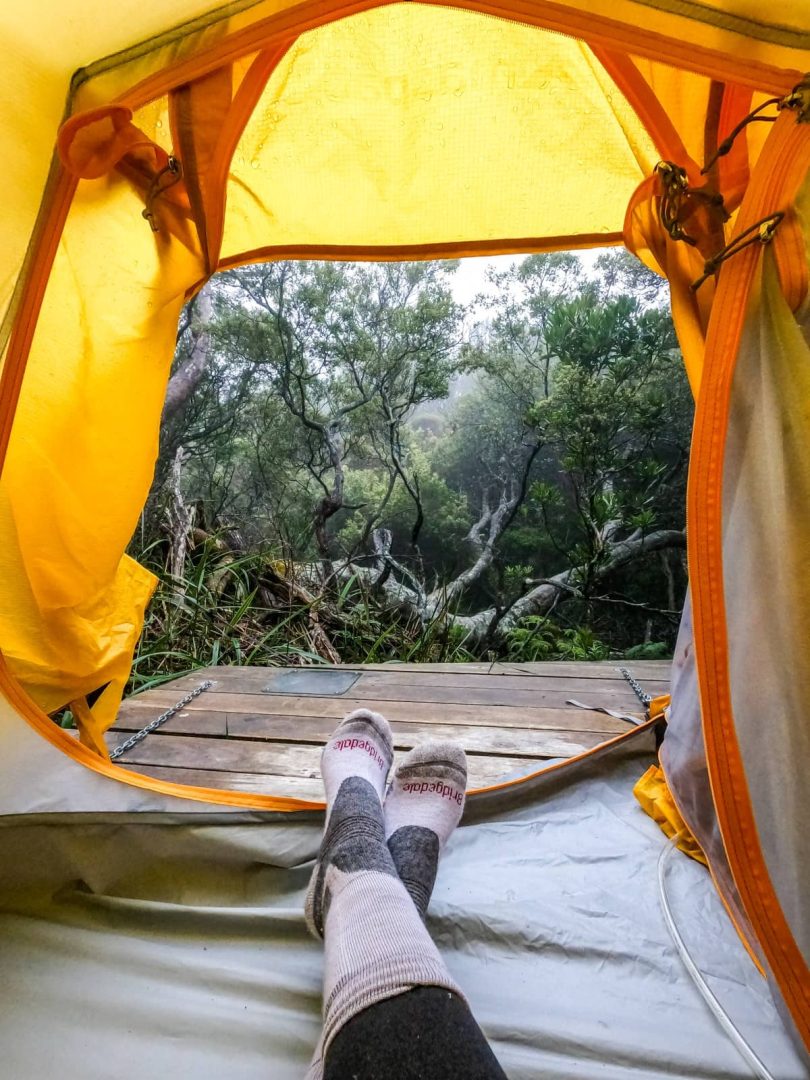
- Campsites have wooden tent platforms and rainwater tanks (boil or filter before drinking).
- Bring everything you need: food, gear, water bottles… There are no shops or phone signal.
- Book your campsites early if you’re hiking in peak season, they fill up months ahead.
We left our heavy gear at camp during the hikes to make things easier. 100% recommend!
Day 5-6: Maria Island (1hr 45m, 100 km)
Next is Maria Island, one of the best islands to visit in Tassie because it’s so unique! It’s home to Painted Cliffs, has great hikes, snorkelling, and lots of Tassie Devils.
It’s about a 2-hour drive north from Port Arthur to Triabunna, where the Maria Island ferry leaves from.
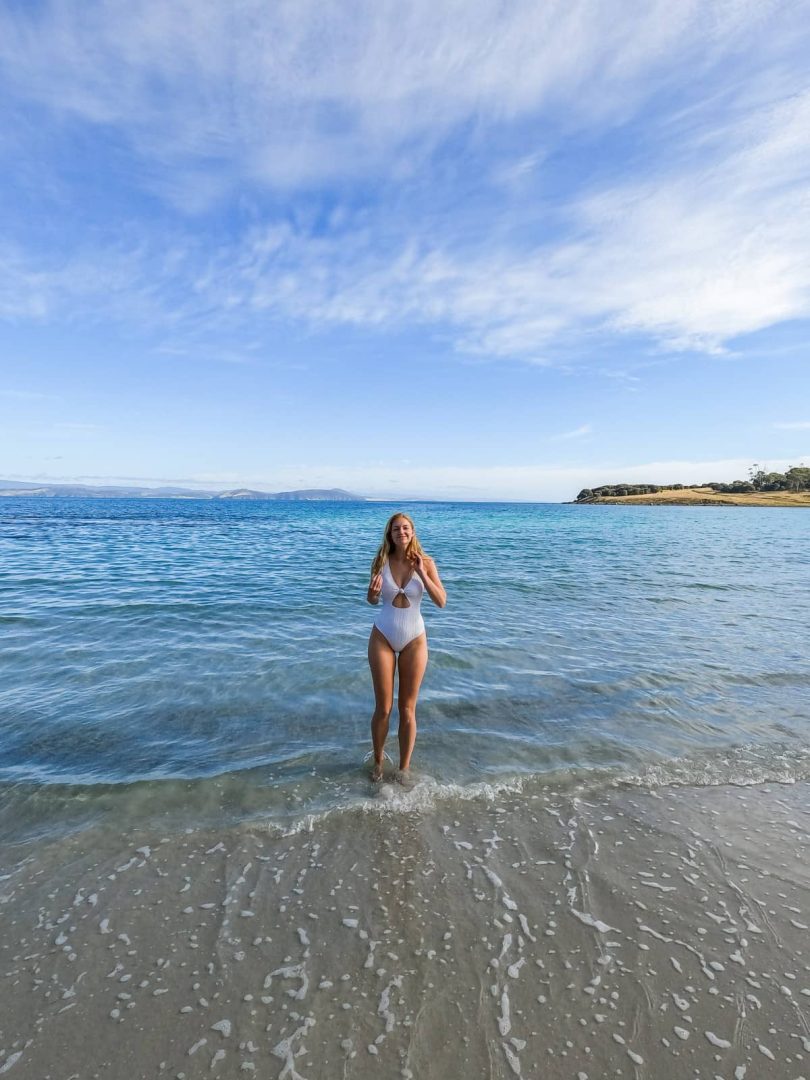
We recommend grabbing the morning ferry so you get the most out of your time. Check the timetable here.
There’s heaps to do there so we recommend staying 2 nights, especially if you want to do the Bishop and Clerk hike!
Here’s what you shouldn’t miss on Maria Island:
- Painted Cliffs, iconic and best seen at low tide when you can get right up close.
- Bishop and Clerk Hike. It’s steep and rocky but the views are worth every step. It’s 12km, 4-5 hours return.
- Fossil Cliffs, an easier 4.5km loop walk with epic coastline and heaps of ancient fossils.
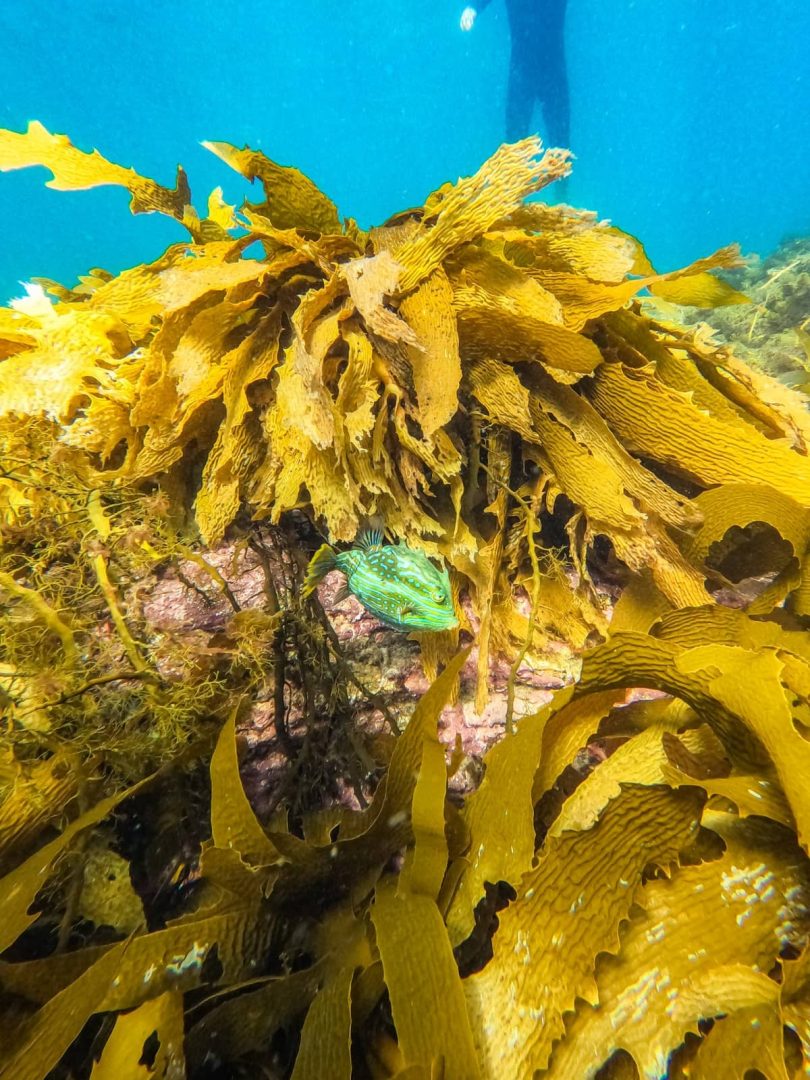
- Snorkelling. The marine reserve near Painted Cliffs is gorgeous!
- Tasmanian Devils. Your best shot at spotting them is after dark.
- Historic buildings. Explore the old penitentiary and colonial ruins dotted around the island.

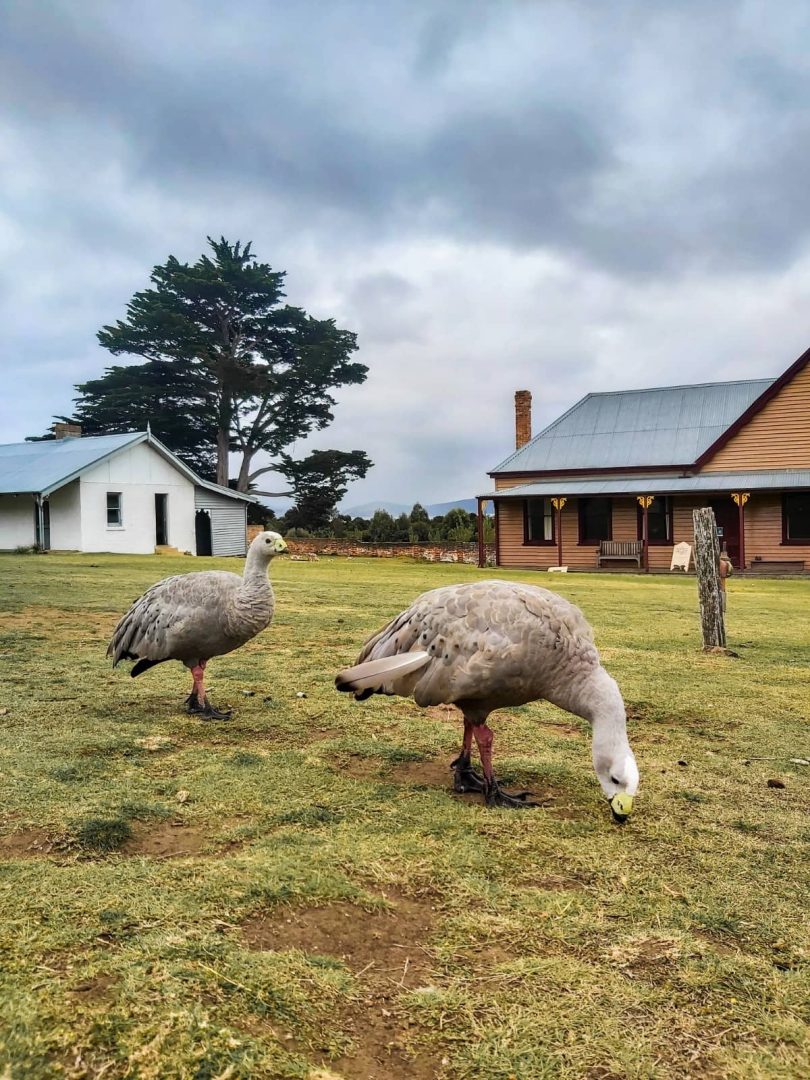
Snorkelling near Painted Cliffs Two gorgeous Cape Barren geese
Now, keep in mind that there are no shops or staff on Maria Island, so bring all your food, water, and gear with you. You’ll need to be self-sufficient and pack your rubbish, too.
Also, there are no cars allowed on Maria, so you’ll be walking or cycling everywhere.
We left our car in the ferry car park for a few days and had no problem. You can hire bikes, but definitely book ahead as they go quickly.
If you’d rather skip the detour or want a shorter road trip, there are full-day tours to Maria Island from Hobart like this one!
Where to stay on Maria Island
Accommodation on Maria Island is basic, but that’s half the experience!
You’ll be either sleeping in the old convict penitentiary or camping under the stars, both right near the beach and surrounded by wildlife.
Here are the main options:
- Penitentiary Accommodation. Simple bunk rooms inside a historic convict building. No electricity, but it’s got loads of atmosphere.
- Maria Island Campground (Darlington). Basic bush camping just a short walk from the ferry and close to wombat hangouts. Book early if you’re coming in peak season.
- Frenchs Farm & Encampment Cove. These are free, remote hike-in campgrounds for anyone doing the full island circuit. No facilities at all, so you’ll need to carry everything in and out.
Day 7-8: Freycinet NP (1hr 30m, 110km)
Jump on the ferry back to Triabunna in the morning. Then, hit the road north towards the iconic Freycinet National Park and the famous Wineglass Bay!
You’ll be spending the next 2 days there. This area is absolutely stunning, with beautiful beaches and excellent free camping.
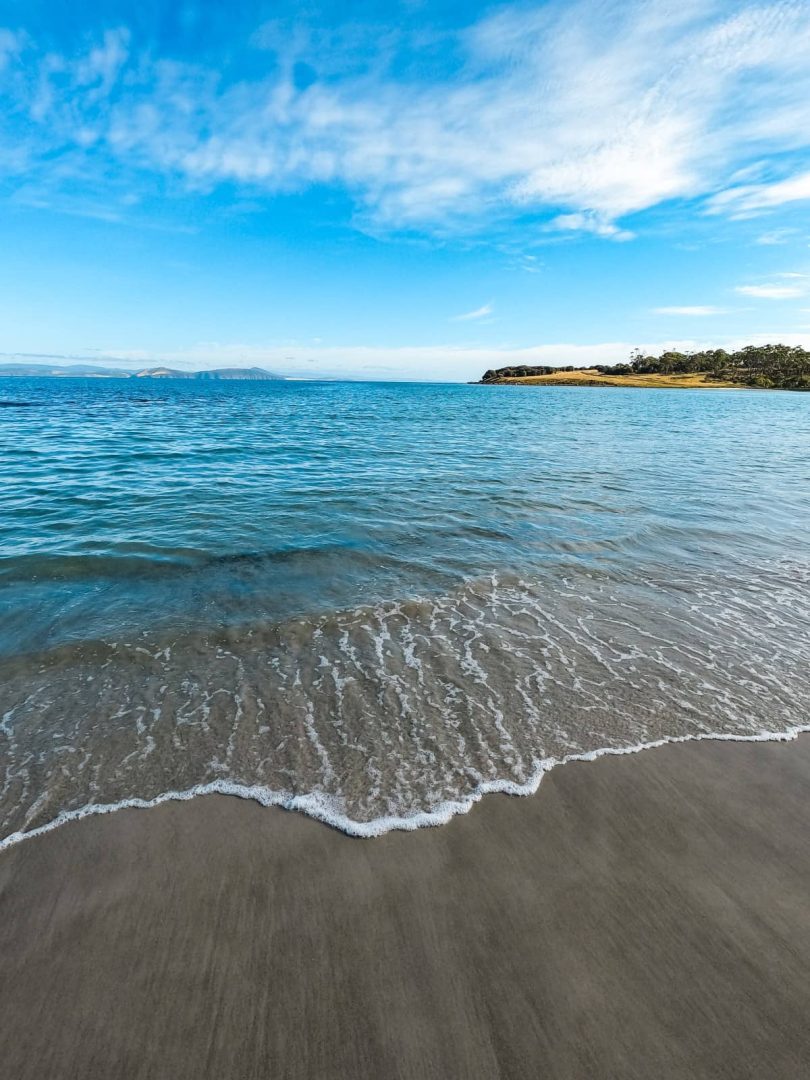
Definitely stop in Swansea for a meal. It’s a beautiful little town right on the water, and there are some great bakeries and cafés.
Here’s what we recommend doing while in Freycinet NP:
- Wineglass Bay Lookout. This is the classic walk of the area, 3km, ~1.5 hours return. The track is well-made but there are a lot of steps, so you’ll get the heart rate up. The view from the top is worth every bit of effort!
- Wineglass Bay Beach. If you’re feeling energetic, keep going down to the beach itself from the lookout. It’s another hour or so each way, and the track is steep on the way back up. The beach is usually quiet and feels pretty remote.
- Mount Amos. This one is a steep, rocky, and challenging hike, but one of our favourites in Tassie! It’s 3.6km return, ~3 hours. It gets slippery if it’s wet, so only do it if you’re confident on your feet and the weather’s good.
- Honeymoon Bay. A calm little spot for a swim or just to chill out. Good for a picnic and usually not too busy.
- Sleepy Bay. Another scenic beach close by, with dramatic rocks and clear water. Nice for a wander or a quick dip.
- Friendly Beaches. If you’re keen on bushcamping, this spot is free and right by the ocean! We loved it.
Where to stay in Freycinet?
Coles Bay is the main spot to stay if you want to be near Freycinet National Park, while feeling close to civilization.
It’s a small town but has some good cafés and shops, so it’s worth booking early, places fill up fast!
Here are some excellent stays we recommend:
- Wineglass Bay Campsite is the pick if you want to camp inside the park. It’s basic but you’ll wake up right near the walking tracks.
- Friendly Beaches camping is free, but it’s first-come, first-served and a bit more out of the way.
- BIG4 Iluka on Freycinet is a solid choice for powered sites or cabins. It’s in Coles Bay so you’ll be within walking distance of bakeries, coffee shops, etc.
- Freycinet Lodge is the splurge option. It’s inside the park, so you’re paying for the location and the views.
Day 9-10: Bicheno (40m, 45km)
It’s a short drive today, so you’ve got time to squeeze in a last walk or swim in Freycinet before heading up the coast.
Bicheno is one of our favourite Tassie towns. It’s laidback, with good food, and some adorable residents (PENGUINS!!).
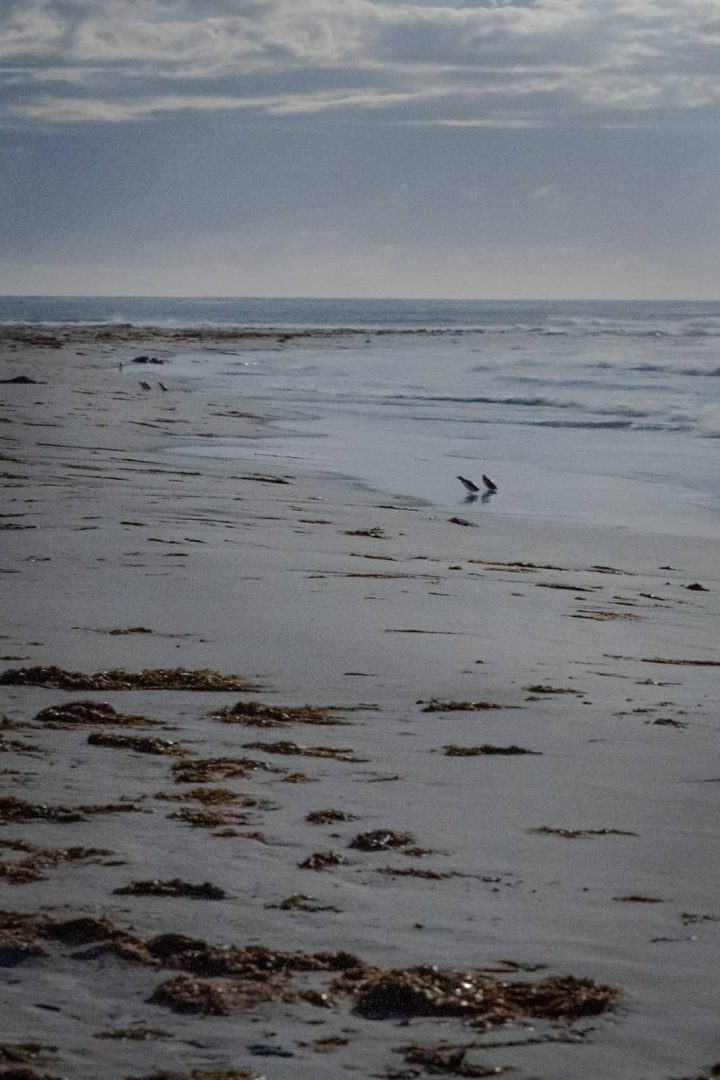
There’s heaps to do in Bicheno and nearby, which is why we recommend staying 2 nights there. Here’s what we reckon you shouldn’t miss:
- Fairy Penguins Head down at dusk to watch them waddle in! There are tours if you want a guide, but you can sometimes spot them on your own. Just keep your distance and no flash.
- Bicheno Blowhole. Quick stop but pretty fun, especially if the swell’s up! You’ll get wet if you stand too close.
- Redbill Beach. Excellent spot for surfing if you’re keen. There are also penguin burrows in the dunes, so keep an eye out for little tracks in the sand.
- Diamond Island. We loved this place, and you can walk there at low tide! Just check the times and don’t get stuck like we nearly did.
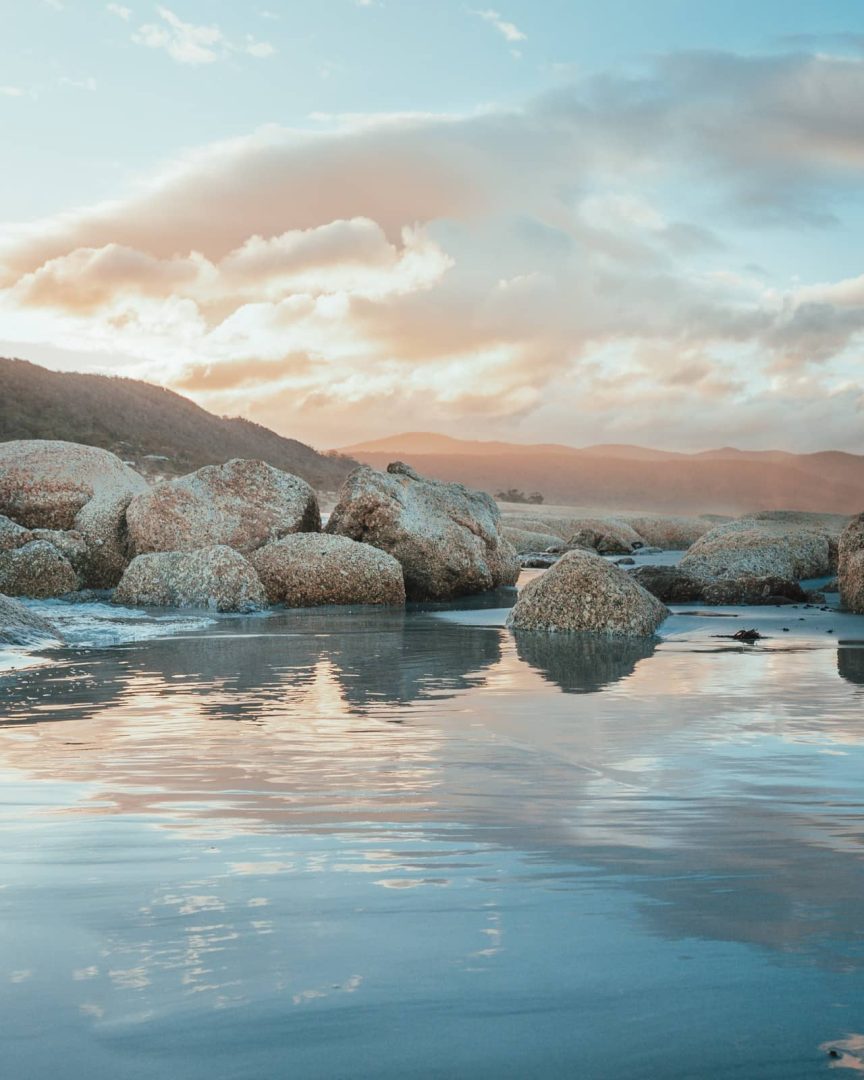
- Waubs Beach. Calm and clear, great for a swim or just lazing about.
- Whalers Lookout. Short, easy walk with cracking views over the coast.
- Have coffee at Blue Edge Bakery. Proper good coffee and pastries, but they shut early (3pm last time we checked), so don’t leave it too late!
- Bicheno Community Garden. Cute spot to wander, especially if you want a break from the beach. Locals are friendly and there’s usually something in bloom.
Where to stay in Bicheno
You’ve got a few solid options in Bicheno, whether you’re camping, road tripping, or after a comfy bed:
- Bicheno East Coast Holiday Park is right in town, so you can walk to the bakery, pub, and the beach. Good for families or anyone who wants to park up and not move the car for a few days.
- Bicheno by the Bay has cute cabins and is close to the water. It’s a bit quieter, with plenty of space and a pool if you’re keen for a dip.
- Diamond Island Resort is a bit out of town but has direct access to the sand and Diamond Island itself. And you can see the penguins wander the grounds at night, so you might spot them without booking a tour!
Day 11: Bicheno to Bay of Fires (1h, 75km)
Today you’ll go to one of the most beautiful parts of Tassie, Bay of Fires. We recommend spending 2 days there, to soak it all in and enjoy some relaxing time.
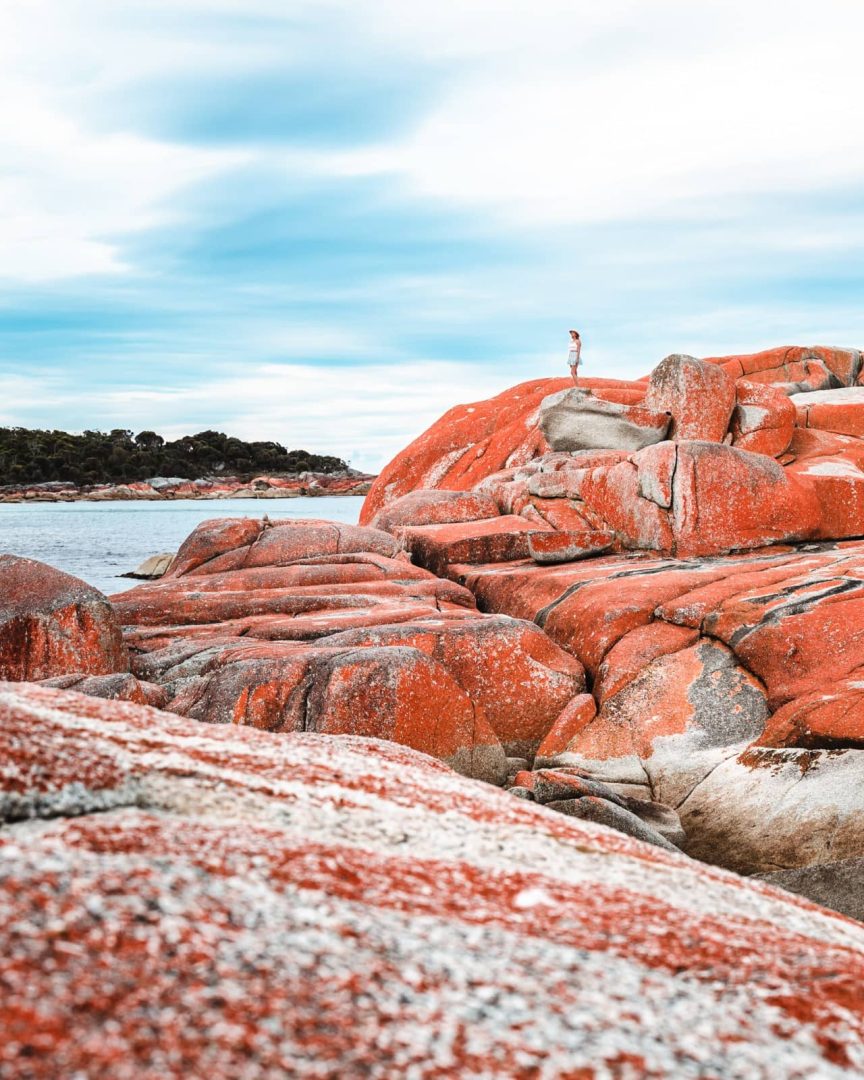
Now, the stretch of coast from Bicheno to Bay of Fires is absolutely unreal, especially if you’re into surfing or just love a good beach crawl!
Here are some top beaches to hit on your way north:
- Four Mile Creek Beach. Classic surf spot with plenty of space to spread out. Even if you’re not surfing, it’s a good spot for a walk or a quick dip.
- Steels Beach. This one’s a long sandy stretch between Falmouth and Scamander. It’s also great for surfing and beachcombing.
- Beaumaris Beach. Another favourite with surfers, but also good for fishing or just chilling out. There’s usually a few locals around but it never feels crowded.
If you’re running late or just want to take it slow, you can always stay the night in one of the little towns along the way.
Everything in Tassie shuts early, so don’t bank on a late dinner or last-minute supplies.
If you’re sticking to this itinerary, make sure you get to St Helens before 7pm to stock up. The supermarkets close early and you’ll need food and drinks for your next couple of days in Bay of Fires.
Where to stay
Camping at Bay of Fires is an experience! Honestly, it’s some of the best campsites we’ve stayed at in Australia.
And they’re free! You’ll be right on the sand, waking up to those stunning views.
There are a few different campgrounds to pick from, and you can check them all out here. In summer, spots fill up quickly, so you’ll want to roll in early if you want a good patch.
If you want a few more creature comforts, there are also great paid options nearby:
- BIG4 St Helens Holiday Park. Top spot for families, with all the bells and whistles, just a short drive from the national park.
- Bay of Fires Bush Retreat. Glamping tents near Binalong Bay for those who want to splurge.
- Prefer a hotel? St Helens has a couple, like Panorama Hotel or the budget-friendly Bayside Hotel. Both are handy if you want a proper bed and a hot shower.
Days 12-13: Bay of Fires
These are your slow, beachy days. And believe us when we say you’ll wish you had a week here!
The Bay of Fires is a truly beautiful, peaceful place. So take it easy and soak up the views.
Here are some cool things to do while you’re there:
- Snorkelling. The water is icy but so clear you’ll spot fish and starfish straight off the beach. Bring a wetsuit if you’ve got one, or just brave it for a quick dip.
- Rock hopping and photography. Those orange boulders are wild in real life. Sunrise and sunset are best for photos, but watch your step, they get slippery.
- Swimming. Some beaches are calm enough for a proper swim, especially around Binalong Bay. It’s cold year-round, but in summer it’s actually refreshing.
- Fishing. You’ll see locals casting off the rocks or straight from the sand. Bring your own gear, and keep an eye on the swell.
- Hikes. The Bay of Fires Lodge Walk is the big one (4 days, moderate, but you can just do a section for a day walk). For something shorter, the Skeleton Bay Track (2km, easy, about 45 mins return) is a good way to stretch your legs and see more of the coastline.
There’s not much in the way of shops or cafés, so stock up on St Helen’s before you arrive!
Day 14: Back to Hobart (3.5hr, 270km)
There’s not a heap to see along the way, but you can break it up with a few good stops:
- St Mary’s Pass. Wind your way down this mountain road for some pretty epic valley views. It’s a bit twisty, so take it slow if you’re towing.
- Campbell Town. Decent spot for a coffee and a stretch. There’s a nice park by the river if you need a break from the car.
- Ross. This little historic town is worth a wander. The bakery here is famous for a reason, so grab a pie or a pastry before you keep moving.
Once you hit Hobart, it’s worth sticking around for an extra day or two if you can swing it. Here’s what we reckon is worth your time:
- MONA. The Museum of Old and New Art is wild, weird, and absolutely worth a visit. Give yourself a few hours, and don’t skip the ferry ride there if you can.
- Mount Wellington. The views over Hobart are unreal, especially at sunrise or sunset. You can drive right to the top, but if you’re keen for a hike, there are a few good trails.
- Bruny Island. You could do a full-day trip there but we recommend spending 2-3 days. The oysters are SO good and there’s heaps of bushwalks and beach camping.
- Cockle Creek. If you want to say you’ve been as far south as you can drive in Australia, this is it! Great spot for camping, but you’ll want 2-3 days to make the detour worth it.

Some cool tours to do on Tassie if you’re keen:
Planning your Great Eastern Drive
How to get to Tasmania
You can fly to Hobart or Launceston, or hop on the Spirit of Tasmania ferry, which runs between Geelong and Devonport. You can ferry your own car, caravan, bike, etc.
A car is essential for Tassie, though. Public transport is extremely limited. Most places are on sealed roads, so you don’t need a 4WD unless you’re chasing a remote campsite or a proper off-grid adventure.
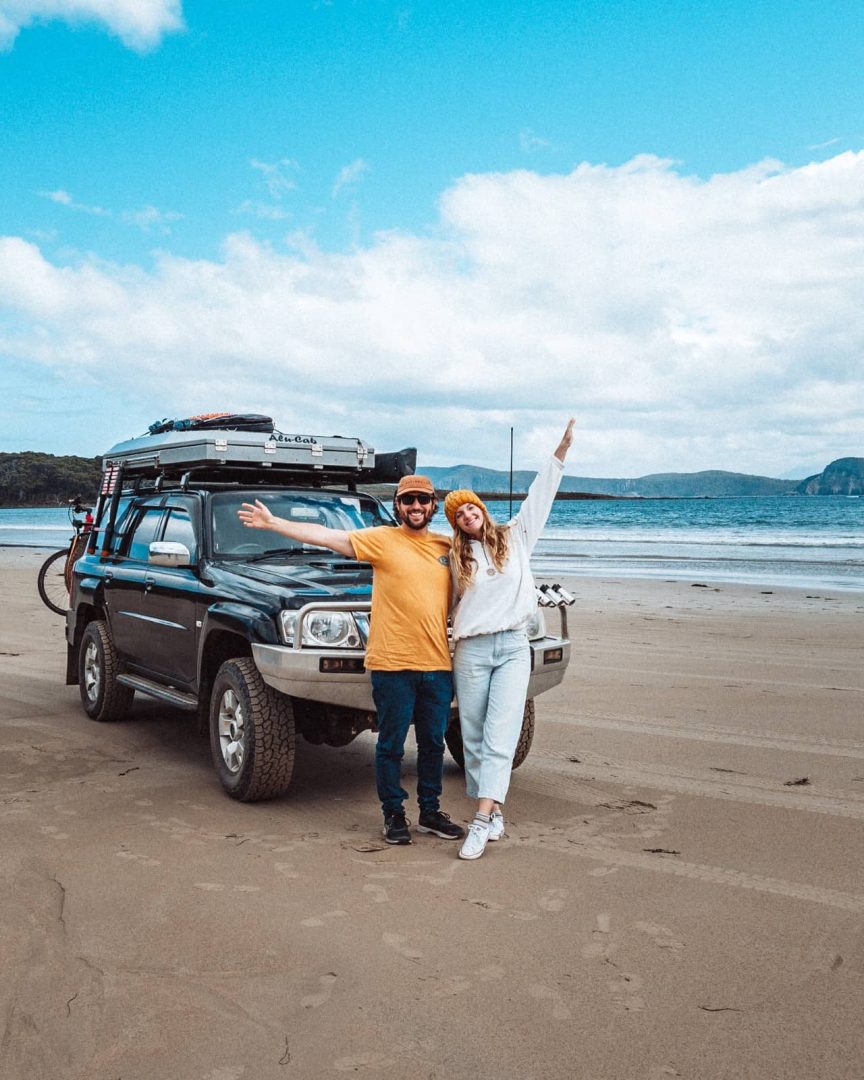
We recommend checking in Booking’s car rental and in Discover Cars to see which one has the best car deals for your specific dates!
But please double-check the fine print if you’re hiring a car on the mainland. Some companies don’t allow taking their vehicles on the ferry.
Moving around Tassie
You’ll need a park pass to enter any national park in Tassie. The Holiday Pass covers all the parks on this road trip, but you’ll still need to pay for camping fees if any. Check the latest info on park passes here.
Roads can be narrow, winding, and pretty steep, especially through the centre. So add extra time to your drive, Google Maps doesn’t account for the slow driving on windy roads, or the odd cattle blocking the road!
Also, watch for wildlife, especially at dawn and dusk. Tasmania is full of critters that love wandering onto the road.
What to pack?
The weather in Tasmania is WILD. Even in summer, you can cop hail, sideways rain, or a freezing wind, so don’t get caught out.
If you’re hiking (especially big ones like Cape Pillar), bring:
- A proper waterproof jacket with a hood and waterproof over trousers (seam sealed, breathable
- Sturdy walking boots (it gets muddy and slippery)
- Warm layers (fleece or wool jumper, thermal base layers)
- Gaiters if you’re squeamish about leeches
For non-hikers, you’ll still want:
- A rain jacket
- Warm jumper
- Decent shoes (paths get boggy fast)
Don’t stress if you forget something, though. Hobart is filled with outdoor shops, so you can grab gear before your Great Eastern Drive.
Just don’t underestimate the weather, or you’ll be soggy and shivering before you know it!
Camping in Tasmania
Camping in Tassie is EPIC! It’s one of our favourite places to roll out the swag. The state really looks after campers, so you can get away with spending next to nothing most nights.
We found heaps of pubs that let you stay in their car park if you grab a meal or a beer. It’s a win-win: cheap spot to sleep and a decent feed!
Some rec clubs even open up their golf courses or ovals for campers. We paid as little as $5 a night at a few spots, and they were way more interesting than your standard caravan park.
A couple of places were right near waterfalls or bushwalks, so you wake up and just wander straight out for a stroll.
You’ll want to have some cash handy, as a few of these spots are old-school and don’t take cards.
If you’re keen to keep costs down and don’t mind basic facilities, Tassie’s camping scene is hard to beat.
Best time to visit Tasmania
Honestly, there’s no bad time to visit Tassie. It just depends on what you’re after:
- Summer (December to February) is the crowd favourite. The beaches are at their best, the lavender fields are in full swing, but it’s also peak season so book ahead and expect prices to jump.
- Spring (September to November) and autumn (March to May) are perfect if you’re keen on hiking. Spring brings tulips and mild weather, while autumn’s “turning of the fagus” sets the hillsides on fire with colour.
- Winter (June to August) is honestly underrated. It’s prime oyster season, and if you’re lucky, you might catch the aurora australis lighting up the sky! Just be ready for snow, take it slow if you’re driving.
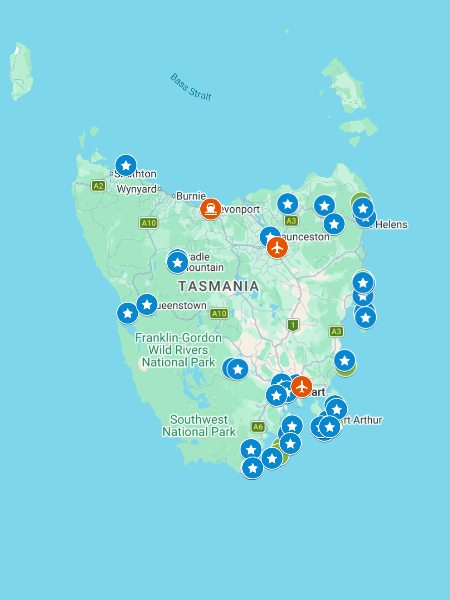
FREE map of this Great Eastern Drive itinerary
Top Tips
Don’t count on every town for fuel. Places like Triabunna sometimes only have one servo, and it can be closed or out of diesel. Top up in bigger spots like Sorell, Bicheno, or St Helens before you hit the quieter stretches.
Reception drops off quickly once you leave the main highways. Fortescue Bay, parts of Freycinet, and most camps in the Bay of Fires have no signal at all. So download your maps and your national park passes before you lose coverage.
Always check tide times before heading to Diamond Island (Bicheno) or the Painted Cliffs (Maria Island). If you get the timing wrong, you’ll either get soaked or miss out completely, Painted Cliffs are only visible at low tide.
And do not drive at night. The east coast of Tasmania is crawling with wallabies and wombats, especially at dusk, and they’re not shy about jumping in front of your car.
Did you know?
Port Arthur isn’t just a convict site. It’s where the 1996 massacre happened, which led to Australia’s strict gun laws. The changes were fast, and you’ll still feel the weight of that history when you visit.
As for the Bay of Fires, it got its name from the orange glow of Aboriginal campfires seen by early European explorers along the coast. It’s not about the colour of the rocks, even though everyone thinks it is.
FAQs
Is the west or east coast of Tasmania better?
We think the east coast might be better for most people just because it’s easier to access. The roads aren’t as windy and there’s plenty of beaches you can actually swim at.
The west coast is better if you’re after a wild, remote feel. The roads are seriously twisty, though. It’s stunning if you’re after adventure and don’t mind long stretches without much around.
Sort these out before your Great Eastern Drive road trip
Now that you’ve got your Great Eastern Drive itinerary sorted, it’s time to lock in the practical stuff! That means booking your wheels, grabbing your ferry tickets early, and making sure you’ve got all your gear ready to go.
Here are our go-to road trip essentials and travel tools to keep things smooth and stress-free:
- Car rentals: Booking’s car rental and Discover Cars both let you pick up from Hobart. Compare both to see who’s got the best deal for your dates.
- Accommodation: Free camping is hard to beat. But if you’re after hotels or holiday parks, Booking has loads of options. Airbnb is worth a look too for something different.
- Tours: There are some great tours along the way if you want to mix things up! Check them out here
- National Park Entry: You’ll need a holiday pass for Tassie’s national parks. Grab it from the Parks and Wildlife Service before you go.
- Ferry: If you’re bringing your car over, book your Spirit of Tasmania ferry early, car spots go quick. Book here!
Our Essential Travel Toolkit
🤩 Wise Card – Online bank to hold money in different currencies worldwide and lowest fees in the market! (FREE debit card here)
🤩 Trip.com – Consistently great accommodation and hotel deals.
🤩 Hostelworld – Looking for the cheapest accommodation? We especially love the “book now, pay later” feature.
🤩 Discovercars.com – Best range, super easy to compare prices rental car and motorhome prices.
🤩 Viator.com – Easily book tours and experiences at the lowest rate. Great selection all over Australia.
🤩 Tripadvisor.com – Other than our website…😉 the best place to find things to do
🤩 Airalo – eSIM store that solves the pain of high roaming bills by giving travelers access to eSIMs (digital SIM cards).
🤩 Caravan RV Camping – Traveling Australia in a van, caravan or bus? This is the best place to get all your gear.